Search

GEOGRAPHY EDUCATION

Supporting geography educators everywhere with current digital resources.

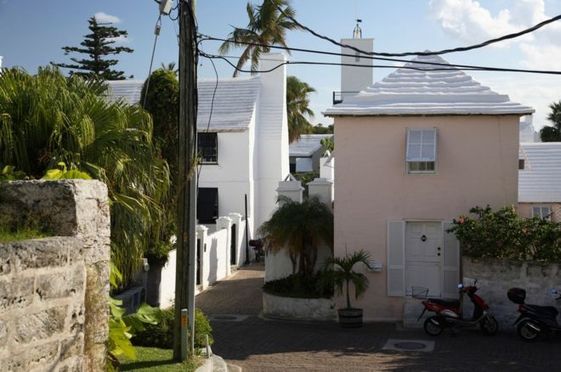
Why houses in Bermuda have white stepped roofs

The island of Bermuda has no fresh-water springs, rivers or lakes so the design of its roofs is essential for collecting rainwater.

Source: www.bbc.com

This is such as distinct, localized example of how people adapt to their physical environment.  It explains why a particularly cultural landscape is prevalent, and the article nicely shows how traditional island living comes into conflict with tourist expectations and consumption patterns.  Tons of good geographic factors in this issue for students to analyze. 


Tags: water, tourism, sustainabilityarchitecture, consumption, landscape, Bermuda, environment adapt.

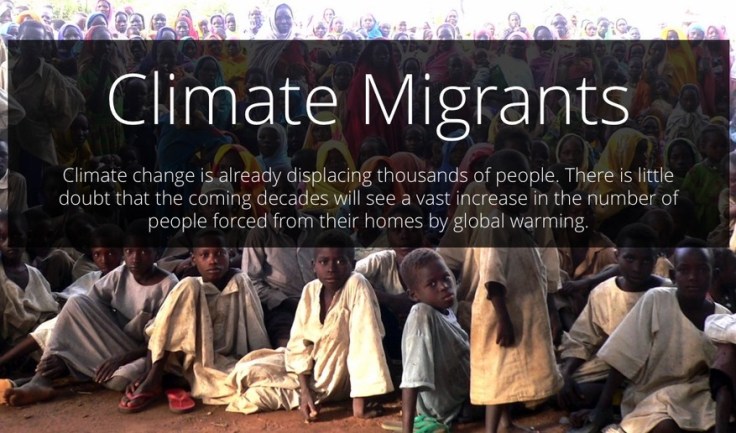
WORKSHEETS: Climate Migrants

“The ESRI storymap on climate refugees does a phenomenal job sampling locations in the world that experience migration effects as a result of climate change. Attached is a guided worksheet that accompanies the ESRI Climate Migrant Storymap.”

Source: www.thehumanimprint.com

This StoryMap shows some key regions where migrants are fleeing some of the negative impacts of climate change and one APHG teacher has created a fabulous worksheet to guide students through this great resource.   


TagsAPHG, climate changemigrationrefugees, environment, coastalmappingESRIStoryMap, political ecology.

Linking the most interesting places in the world

“Every city has a picturesque spot or two where the probability of a photo being taken at any given time is pretty high. Now there’s a world atlas of maps showing the routes people follow while taking these pictures in every city around the world:Mapbox’s Eric Fischer has been working on the “Geotaggers’ World Atlas” for years, using locations of photos uploaded on Flickr over a decade. In his city maps, which now span the world, he connects the dots between subsequent photos taken by a photographer—representing their path in sketchy lines that criss-cross across the city.” 

—Tanvi Misra on CityLab

Tags: mapping, visualizationsocial media, tourism.

Source: www.mapbox.com

Questions to Ponder:

  1. How does the idea of crowdsourcing influence modern-day cartography and geographic data?
  2. What kind of meaning is there in this seemingly random assortment of geotagged images?
  3. Analyze a particular pattern (anywhere in the world). Describe the location, explain the patterns you see and analyze why they are the way they are.
  4. Analyze a particular pattern (somewhere else in the world). Describe the location, explain the patterns you see and analyze why they are the way they are.

CIA’s Cartography Division Shares Declassified Maps

“As much as James Bond is defined by his outlandish gadgets, one of the most important tools for real-life spies is actually much less flashy: maps. Whether used to gather information or plan an attack, good maps are an integral part of the tradecraft of espionage. Now, to celebrate 75 years of serious cartography, the Central Intelligence Agency has declassified and put decades of once-secret maps online.  These days, the C.I.A. and other intelligence agencies rely more on digital mapping technologies and satellite images to make its maps, but for decades it relied on geographers and cartographers for planning and executing operations around the world. Because these maps could literally mean the difference between life and death for spies and soldiers alike, making them as accurate as possible was paramount, Greg Miller reports for National Geographic.”


Tags: mapping, geopolitics, maphistorical, map archives

Source: www.smithsonianmag.com

Every Name Is a Music Reference

The designers behind the “Alternative Love Blueprint” are back with a map of the world. Only this map uses song titles instead of place names.

Source: www.wired.com

As one friend said, I think we can forgive the poor projection choice because of the incredibly clever naming scheme of this map.  Very fun idea, and worth exploring. 


Tags: music, map.

The Sargasso Sea

“The Sargasso Sea occupies almost two thirds of the North Atlantic Ocean. Within this sea, circling ocean currents accumulate mats of Sargassum seaweed that shelter a surprising variety of fishes, snails, crabs, and other small animals. The animal community today is much less diverse than it was in the early 1970s, when the last detailed studies were completed in this region. This study shows that animal communities in the Sargasso Sea are definitely changing. The next step is to find out why.”

Source: www.youtube.com

Often, we define oceans and seas based on their borders with land as their defining characteristics (this is one reason why many don’t know about the Southern Ocean as a distinct body of water or consider it an ocean). The Sargasso Sea is defined by ocean currents; it is surrounded by great currents but is itself without a strong current, making it perilous for early seafarers.  These oceanic doldrums became shrouded in superstition as stories of the fabled Bermuda Triangle spread, but the truth is all in the ocean currents.   


Tags: water, biogeography, environment, physical.

Geographic Illiteracy and the Rise of Trump

Even the most accomplished American high school student can graduate knowing more about criminal justice in Puritan New England than about the actual injustices going on every day in the United States. Students can learn every step of the process of photosynthesis and yet have never heard of the Kyoto Accords. They can know how nuclear fission works, and yet they don’t know which countries have nuclear weapons and don’t understand the (perverse) logic of mutually assured destruction. They know the Five Pillars of Islam but don’t know what modern-day country Mecca is in.

Source: www.huffingtonpost.com

I know, I know.  This is more partisan than most articles I typically share, but the title is bit misleading and clickbait-ish.  Approximately 7/8ths of the article is a plea for more geographic instruction in the United States and the value of the AP Human Geography curriculum for understanding the world we live in (and 1/8th is a partisan perspective).  The bulleted section of the article is especially good and would be useful to extract for students (as would some other portions).


Tagseducation, APHG, geography education, 

The silent minority

America’s largest ethnic group has assimilated so well that people barely notice it


German-Americans are America’s largest single ethnic group (if you divide Hispanics into Mexican-Americans, Cuban-Americans, etc). Yet despite their numbers, they are barely visible. During the first world war, parts of America grew hysterically anti-German. Many stopped speaking German and anglicized their names. The second world war saw less anti-German hysteria, but Hitler and the Holocaust gave German-Americans more reasons to hide their origins.


Tagsculturemigrationhistorical, ethnicityUSA.

Source: www.economist.com

Climate Migrants

Climate change has already displaced tens of thousands of people. If it continues unabated, it could lead to one of the largest mass human migrations in history.

Source: storymaps.esri.com

This StoryMap shows some key regions where migrants are fleeing some of the negative impacts of climate change, a trend that appears very likely to increase in the future.  It is also an excellent example of the ESRI’s new Cascade template for creating a web app. 


Tags: physical, weather and climate, climate change, environment, resources, watercoastalmappingESRIStoryMap, visualization, environment depend, political ecology.

Create a free website or blog at WordPress.com.

Up ↑