Search

GEOGRAPHY EDUCATION

Supporting geography educators everywhere with current digital resources.

The Staggering Wealth Of Mexico City

Walk on the streets and you´ll be exposed to its informal economy: people who do what they can to eke out a living including washing windshields, selling food, or even singing, dancing, and performing acrobatics for a tip.

What Americans may not know is that Mexico City is home to the wealthiest people, the poshest neighborhoods, the most exclusive shops, entertainment venues, and cultural centers on the planet.

Source: xpatnation.com

Mexico City has been the economic center of Mexico for a long time and is a true primate city. “Wealth accumulation in Mexico City has historically been concentrated in the hands of a few. In colonial times, the elite was mostly composed of Spanish-born immigrants who held high-ranking offices or worked as business owners or export-oriented merchants. Later, the wealthy were those who owned large estates known as haciendas…It is estimated that around 40 percent of Mexico’s income is owned by just 10 percent of its population, while 52.3 percent of Mexican citizens live in poverty.”


Tags: urban, megacitieseconomic, labor, Mexico.

Americans Moving at Historically Low Rates

The percentage of Americans moving over a one-year period fell to an all time low in the United States to 11.2 percent in 2016.

Source: www.census.gov

In the past, when I’ve taught world regional geography, I’ve often discussed a major regional characteristic of North America is the high degree of internal mobility…that appears to be changing and it brings up more questions than answers.  


Questions to Ponder: Are there regions in the United States where people are less likely to move?  How does mobility impact economic, cultural, and political patterns in the United States? Why are less people moving now than before?  


Tags: mobilitymigration, USA, statistics.

Israeli-Palestinian Conflict updates, 2016

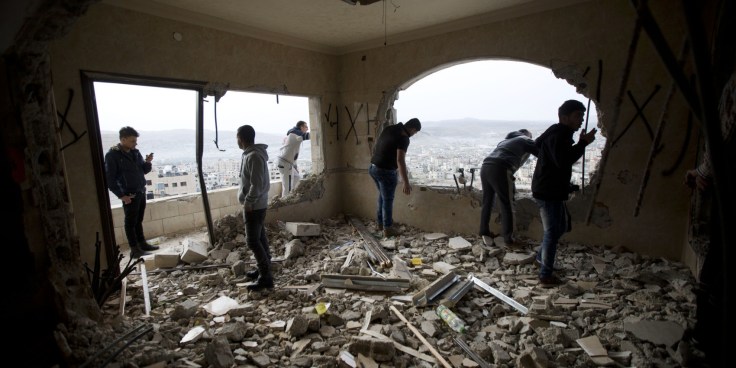
The Israeli-Palestinian conflict is one that powerfully divides the international community.  Of those living within the state of Israel, Pew Research data shows that they are often deeply divided based on religious affiliation. Not surprisingly, those divisions extend into how they view the peace process, West Bank settlements and U.S. support.  Although the conflict is portrayed as a battle between religious groups, it can be more fairly assessed as two nationalistic groups competing for land.  Broadly speaking, the Muslim world has sided with the Palestinians, and the U.S. and its NATO allies have defended Israel.   In the United Nation’s Security Council, the United States’ veto power has been use to strike down resolutions that would condemn Israeli settlement in the militarily occupied lands of the West Bank.  The 2016 UN resolution that passed 14-0 (with only the U.S. abstaining) says that Israel’s settlements on Palestinian territory occupied since 1967, including East Jerusalem, have “no legal validity” and demands a halt to “all Israeli settlement activities,” saying this “is essential for salvaging the two-state solution.”


These settlements are considered by most of the international community to be illegal, and the UN has condemned them, but since the U.S. has always vetoed this, Israel has never been formally reprimanded.  Earlier this week, the U.S. abstained from the vote, and the many see the U.S. position as hypocritical, (Secretary of State John Kerry strongly defended the position).


Some highly partisan supporters of Israel do not see Israel’s actions as the problem, primarily because Israel’s neighbors have traditionally not recognized its right to exist, and attacked it many times.  Therefore, they see Israel’s actions as necessary for the security of Israel, and do not see Israel’s settlements in the West Bank as illegal since Palestine isn’t a state that was ever legally accepted. 


Tags: Israel, Palestine, conflict, borders, political, Middle East.

Source: geographyeducation.org

Australia flood: Uluru national park closed after huge rainfall

Record rainfall in central Australia leads to flash floods and the closure of Uluru national park.


Tags: Australia, environmentweather and climate, water.

Source: www.bbc.com

Tsunami Stones: Ancient Japanese Markers Warn Builders of High Water

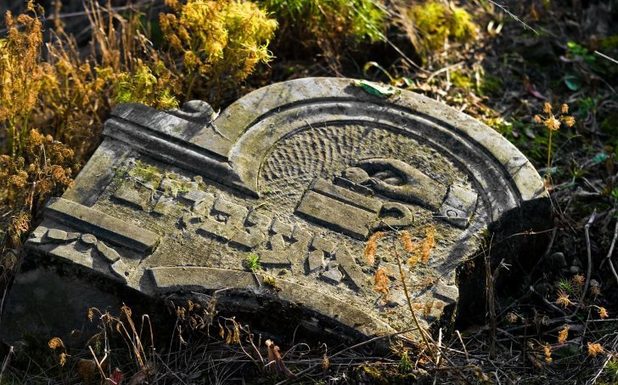
“Residents of Aneyoshi, Japan, heeded the warnings of their ancestors. They obeyed directions and wisdom found on a local stone monument: ‘Do not build any homes below this point,’ it reads. ‘High dwellings are the peace and harmony of our descendants. Remember the calamity of the great tsunamis.’ When the 2011 Tōhoku earthquake and tsunami devastated Japan, this village.”

Source: 99percentinvisible.org

Beachfront property is beautiful real estate with enormous economic potential, but when it is in an area with a history of tsunamis, the impending threat of an earthquake looms over the coastal lowlands and limits the land use plans for the region. 


Tags: physical, tsunami, water, tectonics, disasters.

Japan forces a harsh choice on children of migrant families

Born in Japan, Gursewak Singh considers himself Japanese. The government doesn’t. But it offers children like him a chance to stay – if their parents leave.


Gursewak’s parents, who are Sikhs, fled to Japan from India in the 1990s. For several years, they lived without visas under the radar of the authorities until they were put on a status known as “provisional release” in 2001. It means they can stay in Japan as long as their asylum application is under review.  While there were almost 14,000 asylum cases under review at the end of 2015, Japan accepted only 27 refugees last year. The year before that, the number was 11.

The low acceptance rate stands in stark contrast to Europe, which has seen hundreds of thousands of refugees arrive from countries such as Iraq, Syria and Eritrea. In the first half of the year, European countries ruled on 495,000 asylum applications, approving more than 293,000.


Tags: culture, Sikhdeclining populationpopulationmigrationrefugees, JapanEast Asia,             .

Source: www.reuters.com

100 Great Teaching Images

“Nature and humankind are both great artists, and when they join forces, amazing masterpieces can be produced. Today Bright Side has collected for you works in which the combined efforts of mother nature and photographic artists have captured magic moments showing the wondrous diversity of modern life and the natural world. Pictured above is the Westerdok District in Amsterdam.”


Tags: images, artlandscape, worldwide.

Source: brightside.me

Why Eating Chinese Food on Christmas Is a Sacred Tradition for American Jews

“[Jews] will not go to Mile End on Christmas because [they] happened to feel like fried rice; they will go to proudly proclaim their Jewish-American identity. They may or may not enjoy General Tso’s Chicken, but if they are eating it on Christmas, their prime motivation is not the general’s sweet, spicy deliciousness, but rather the knowledge that they are doing something that in some adapted way reinforces their Jewishness.”


Tags: Judaism, culturecultural norms, food, seasonal.

Source: www.tabletmag.com

Election Results in the Third Dimension

“By extending each region into the 3rd dimension, it’s possible to show the relative importance of each region while retaining the map’s shape, keeping the areas recognizable. In this case, the height of each county corresponds to its total number of votes, though it could just as easily show population or share of the electoral vote. For a closer look, see the full screen interactive version.”

Source: metrocosm.com

We’ve all probably seen enough maps of the 2016 presidential election and are familiar with the basic patterns (although my favorite is still the interactive that let’s you redraw the states to alter the election).  This 3D map certainly though is an innovative way to portray some of the disparities in the U.S. electorate.


Tags: electoral, politicaldensity, mapping.

Blog at WordPress.com.

Up ↑