Tags: environment, biogeography.
Source: www.youtube.com
Video and Photographs of the event. All media is from the internet and not my own. I compiled all media from the internet and edited them together to tell the story of the deadliest attack on America.
Source: www.youtube.com
The compilation above was created by a teacher who realized that now none of his students were alive to remember how emotional it was for people to watch the horrific news unfold. Additionally, this video of how Canadians helped the U.S. paired with this lesson plan from the Choices Program will help students explore the human dimension of the September 11 attacks as will this lesson from Teaching History. For a geospatial perspective on 9/11, this page from the Library of Congress, hosted by the Geography and Map Division is a visually rich resources (aerial photography, thermal imagery, LiDAR, etc.) that show the extent of the damage and the physical change to the region that the terrorist attacks brought. The images from that day are a part of American memory and change how the event is remembered and memorialized in public spaces (if you want a touching story of heroism, the Red Bandana is moving). .
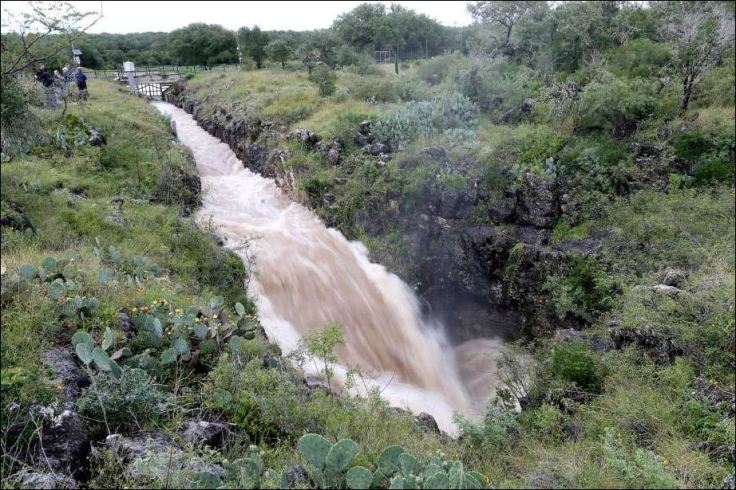
At this sinkhole, about 500 cubic feet of water per second is disappearing into the earth, the equivalent of an Olympic-sized swimming pool every three minutes, according to an engineer with the Edwards Aquifer Authority. For as much water reaches the aquifer at this spot, far more infiltrates through porous rock across South-central Texas.
Source: www.mysanantonio.com
Not all water runoff goes to rivers, lakes, and oceans. Some water percolates into soils that can absorb water (aquifers) but there are some soils such as clay that can’t absorb water (aquicludes or aquitards). In this dramatic example (see video), the water is not absorbed by the resistant rock, flows through a sinkhole to recharge the aquifer below.
Tags: physical, geomorphology, water, erosion.
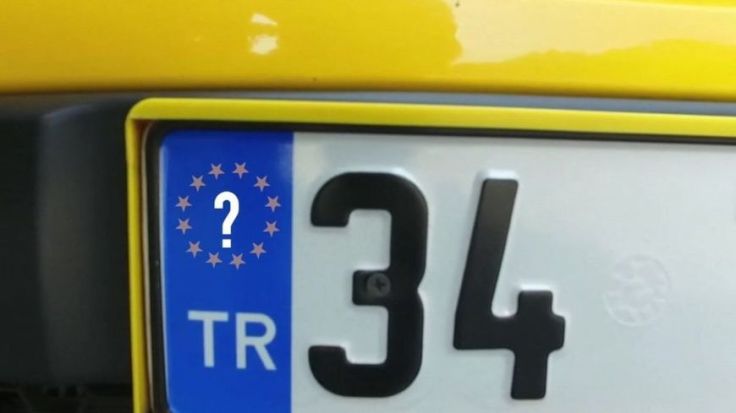
“As the UK prepares for what looks like a slow and painful divorce from the European Union, the people of Turkey are wondering how their relationship with Europe will now develop.
The government in Ankara has been seeking to strengthen its case to join the EU, but as Europe grapples with Brexit – is the Turkey’s membership closer or further away?”
Source: www.bbc.com
This video show some of the recent shifts in the always important, often rocky Turkey/EU relationship. Economically, Turkey has consistently sought greater ties with Europe for the past few decades and Europe keeps Turkey at arms length. Turkey has applied to join the EU, but that is not going to happen without some massive social restructuring that would take years.
Tags: Europe, Turkey, supranationalism, economic, refugees, political, video.
“There’s a flip side to everything,” the saying goes, and in 2 minutes, Derek Sivers shows this is true in a few ways you might not expect.
Source: www.youtube.com
Death Valley,California – Giant boulders in the desert look as though their moving all on their own! But could weird weather be behind these roving rocks
Source: www.youtube.com
Since the video above was created, the mystery has been solved. On very rare occasions, when it rains in the region, water will accumulate in the playa (discovermagazine.com). If the wind is powerful and consistent enough, the wind will push the panels of ice against these rocks and over time, the ice floes will push these rocks, leaving behind distinctive trails (latimes.com). This perfect combination of water, wind, ice and heat creates a remarkable signature on the landscape (livescience.com). The video in this article (weather.com) nicely explains how the non-aerodynamic rocks of Death Valley’s Racetrack Playa move, leaving behind their trail in the hot desert. Numerous attempts using GPS receivers (NatGeo.com) and good ol’ fashioned observations have been made, but observing ice in Death Valley is so rare that no one had ever seen it until now (phys.org).
Tags: physical, geomorphology, landforms, desert, landscape.
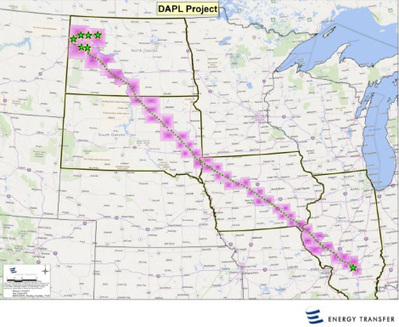
Conflict between Native American protesters and private security personnel over construction of the Dakota Access Pipeline has turned violent. What is the Dakota Access Pipeline?
Tags: industry, conflict, economic, energy, resources, environment, indigenous, ecology.
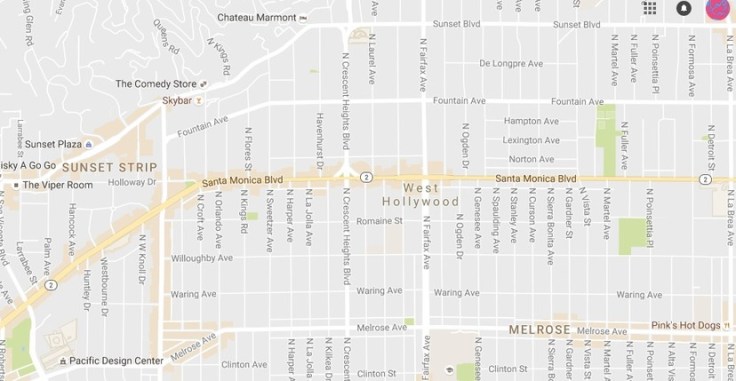
“Google rolled out its new Maps design…from a navigational tool to a commercial interface and offers the clearest proof yet that the geographic web—despite its aspirations to universality—is a deeply subjective entity.”
Source: www.slate.com
Google Maps was updated over the summer, and the updates don’t make them more impartial, but that isn’t a bad thing. Google Maps now highlight ‘Areas of interest,’ which are created with algorithms designed to reveal the “highest concentration of restaurants, bars, and shops.” The algorithms aren’t ‘objective,’ but are fine-tuned by human engineers to reflect what they consider ‘Areas of Interests’ should look like. Maps are never as objective as they appear to be, and that can often be a great thing.
Tags: google, mapping, geospatial, cartography, visualization.
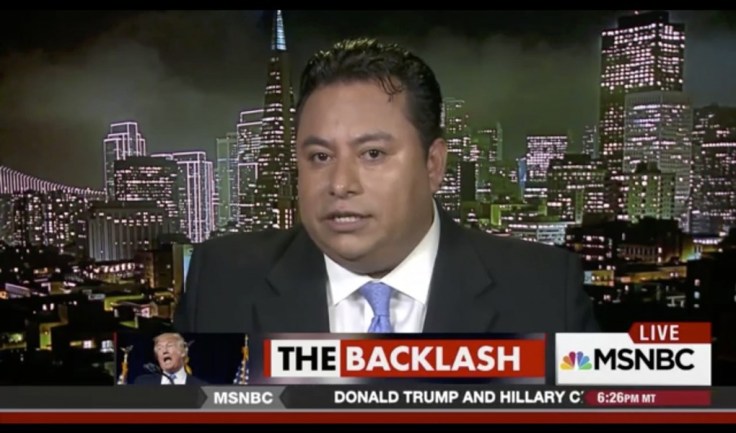
Marco Gutierrez, founder of Latinos for Trump, explains his view of immigration and assimilation to the US.
Source: www.pri.org
I’m NOT trying to use this platform to advance any partisan political agenda, but I think this brings up some very interesting narratives that are used when discussing migration and culture, which becomes a political ‘hot-button’ topic. There is often cultural pressure on the migrant to assimilate into the host culture (or at least acculturate to a certain degree). This larger national discussion centers on whether cultural assimilation should be expected of migrants and how much cultural diffusion the host culture will be receiving from the migrants.
Questions to Ponder: How are cultural norms placed on migrants? What are some recent examples of migrants not wanting to assimilate that have led to political tension?
Tags: culture, cultural norms, migration, political.



 GEOGRAPHY EDUCATION