Search

GEOGRAPHY EDUCATION

Supporting geography educators everywhere with current digital resources.

Introducing ISIS

“The invasion of Iraq was supposed to turn the country into a democracy that posed no threat to the United States, or the rest of the world. Thirteen years later, Iraq has collapsed into three warring states. A third of the country is controlled by ISIS, who have also taken huge amounts of territory in Syria. VICE correspondent Ben Anderson gains exclusive access to the three front lines in Iraq, where Sunni, Shiite and Kurdish forces are fighting for their lives. Anderson visits with the Russian military forces in Syria, meets captured ISIS fighters in Kurdistan, and interviews US policymakers about how the situation in Iraq spun out of control.”

Source: www.youtube.com

Many young students are especially baffled at how a terrorist organization can seize control of large chunks of territory.  If you are looking for a good video introduction that explains how and why ISIS was able to gain power and than gain and maintain territory, this is it (it’s classroom safe despite the source). 


Tags: Syria, war, conflict, political, geopolitics, Iraq, devolution, terrorism, ISISMiddle East.

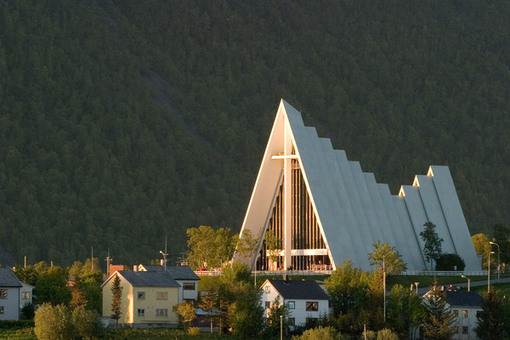
Thousands Leave Norwegian Church as Online Registration Backfires

“15,035 people have ‘unsubscribed’ from the church since Monday.”

Source: www.atlasobscura.com

Europe, the most developed region in the world, is also the most secular region today.  During colonial times, Europeans were spreading Christianity across the globe, but now Christianity is becoming more a part of Europe’s historical landscape.  Secularization can be seen as either the cause or the effect of several other European trends such as declining fertility rates.  Today Europeans have stopped attending mass en masse, and many cathedrals sit empty.  This example for Norway has an amusing twist, but it is rooted in a powerful cultural shift. 


Questions to Ponder: What are other signs of secularization on the cultural landscape?  What would you do with a former sacred site (and an architectural treasure) that is can’t be maintained?


Tags: culturepopular culture, religion, ChristianityNorway, Europe.

Why China and India face a marriage crisis

“What has lead to this marriage squeeze?  First, millions women have gone ‘missing’. A generation ago, a preference for sons and the greater availability of prenatal screening meant first Chinese couples, then Indian ones, started aborting female fetuses and only giving birth to boys. At its extreme, in parts of Asia, more than 120 boys were being born for every 100 girls. Now, the generation with distorted sex ratios at birth is reaching marriageable age. The result is that single men far outnumber women.”


Tags: gender, ChinaIndia, culture, population.

Source: www.youtube.com

DON’T PANIC — Hans Rosling showing the facts about population

Source: www.youtube.com

Over the years I’ve shared many video clips featuring Hans Rosling and the Gapminder resources (click here for archived links).  For many this is going to but a rehash of previous videos, but this in the 1-hour long version of global population data (2016 Population Reference Bureau).  Clearly he is a proponent of lowering fertility rates–here he paints the optimistic view that population growth growth and development can be balanced in a future that is more ecologically and economically sustainable.  


Tagspopulation, statistics, media, models, demographic transition modeldevelopment.

Most Young Americans Can’t Pass a Test on Global Affairs—Can You?

A new survey finds that even college-educated Americans have a lot to learn about the world around them. Take our quizzes to see how much you know.

Source: news.nationalgeographic.com

In a joint initiative from National Geographic and the Council on Foreign Relations, they polled college-educated Americans and (not surprisingly) they found that their global literacy was lacking (see the full report here).  This is why geography courses are needed in all general education programs–you can’t be a competent world citizen without understanding the basic geography and global affairs. 


Tagsgeography education, unit 1 GeoPrinciples, National Geographic.

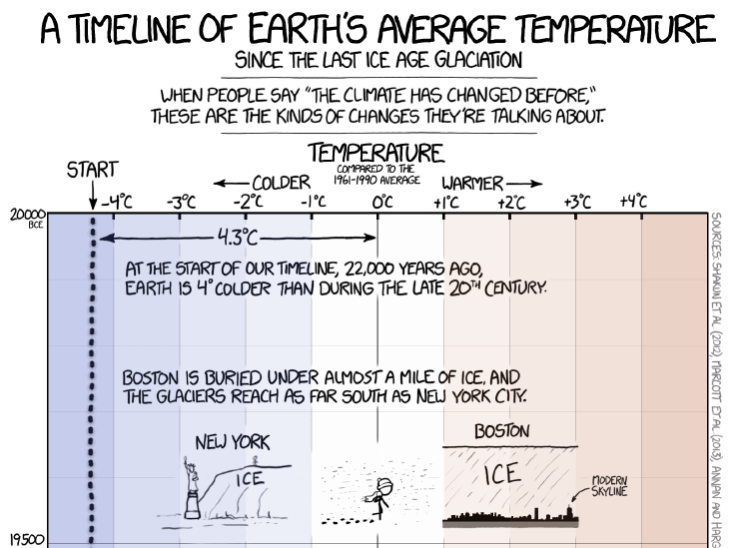
Earth Temperature Timeline

Source: xkcd.com

This infographic is a fascinating way to put into context the very recent trend of rising global temperatures.  This is worth scrolling all the way through to make the ending all the more meaningful.  Oh yeah, and August 2016 was the hottest month in recorded history…only 11 months of record-breaking temperatures.  


TagsXKCD, artinfographic, physicalhistorical, environment, climate change.

Environmental Possibilism Vs. Environmental Determinism

“Environmental possibilism and determinism are theories, put forth in order to comprehend and understand the role played by the physical environmental conditions in the emergence and progress of any human culture or society in a particular location.”

Source: www.buzzle.com

This article outlines differences between environmental determinism and environmental possibilism.  Authors such as Robert Kaplan (Revenge of Geography—see a review here) and Jared Diamond (Guns, Germs, and Steel) have been accused of being too environmentally deterministic.  Read Jared Diamond’s retort to his critics here. 


Questions to Ponder: In what ways does the environment shape human culture(s)?  Why is Jared Diamond critical of skeptics who use the phrase ‘environmental determinism?’Why might some of Kaplan’s ideas as well as the ideas of classical geopolitics be considered ‘environmental determinism?’ Can the role of physical geography be overstated in culture, economics or politics? Give three examples when it might be inappropriate. 


Tags: environment, religion, cultureunit 1 GeoPrinciples.

Creamed, Canned And Frozen: How The Great Depression Revamped U.S. Diets

During the Depression, cheap, nutritious and filling food was prioritized — often at the expense of taste. Jane Ziegelman and Andy Coe, authors of A Square Meal, discuss food trends of the time.

Source: www.npr.org

Peanut butter and school lunches became fixtures of American culture during the Depression.  On the flip side, our modern preference for freshness is a reaction against the Depression’s obsession to find ways to preserve food for longer amounts of time.  


Tags: foodeconomicfood distribution, historical, podcast.

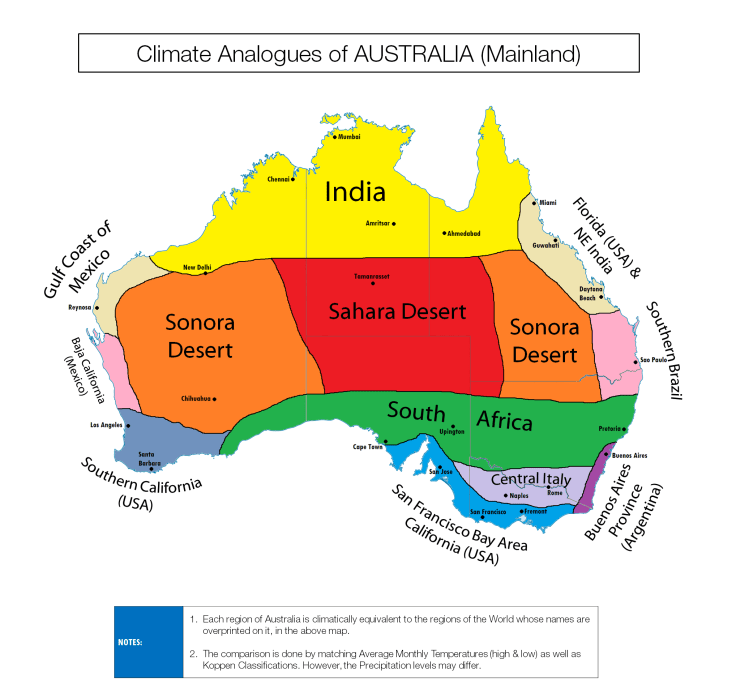
Climate Comparison Maps

Triton1982 makes maps by comparing each of the city’s highest and lowest average temperatures against the Koppen classification system.”

Source: www.triplem.com.au

Many maps are shared on Reddit, and this series of maps help make some far off places easier to relate to.  I think these cross-regional comparisons can also help students also see that countries can have a great degree of internal variety.  


Tags: Australia, Oceania, mapping, visualization 

Blog at WordPress.com.

Up ↑