Search

GEOGRAPHY EDUCATION

Supporting geography educators everywhere with current digital resources.

Mumbai or Bombay? A British newspaper reverts to a colonial-era name.

The Independent’s concerns over Hindu nationalism led to a change in policy.


The city has been officially known as Mumbai since 1995 when it was renamed by the far-right regional party Shiv Sena, an ally of the Bharatiya Janata Party (BJP), which currently holds national office in India. Shiv Sena advocates the use of the Marathi language, which is dominant in the state of Maharashtra, of which Mumbai is the capital. Marathi speakers have long referred to the city as Mumbai, after the Hindu goddess Mumbadevi, the city’s patron deity.

Shiv Sena had argued that the previous name, Bombay, was an unwanted relic of British colonial rule in India. That name is believed to be an Anglicized version of the city’s name from when it was occupied by the Portuguese — “Bom Bahia,” which means “good bay.” Both Bombay and Mumbai are now used interchangeably by locals during casual conversation.


Tags: culture, India, South Asiacolonialism, placeregions, language, toponyms.

Source: www.washingtonpost.com

Why most 8th graders are not good at geography

Some experts argue overemphasis on reading and math tests is to blame for narrowing of content curriculum, reducing motivation to learn and breadth of knowledge.

Source: www.deseretnews.com

The U.S. government report on 8th grade geography is not a ‘pick-me-up’ but a sobering reminder of the task that lays before us.  This article quotes a few alliance coordinators on the current situation and how to change it. 


TagseducationK12geography education.

Changing How We Think About Africa

Do you speak African? Well, neither do the 1 billion people on the continent.Africa is home to 54 different nations, more than 2,000 languages and four of the world’s 10 fastest growing economies, but is often painted with a sweeping stroke of doom and gloom. In this week’s Reality Check, Mehdi Hasan exposes popular misconceptions about the African continent.

Source: www.youtube.com

This short video is full of with examples and statistics that show that many of the ‘doom and gloom’ perspectives and ways of thinking about Africa are outdated (at best).  Here are some good facts to update how we talk about Africa. 


Tags: Africa, perspective.

The Most Aussie Interview Ever

“The 2 Aussie legends that prevented a fast food shop robbery get interviewed!”

Source: www.youtube.com

While this is hardly common in Australia, and most people don’t speak this way, it only makes sense if you know Australian culture well.  There are so many jokes, phrases, and words that don’t make sense if you don’t understand the cultural context.  Just to help you start to make sense of this: busted pluggers = broken flip-flops.   


TagsAustralia, language, placeculture, Oceania.

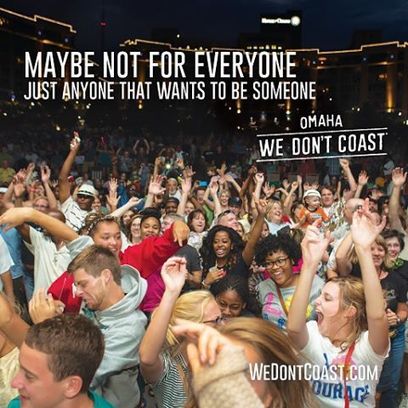
We Don’t Coast

A celebration of who we are, where we are and how we operate. It belongs to the 30+ communities who make Omaha—Greater Omaha.

Source: wedontcoast.com

This website is a great example a city selling it’s regional distinctiveness to create a sense of civic pride, promote tourism, and attract more businesses.  Often Omaha’s distance for the coasts is portrayed as a major weakness, but in a clever play on words, the weakness is acknowledged and reformed into a strength.   


Questions to Ponder: How would you promote your own city/region/state?  What would be highlighted on a similar page for your city?  What slogan would you use?


Tagsplacetourism, urban, culture, economic

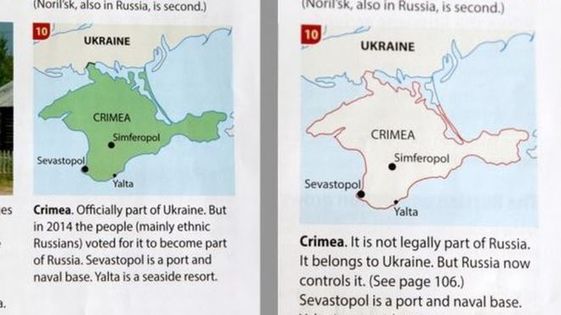
Geography textbook changed after Crimea row

A geography textbook that prompted a complaint from the Ukrainian embassy for showing Crimea as part of Russia is changed.

Source: www.bbc.com

How we describe and categorize geopolitical shifts matter, and can ocassionally ruffle some feathers.  More important than the ruffled feathers is the fact that how we present the issues helps to shape students’ perspectives.  In a somewhat related article, the Russian annexation of Crimea has magnified internal divisions in Kazakhstan.  


Tags: UkraineRussia, geopoliticspolitical, Kazakhstan.

Why America Needs a Slavery Museum

“The Whitney Plantation near Wallace, Louisiana, is the first and only U.S. museum and memorial to slavery. While other museums may include slavery in their exhibits, the Whitney Plantation is the first of its kind to focus primarily on the institution. John Cummings, a 78-year-old white southerner, has spent 16 years and more than $8 million of his own fortune to build the project, which opened in December of last year.

Cummings, a successful trial attorney, developed the museum with the help of his full-time director of research, Ibrahima Seck. The duo hope to educate people on the realities of slavery in its time and its impact in the United States today. ‘The history of this country is rooted in slavery,’ says Seck. ‘If you don’t understand the source of the problem, how can you solve it?'”


Tags: raceconflictracism, historicalthe Southlandscape.

Source: www.youtube.com

Additionally, here is a list of 13 honest books about slavery that young people should actually read.  

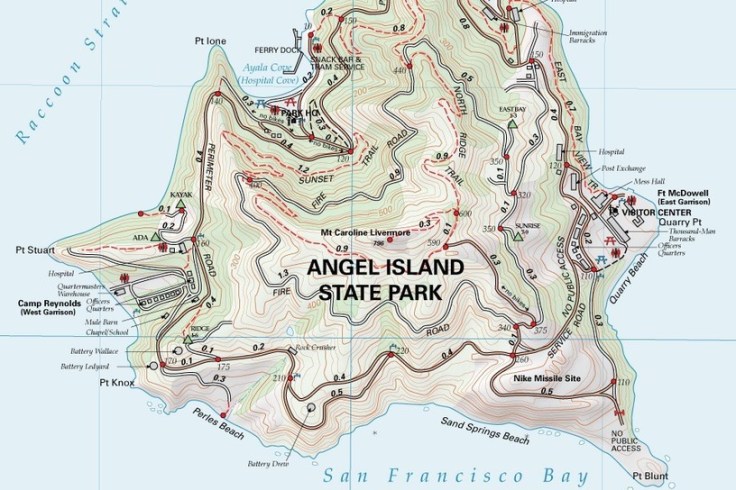
How a Modern-Day Mapmaker Does His Job

Tom Harrison, a Californian cartographer, explains what goes into a good map and why making one can take nearly two years.


Tags: mapping, cartography, geospatial.

Source: www.theatlantic.com

Jordan’s Geographic Challenge

“Stratfor explains Jordan’s geographic challenge: governing its diverse population and managing its limited natural resources.” For more of these videos, visit http://arcg.is/1IeK3dT

Source: www.youtube.com

Stratfor produced a new video in their “Geographic Challenge” series.  I’ve updated my map which spatially indexes 70+ of their videos that are especially relevant to geography teachers.  These videos are great starting points for students that are researching a particular country.


Tagsvideogeography education,geopoliticspolitical.

Blog at WordPress.com.

Up ↑