Search

GEOGRAPHY EDUCATION

Supporting geography educators everywhere with current digital resources.

Tag

conflict

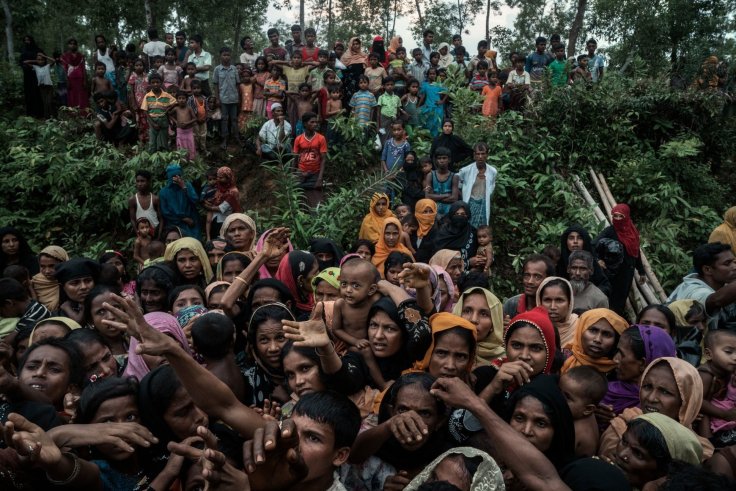
Left For Dead: Myanmar’s Muslim Minority

In recent years, democratic reforms have swept through Myanmar, a country that for decades was ruled by a military junta. As the reforms took hold, however, things were growing progressively worse for the Rohingya, a heavily persecuted ethnic Muslim minority concentrated in the country’s western state of Rakhine. The 2012 gang rape and murder of a Buddhist woman by three Muslim men ignited violent riots in which hundreds were killed as Rakhine Buddhists and Rohingya attacked each other. In the following months, tens of thousands of Rohingya were rounded up and forced to live in squalid camps; Human Rights Watch deemed the attacks crimes against humanity that amounted to ethnic cleansing of the Rohingya. Thousands of Rohingya have since attempted to leave the country, fueling the region’s intricate and brutal human trafficking network.


Tags: Rohingyagenocide, migration, politicalconflict, refugeesBurma, Southeast Asia.

Source: www.youtube.com
Teaching About the Rohingya Crisis in Myanmar

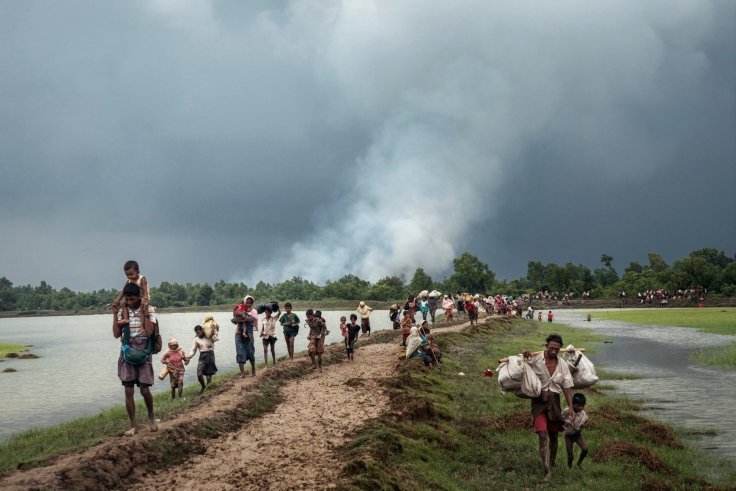
“Why are hundreds of thousands of Rohingya refugees fleeing Myanmar? Who are the Rohingya and why are they being persecuted? What responsibility does the world have to end what the United Nations is calling ‘ethnic cleansing’ and many are labeling ‘genocide’? In this lesson, students will first learn about the crisis unfolding in Myanmar using Times reporting, videos, podcasts and photography. Then, we suggest a variety of activities for going deeper, such as tackling universal questions about national identity and minority rights, considering the responsibility of the world community, and going inside the squalid refugee camps sprawling across the border in Bangladesh.”

Source: www.nytimes.com

This issue is not as firmly fixed in our minds as it should be.  So much of our media’s attention is on less substantial issues, that when they compile resources for teachers on a subject like this, it deserves mentioning.  Even if you have already read your 10 free monthly articles from the NY Times, you can still watch the video embedded in the lesson.  Attached is a worksheet that I will be using in my classes (feel free to adapt and use).

Tags: Rohingyagenocide, migration, politicalconflict, refugeesBurma, Southeast Asia.


The Rohingya in Myanmar: How Years of Strife Grew Into a Crisis

Life has long been fraught for a Muslim minority in mainly Buddhist Myanmar, but the recent “ethnic cleansing” has sent Rohingya fleeing en masse.

Source: www.nytimes.com

Many students have asked the question “Who are the Rohingya?” The Muslim minority group, concentrated near the Bangladeshi has a long history of marginalization. Its members lack full citizenship in Myanmar (Burma), and many in Myanmar deny that the Rohingya are a native ethnic group, claiming that they are recent Bengali immigrants. Now, fierce clashes between security forces and Rohingya militants left hundreds dead and entire villages torched to the ground. Hundreds of thousands of Rohingya have fled over the border into Bangladesh.


Tags: migration, politicalconflict, refugeesBurma, Southeast Asia.

A History Of Sudan’s Civil Wars & Conflict

This is the story of how Sudan became two nations, and of an ongoing conflict in the Nuba Mountains that has changed the lives of millions of people. In parts 2–5 of our VR series, We Who Remain, follow the lives of four people living through the war: http://ajplus.co/nuba360. Produced in partnership with Nuba Reports and Emblematic Group.

Source: www.youtube.com

The first video in this 5-part video is a bit slow, but provides the historical and geographic context needed to understand the developmental, ethnic, and political issues that remain so difficult to resolve.  The Subsequent four videos provide a more human, personal glimpse into facets of the conflict. 


Tags: Sudan, politicalethnicity, Africa, war.

Syria’s war: Who is fighting and why [Updated]

“After four-plus years of fighting, Syria’s war has killed at least hundreds of thousands of people and displaced millions. And, though it started as a civil war, it’s become much more than that. It’s a proxy war that has divided much of the Middle East, and has drawn in both Russia and the United States. To understand how Syria got to this place, it helps to start at the beginning and watch it unfold.”

Source: www.youtube.com

Over a year ago I posted a previous version of this video highlighting the complexities behind the Syrian war.  Much has happened since then and this updated version adds more detail and includes a very helpful timeline to show how more internal and external forces became involved in the fighting.  This is an incredibly complicated geopolitical situation because of all the regional and international players involved.  


TagsSyria, war, conflict, political, geopolitics.

Why China is building islands in the South China Sea

“China is building islands in the South China sea and its causing disputes among the other nations in the region; Malaysia, the Philippines, Brunei, Vietnam, and Indonesia. China claims they aren’t military bases, but their actions say otherwise. The US has many allies in the region and uses its massive Navy to patrol international waters, keeping shipping lanes open for trade.”

Source: www.youtube.com

Last year this was an intriguing story but now the geopolitical drama is growing as more countries are literally building islands out of reef outcroppings to strengthen their claims to the South China Sea.  For some without geographic expertise, this might some baffling.  For those that understand Exclusive Economic Zones, maritime claims, and expanding geopolitical aspirations, this makes perfect sense. 


Tags: borders, political, conflict, waterChina, East Asia.

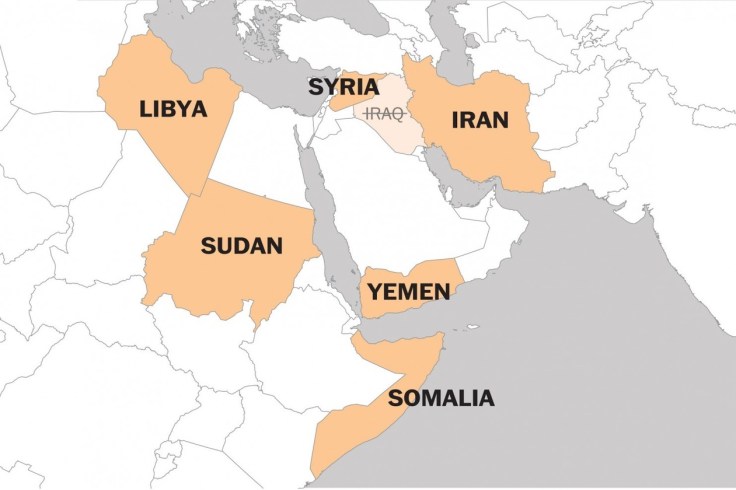
Revised executive order bans travelers from six Muslim-majority countries from getting new visas

The president is expected to sign his new, more limited rule Monday.

Source: www.washingtonpost.com

It’s hard to discuss this topic in detail without a partisan political views.  Underneath all of those opinions are geographic perspective about how the world works as well as geographical imaginations on how things should operate. 


Tags: migrationrefugees, war, political, terrorism, ISISMiddle East, conflict.

An Old King for Congo

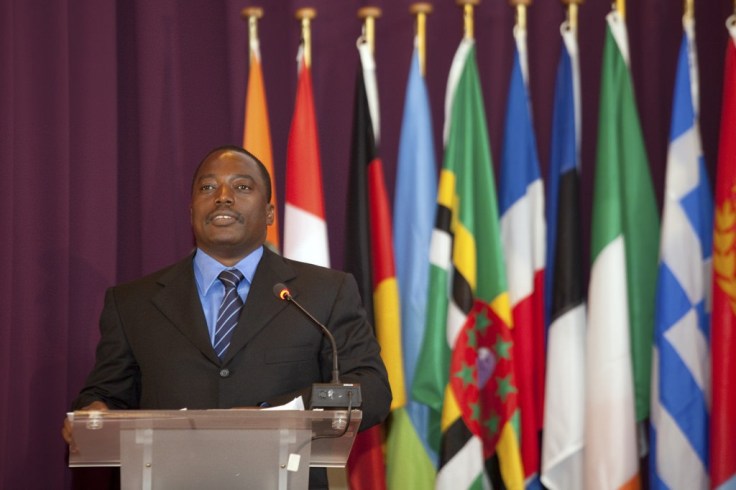
“On December 20, the Democratic Republic of Congo, which had been a democracy for the past decade (flawed though it was), lost that distinction. The backsliding of democracy in the country was preventable; it unfolded slowly and under the watch of the international community. DRC President Joseph Kabila, faced with the end of his constitutional mandate, had two options: call elections or resort to repression to stay in power. He chose the latter. Kabila’s ultimate decision is not that surprising. He faces deep levels of unpopularity. A Congo Research Group poll of 7,545 Congolese showed that he would have only received 7.8 percent of the vote if elections had been held this year. Furthermore, the presidency guarantees his safety. As Brian Klaas of the London School of Economics has noted, 43 percent of African leaders have been jailed, exiled, or killed after losing power since 1960.”


Tags: DR Congo, political, conflict, Africa.

Source: www.foreignaffairs.com

Israeli settlements, explained

Both sides claim the West Bank as legitimately belonging to them. Over time, and especially as Israeli politics has shifted rightward, the settler movement has become an institutionalized part of Israeli society. Support comes in the form of building permits, public investment, and even incentives for Israelis to move into the West Bank. While peace talks remain frozen, the settlements continue to grow, making any possibility of a Palestinian state in the West Bank faint.”

Source: www.youtube.com

These settlements are considered by most of the international community to be illegal, but since the U.S. has always vetoed sanctions in the UN security council, Israel had never been formally reprimanded.  Just last week, a UN resolution that passed 14-0 (with only the U.S. abstaining) says that Israel’s settlements on Palestinian territory occupied since 1967, including East Jerusalem, have “no legal validity” and demands a halt to “all Israeli settlement activities,” saying this “is essential for salvaging the two-state solution.” 

Questions to Ponder: What is the two-state solution?  Who favors this plan?  What are some reasons why the two-state solution is so difficult to achieve?

Tags: Israel, Palestine, conflict, borders, territoriality, political, Middle East.

Blog at WordPress.com.

Up ↑