Search

GEOGRAPHY EDUCATION

Supporting geography educators everywhere with current digital resources.

Tag

East Asia

Homeland of tea

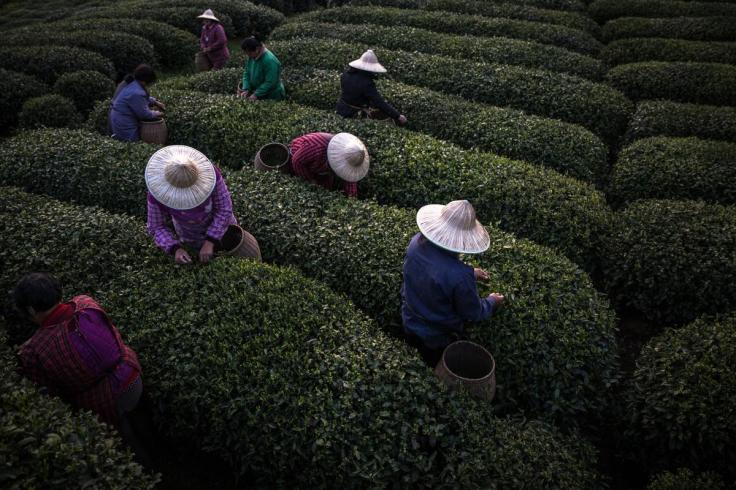
“China is the world’s biggest tea producer, selling many varieties of tea leaves such as green tea, black tea, oolong tea, white tea and yellow tea. Different regions are famous for growing different types of tea. Hangzhou is famous for producing a type of green tea called Longjing or the Dragon Well tea. Tea tastes also vary regionally. Drinkers in Beijing tend to prefer jasmine tea while in Shanghai prefer green tea. Processing raw tea leaves for consumption is a time and labor-intensive activity and still done by hand in many areas in China. The Chinese tea industry employs around 80 million people as farmers, pickers and sales people. Tea pickers tend to be seasonal workers who migrate from all parts of the country during harvest time. In 2016, China produced 2.43 million tons of tea.”

Source: www.bostonglobe.com

Tea, the world’s most popular beverage, doesn’t just magically appear on kitchen tables–it’s production and consumption is shaped by geographic forces, cultural preferences, and regional variations.  These 21 images show the cultural, region, and environmental, economic, and agricultural context of tea.  


Tagsimages, foodChina, East Asia, economic, labor, food production, agriculture.

‘This is death to the family’: Japan’s fertility crisis is creating economic and social woes never seen before

Shrinking GDP and a falling population are poised to turn Japan into what economists call a “demographic time bomb,” and other countries could be next.

Source: www.businessinsider.com

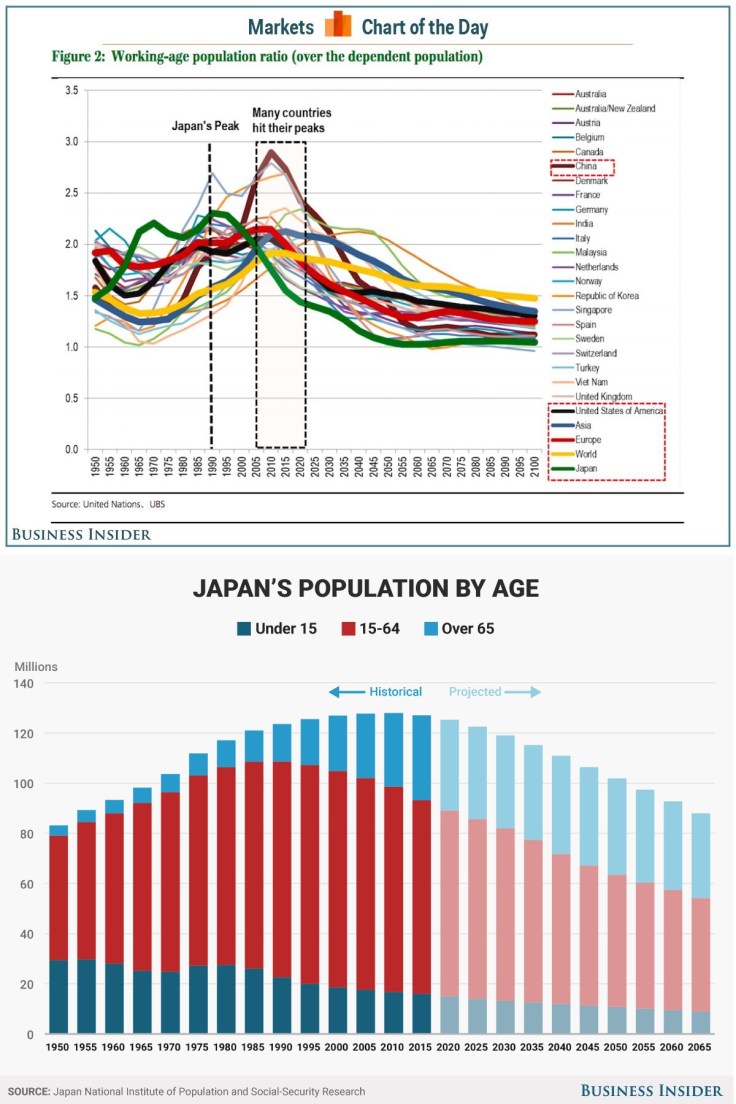
The article headline is quite click-baity, but there is some real substance to this article.  The graphs are especially useful to teach concepts such as population momentum and the age-dependency ratio. These were the key parts of the article that caught my eye:

  • An aging population will mean higher costs for the government, a shortage of pension and social security-type funds, a shortage of people to care for the very aged, slow economic growth, and a shortage of young workers.
  • Following feminism’s slow build in Japan since the 1970s, today’s workers strive for equality between the sexes, something Japan’s pyramid-style corporate structure just isn’t built for. That’s because institutional knowledge is viewed as a big deal in Japan.
  • The elderly now make up 27% of Japan’s population. In the US, the rate is only 15%. Experts predict the ratio in Japan could rise to 40% by 2050. With that comes rising social-security costs, which the shrinking younger generations are expected to bear.
  • To make up for an aging population and aversion toward immigrant work, Japan’s tech sector has stepped up its efforts in robotics and artificial intelligence.

Tags: culture, genderlabor, populationmigration, JapanEast Asia.

Why China is building islands in the South China Sea

“China is building islands in the South China sea and its causing disputes among the other nations in the region; Malaysia, the Philippines, Brunei, Vietnam, and Indonesia. China claims they aren’t military bases, but their actions say otherwise. The US has many allies in the region and uses its massive Navy to patrol international waters, keeping shipping lanes open for trade.”

Source: www.youtube.com

Last year this was an intriguing story but now the geopolitical drama is growing as more countries are literally building islands out of reef outcroppings to strengthen their claims to the South China Sea.  For some without geographic expertise, this might some baffling.  For those that understand Exclusive Economic Zones, maritime claims, and expanding geopolitical aspirations, this makes perfect sense. 


Tags: borders, political, conflict, waterChina, East Asia.

Japan forces a harsh choice on children of migrant families

Born in Japan, Gursewak Singh considers himself Japanese. The government doesn’t. But it offers children like him a chance to stay – if their parents leave.


Gursewak’s parents, who are Sikhs, fled to Japan from India in the 1990s. For several years, they lived without visas under the radar of the authorities until they were put on a status known as “provisional release” in 2001. It means they can stay in Japan as long as their asylum application is under review.  While there were almost 14,000 asylum cases under review at the end of 2015, Japan accepted only 27 refugees last year. The year before that, the number was 11.

The low acceptance rate stands in stark contrast to Europe, which has seen hundreds of thousands of refugees arrive from countries such as Iraq, Syria and Eritrea. In the first half of the year, European countries ruled on 495,000 asylum applications, approving more than 293,000.


Tags: culture, Sikhdeclining populationpopulationmigrationrefugees, JapanEast Asia,             .

Source: www.reuters.com

China installs weapons on contested South China Sea islands

New satellite imagery indicates that China has installed weapon systems on all seven artificial islands it has built in the contested waters of the South China Sea, a move that’s likely alarm the country’s neighbors.

UPDATE: After this news, the Pentagon says a Chinese warship has seized a US Navy underwater drone collecting unclassified data in international waters in the South China Sea.

Tags: borders, political, conflict, China, remote sensing, East Asia.

Source: www.cnn.com

The unbearable sadness of being Taiwan, a liberal island other democracies refuse to talk to

“An island, a territory, a self-governing entity, a renegade province, a breakaway part of China, the place formerly known as Formosa—call Taiwan any of those things, but never a country, a state, or a nation. The simple fact that it took a phone call between US president-elect Donald Trump and Taiwanese president Tsai Ing-wen to draw attention to one of Asia’s most vibrant democracies highlights the humiliating plight of Taiwan in the international arena. The irony that the US and other democratic countries cannot openly recognize Taiwan’s achievements for fear of incurring Beijing’s wrath has not been lost on many observers, who nevertheless fear that a cavalier move by Trump to upend diplomatic protocol in such a way could ultimately end badly for little Taiwan.”


Tags: Taiwan, political, states, borders, geopoliticsEast Asia.

Source: qz.com

The great Korean bat flip mystery

MLB’s code is clear: Flip your bat and you’ll pay. But in South Korea, flips are an art. How does this alternate world exist? And what does it say about us? Writer Mina Kimes trekked across South Korea with illustrator Mickey Duzyj to unravel the mystery.

Source: www.espn.com

There are unwritten rules in Major League Baseball, or in geographic terms, there are are cultural norms that are informally enforced to maintain homogeneity and to prevent  cultural drift.  Jose Bautista’s repuation as a villain has much to do with his rejection of a key MLB unwritten rule–Never ‘show up’ the pitcher by flipping the bat.  In South Korea, typically a country much more associated with cultural traditions of honor and respect than the United States, bat flipping is much more accepted and common (diffusion plays a role in the story–baseball came to South Korea via Japan).  This is an interesting story about South Korean baseball’s cultural norms that might intrigue some sports fans. 


Tags: sport, popular culturediffusion, culturecultural norms, South Korea, East Asia.

Getting Japanese Citizenship

“To become a Japanese citizen, a foreigner must display ‘good conduct’, among other things. The rules do not specify what that means, and make no mention of living wafu (Japanese-style). But for one candidate, at least, it involved officials looking in his fridge and inspecting his children’s toys to see if he was Japanese enough (he was). Bureaucratic discretion is the main reason why it is hard to get Japanese nationality. The ministry of justice, which handles the process, says officials may visit applicants’ homes and talk to their neighbors.”

Source: www.economist.com

Japan has a remarkably homogeneous population, in large part because they have very tight immigration laws (here is a more extended list of the requirements to obtain a Japanese citizenship).


Questions to Ponder: How is the notion of Japanese citizenship different from American citizenship?  As Japan’s population continues to decline, how might that change Japan’s migration/citizenship policies?   


Tags: JapanEast Asia, place, perspective, cultural norms, culture.

The rise of the Asian megacity (and why ‘metacities’ are the next big thing)

“Asia’s rapid urbanisation is changing the very shape and nature of what we think of as a city.  It’s not just the rapid increase in their numbers or their sheer size that makes these megacities fascinating. They look, feel and behave differently, too.”

Source: www.scmp.com

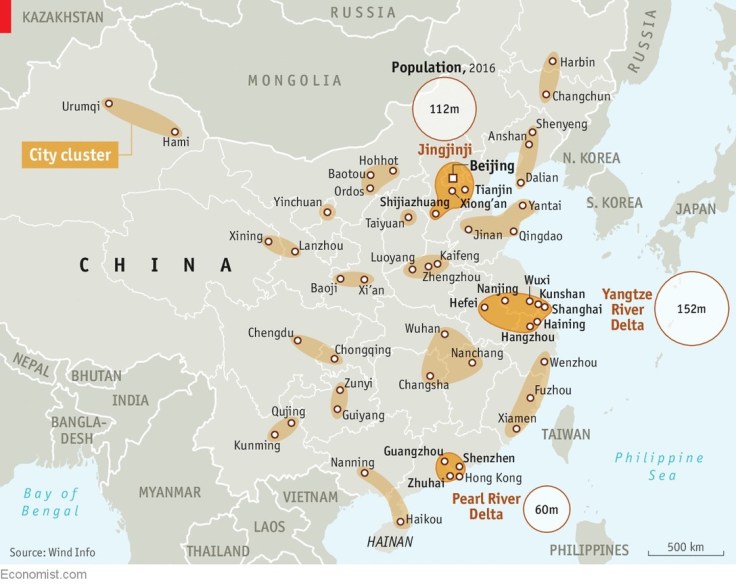
The term megacity (a city with a population greater than 10 million) has been around for a while and there wasn’t much linguistic need to describe something bigger.  Today, most megacities are more like Lagos and Mumbai, places of extreme wealth asymmetries than the global cities of New York City and London.  Some are now using the term metacity to describe cities with populations of 20 million.  Asian metacities are a good place to start thinking about the largest urban regions that are increasingly dominating economic, political and cultural affairs.      


Tags: urbanmegacitiesEast Asia.

Create a free website or blog at WordPress.com.

Up ↑