Search

GEOGRAPHY EDUCATION

Supporting geography educators everywhere with current digital resources.

Tag

geomorphology

The Sahara

I’m deeply fascinated by the Sahara, but since most of my focus in academic geography is on human geography and the settled portions of the planet, this often goes unaddressed even though it explains much about the world we live in. The main landforms of the desert are dunes (ergs), desert pavement (regs), and mountains that rise above the windswept features of ergs and regs. As it’s so inhospitable, it’s hard to imagine that is was that prior to 5,000 years ago the Sahara was more like a savanna with more life (Axial tilt shifts, and other climatic factors shaped this).

SOURCE: Atlas Pro channel on YouTube

Prior to the Sahara as we know it today, the area occupied by dunes now is often in old lake beds because sand (like water) settles into basins. The mountains today bear witness of larger human settlements with art like cave drawings preserved in the high mountain plateaus. The largest lake today, Lake Chad, is a small remnant of what once was, now called Lake Mega Chad…no, I’m not kidding. Like the Great Salt Lake is a remnant of a much larger Lake Bonneville, and still prone to changes, Lake Chad has continued to dry up, losing over 90% of it’s surface area since the 1950.
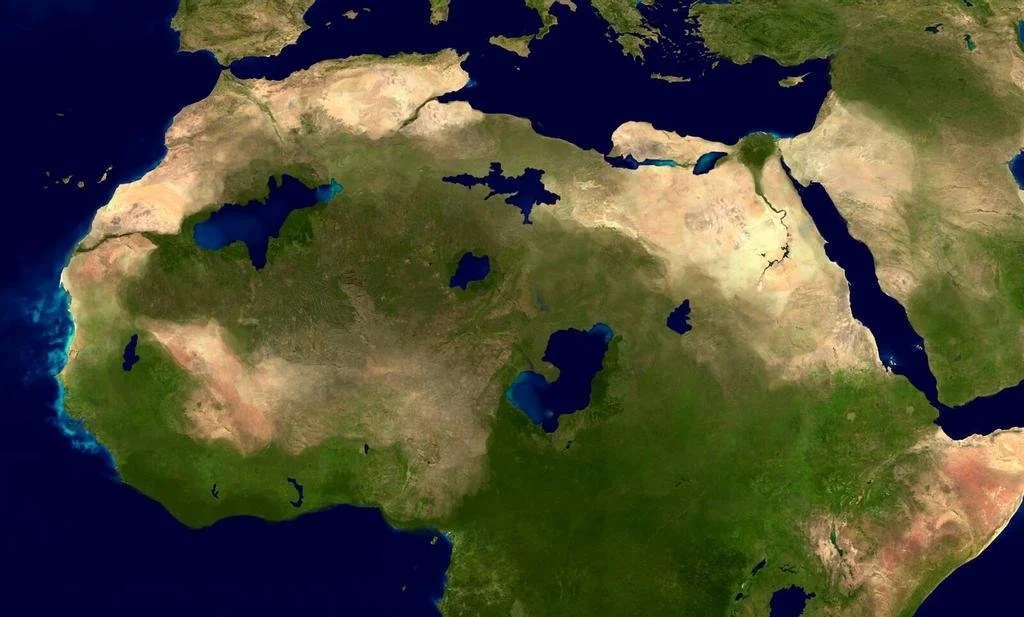
An artistic rendition of a greener North Africa over 5,000 years ago with more lakes. SOURCE: Countere Magazine

Tags: Africa, physical, geomorphology, landformslandscape.

‘Sailing Stones’ in Death Valley

The long version…and no spoilers yet!!

The mystery on the ‘sailing stones’ in Death Valley’s Racetrack playa has been solved and I wrote about a few years ago when it happened, but the video embedded above is so well done, it’s worth revisiting this remote, harsh landscape where large rocks can ‘flow’ uphill. 

SPOILERS (since 2014): On very rare occasions, when it rains in the region, water will accumulate in the playa (discovermagazine.com), and if the temperature dips below freezing a thin layer of ice will cover the playa.  If the wind is powerful and consistent enough, the wind will push the panels of ice against these rocks and over time, the ice floes will push these rocks, leaving behind distinctive trails (latimes.com). This perfect combination of water, wind, ice and heat creates a remarkable signature on the landscape (livescience.com).  The decidedly non-aerodynamic rocks of Death Valley’s Racetrack Playa leave behind a trail in the hot desert.  Numerous attempts using GPS receivers (NatGeo.com) and good ol’ fashioned observations have been made, but observing ice in Death Valley is so rare that it was never observed until 2014 (phys.org). 

Tags: physical, geomorphology, landforms, desertlandscape.

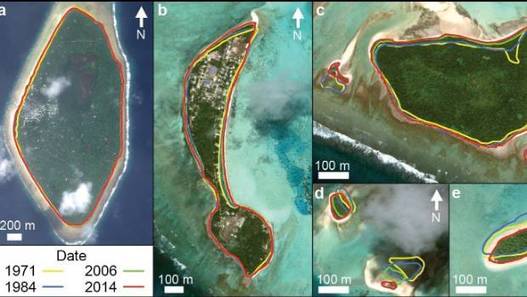
Pacific nation Tuvalu has grown by 73 hectares over 40 years

“The tiny Pacific nation of Tuvalu – once thought to be under threat from rising sea levels – has grown the size of California’s Disneyland over the past 40 years. It’s mostly thanks to waves dumping extra sediment, sand and gravel on shore lines, according to research by Auckland University scientists. The study, published in the Nature Communications journal on Friday, was the first in-depth look at how much each of Tuvalu’s 101 islands have changed over the decades.”


Tags: Oceaniawatercoastal, environment, physical, geomorphology, erosiongeology, landforms.

Source: www.stuff.co.nz

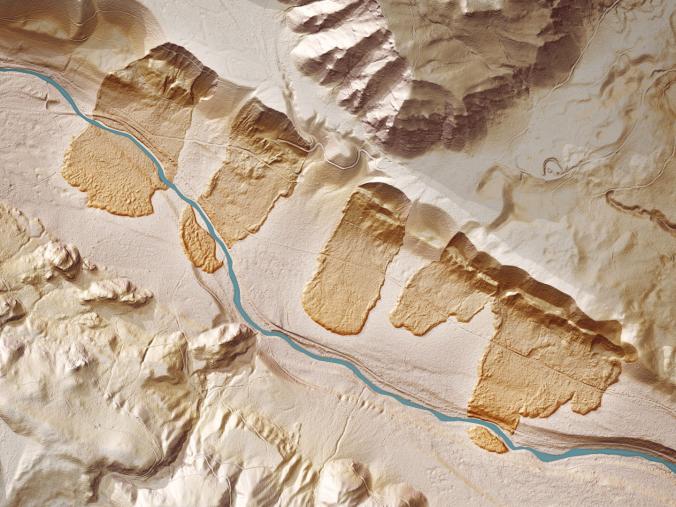
See the Strange, Beautiful Landscapes Revealed by Lasers

“Geospatial technologies unearth a world hidden beneath the lush forests of the Pacific Northwest.”


If you were to strip a forest of all its vegetation, what would you see? To find out, Washington state’s government is using airplanes equipped with LIDAR technology to scan the state’s heavily-forested ground. What’s being revealed beneath the trees is a spectacular and strange landscape of hidden geology. Old landslides, abandoned river channels, ancient lava flows, and the tracks of glaciers are suddenly visible in stark relief. Tracking the altitude and location of a plane with GPS while it scans the ground with LIDAR yields a highly precise digital elevation map of the Earth’s surface created out of the billions of laser pulses. By uncovering the debris from old landslides, LIDAR can show where future slides may occur.


Tags: geomorphologyremote sensing, geology, physical.

Source: news.nationalgeographic.com

Alluvial Fans

“When a mountain stream carries a lot of sediment (clay, silt, sand, gravel, cobbles, and boulders) and leaves the confines of the canyon, the sediment is deposited. Over time, this process creates a fan-shaped deposit. The sediment is deposited not because the gradient of the stream decreased, but because the power of the stream dissipates beyond the canyon mouth as the water is spread thin and infiitrates. Many cities are built on alluvium fans, often leading to hazards from flash floods and mudflows.”

Source: www.instagram.com

In mountainous, interior deserts, the largest settlements are usually not deep in the deserts or on top of the mountains but in that in between space.  Many settlements in Central Asia are built on these alluvial fans


Tags: environment, physical, geomorphology, erosiongeology, California, landforms.

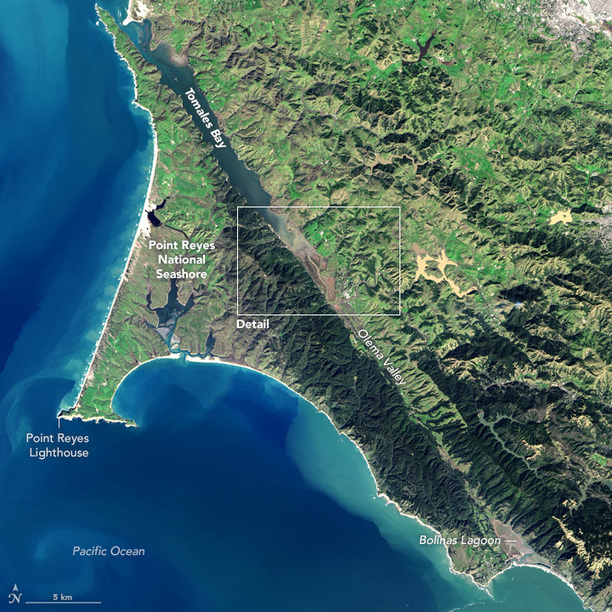
The Edge of the Plates

“Tomales Bay lies about 50 kilometers (30 miles) northwest of San Francisco, along the edges of two tectonic plates that are grinding past each other. The boundary between them is the San Andreas Fault, the famous rift that partitions California for hundreds of miles. To the west of the Bay is the Pacific plate; to the east is the North American plate. The rock on the western shore of the Bay is granite, an igneous rock that formed underground when molten material slowly cooled over time. On the opposite shore, the land is a mix of several types of marine sedimentary rocks. In Assembling California, John McPhee calls that side “a boneyard of exotica,” a mixture of rock of ‘such widespread provenance that it is quite literally a collection from the entire Pacific basin, or even half of the surface of the planet.'”


Tags: geomorphologyremote sensing, tectonics, geology, Californiacoastal, physical.

Source: earthobservatory.nasa.gov

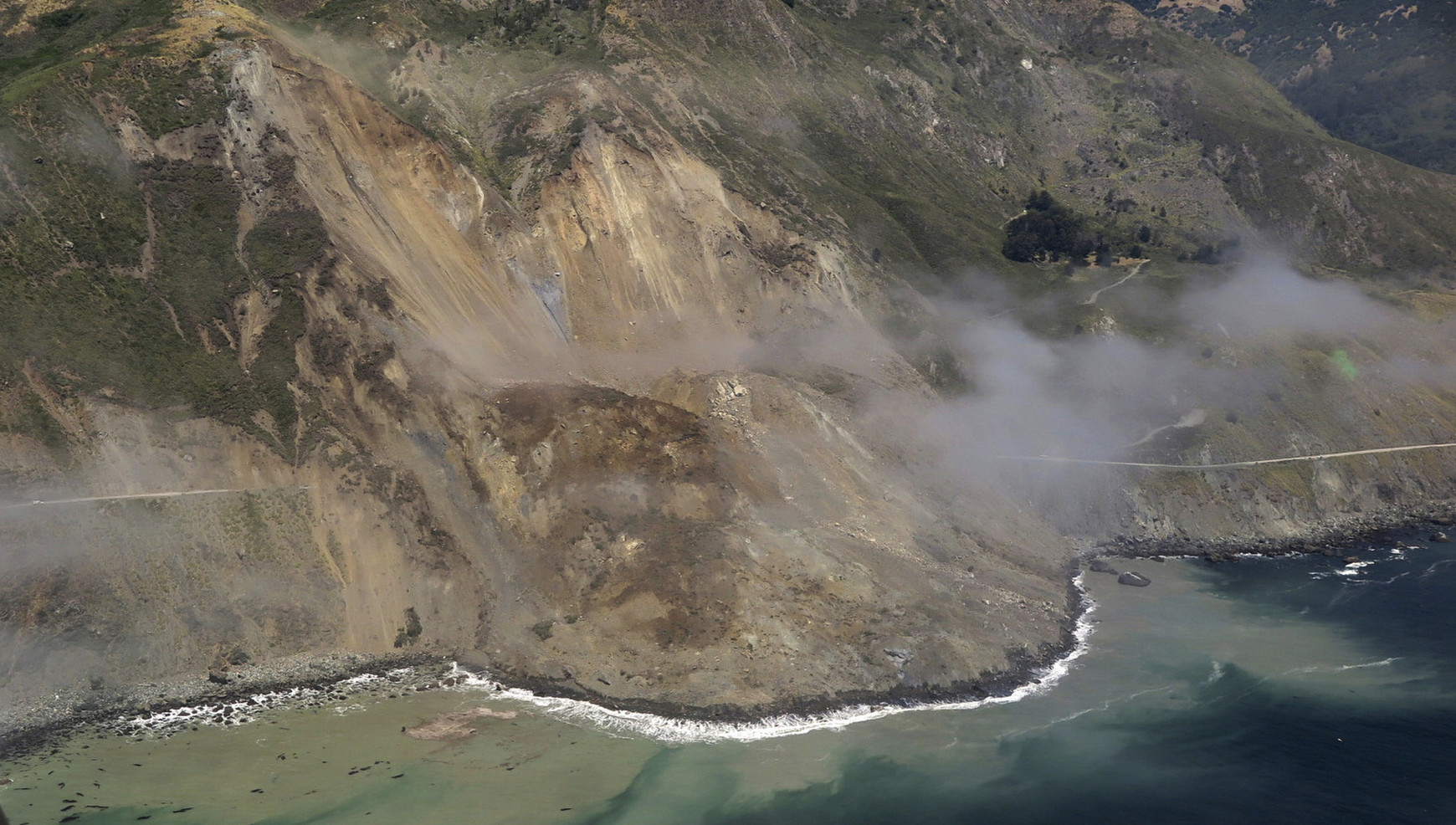
Massive landslide adds to ‘unprecedented’ damage along scenic Highway 1 in Big Sur area

“A massive mudslide along the California coast.  Millions tons of rock/dirt, about 1/3 mile of roadway covered 35-40 feet deep.”

Source: www.latimes.com

A steep slope, unstable ground, and changing moisture content result is this spectacular (and horrifying) example of how the Earth beneath our feet might not be as permanent as we expect it to be.


Questions to Ponder: Which type of mass wasting is seen in this particular example?  What conditions would lead to other types of mass wasting?  


Tags: physicalCalifornia, geomorphology, erosion, landforms.

Skokomish River salmon cross the road

“Watch salmon race across the road on their way to spawn; for more footage, watch this extended version.”

Source: www.youtube.com

We often see examples of how human modifications to ecosystems or watersheds have devastatingly negative impacts.  This is a remarkable example from Washington’s Olympic Peninsula that shows the resiliency of natural systems to overcome human modifications to the physical landscape.  If you study the world, you will always have something to both amaze and surprise you.   


Tagsfluvial, biogeography, environment, geomorphology, physicalwater, environment adapt, environment modify.

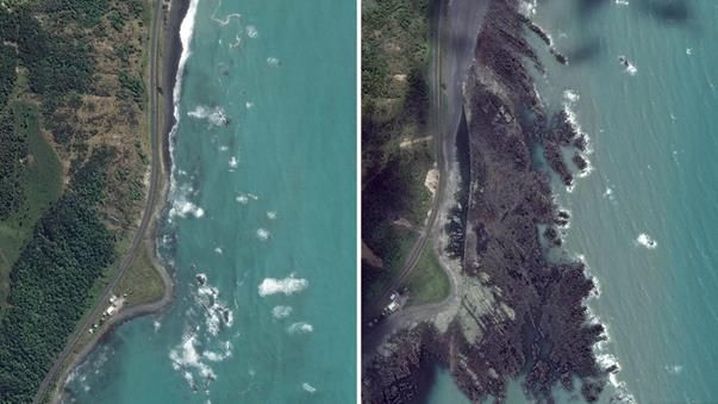
New Zealand quake lifted seabed by 2m

The 7.8 magnitude earthquake that hit New Zealand’s South Island lifted up the seabed by two metres, pushing it above the ocean’s surface.

Source: www.9news.com.au

Plates on the Earth’s crust typically move forward at very slowly (about the same speed as the fingernail growth).  While that is the usual, plates snag along the edges and pressure can build over the years, only to lead to explosive, quick changes like happened recently in New Zealand.  This complex series of tremors has people disconnected as much of the physical infrastructure has be damaged


Tags: New Zealandphysical, tectonicstransportation, geology, geomorphology.

Blog at WordPress.com.

Up ↑