Search

GEOGRAPHY EDUCATION

Supporting geography educators everywhere with current digital resources.

Tag

historical

Drought and Famine

In which John Green teaches you a little bit about drought, which is a natural weather phenomenon, and famine, which is almost always the result of human activity. Throughout human history, when food shortages strike humanity, there was food around. There was just a failure to connect those people with the food that would keep them alive. There are a lot of reasons that food distribution breaks down, and John is going to teach you about them in the context of the late-19th century famines that struck British India.

Source: www.youtube.com

Famine is exacerbated by natural factors such as drought, but those only stress the system, they rarely cause the actual starvation.  The real failure is that the political/economic systems created by governments and how they handle stains in the food production/distribution systems.  Widespread famines are very rare in democracies and are much more prevalent in authoritarian regimes.  Many of the recent examples have come from collectivation strategies that governments have implemented (currently Venezuela, but historically the Soviet Union and China).  The Choices program has some good resources about teaching current events with the famines today.


Tags: food, povertyhistoricalcolonialism, economic, political, governance, agriculture, crash course


Human Settlement Predictive Model

“Simulating climate conditions over the last 125,000 years and predicting how those changes would have allowed humans to spread around the globe, this video models human migration patterns.” Read more: http://ow.ly/lWIp304qZEo

Source: www.youtube.com

The World Economic Forum noted that some spatial research that was originally published in Nature, shows how geneticists took DNA samples from people of different cultures in different parts of the world to track their dispersal throughout the globe.  The video uses climatic data, combined with the genetic data, to create a model showing how the human race spread across the globe over a 125,000 year period.


Tagsdiffusiondemographicsmappingmigration, populationhistorical, video, visualization.

What if the British Empire Reunited Today?

The British Empire was the largest Empire to have ever existed in our history. So what would things look like if the empire reunited today?

Source: www.youtube.com

This is interesting perspective of the strength of the old British Empire as well as some of the inequalities that are part and parcel of empire. 


Tagsempire, UK, historical.

How the first city got started 12,000 years ago

“In this animated video, Jonathan F. P. Rose explains how the first city was started in Turkey, 12,000 years ago.”

Source: www.youtube.com

What led to the first urban settlements? We know that the beginnings of agriculture are closely connected to the first forays into agriculture and the domestication of animals.  This brief video puts some archeological specificity on the though exercise, “what would you need to start the first city in a world without cities?” 


Tags: urban, placehistorical.

During World War I, Propaganda Erased Visible Markers of German Culture

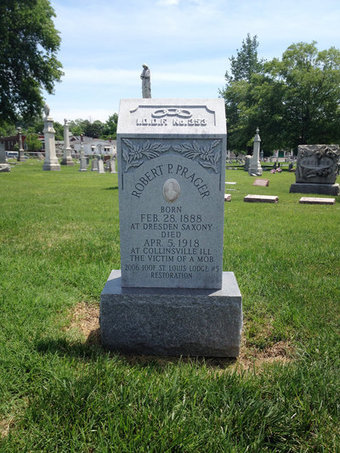
As the U.S. entered World War I, German culture was erased as the government promoted the unpopular war through anti-German propaganda. This backlash culminated in the lynching of a German immigrant.

Source: www.npr.org

German-Americans are America’s largest single ethnic group (if you divide Hispanics into Mexican-Americans, Cuban-Americans, etc). Yet despite their numbers, they are barely visible. During the first world war, parts of America grew incredibly anti-German. Many stopped speaking German and anglicized their names. “In 1915 about 25% of all high school students in America studied German, but by the end of the World War I German had become so stigmatized that only 1 percent of high schools even taught it.”


Tagsculture, historical, ethnicityUSA.


Memorializing Manzanar

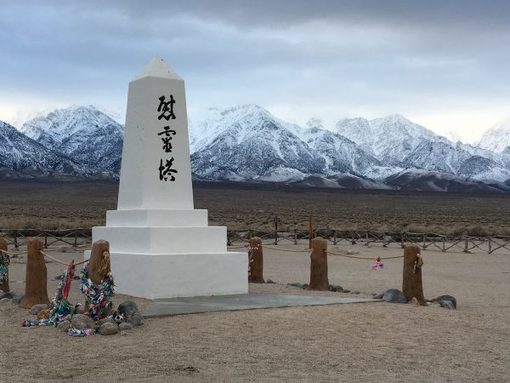
“During World War II the US government incarcerated over 110,000 Japanese Americans, in ten different detention centers throughout the United States.  One of these sites was Manzanar; in 1992, Manzanar was declared a National Historic Site. But apart from the cemetery, there was little there. The committee did not want to settle for a staid, sterile museum and so they worked with the National Park Service to rebuild portions of the camp exactly as they had been during the war. The most powerful symbol might be the site’s newest addition, a replica of the women’s latrine with a trough sink and row of five toilets with no dividers between them. It’s a stark reminder of the humiliation felt by many Japanese Americans during their incarceration.  The annual pilgrimage of Japanese-Americans and others will take place on April 29th, 2017.”

Source: 99percentinvisible.org

How we collectively remember history in the landscape?  Do you erase national embarrassments that open wounds of the past or is the act of memorialization cathartic and part of becoming a better country?  After Pearl Harbor, the U.S. listened to the fears of the public and military officials and interned U.S. citizens of Japanese ancestry.  Today, how this history is remembered is deeply important to many groups in the United States.  There are some great images, videos and primary sources in this episode of the 99 Percent Invisible podcast. 


Tagspodcast, culture, California, historical, monumentsplace, landscape.

Growth of Colonial Settlement

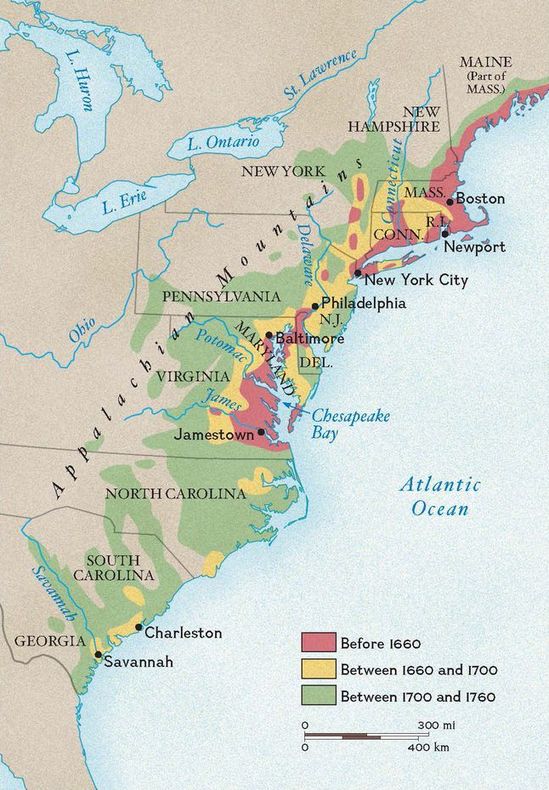
European settlement began in the region around Chesapeake Bay and in the Northeast, then spread south and west into the Appalachian Mountains.


Questions to Ponder: How did European immigrants settle along the East Coast? How did geography determine settlement patterns? 


Tagsmigrationmap, historicalcolonialism, USA, National Geographic.

Source: www.nationalgeographic.org

The Geography and Area Studies Interface from WWII to the Cold War

“The [importance of this study is that it] examines the dynamic between geography and area studies through their distinct understandings of space. As I argue, the dominance of the regional concept in geography, which took the multiple ways of bounding space as its central problematic, was reduced in area studies rendering of global space. This study assesses the transformation of geography during the two decades before and after the Second World War. This era was one of contrasts. On the one hand, geography was central to the war effort and in the creation of post-war programs, most notably area studies. On the other, this era also marked the relative marginalization of geography as a discipline in higher education.”


Tagseducation, geography, geography education, geopolitics, historical.

Source: americangeo.org

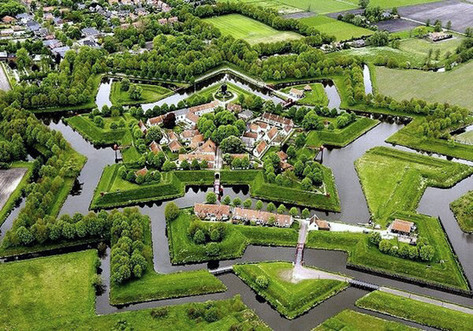
Star Forts, the Premier Defense System of the Late 1500s

Fort Bourtange remains perfectly preserved, with historic structures strewn across the 11-acre pentagon.


Star forts, five-sided forts designed to give guards a panoramic view of any potential attackers, originated in Italy in the 15th century. Providing the optimal structure for protection from threats, star forts were used in Italian warfare for years and eventually diffused to the Groningen region of the Netherlands, where the Bourtange star fort was constructed in 1593.


Tagsmilitaryhistorical, landscape.

Source: www.atlasobscura.com

Blog at WordPress.com.

Up ↑