Search

GEOGRAPHY EDUCATION

Supporting geography educators everywhere with current digital resources.

Tag

historical

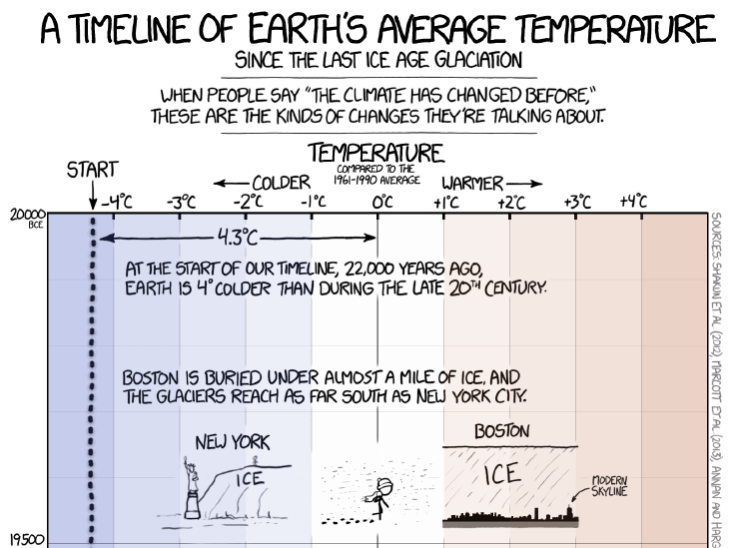
Earth Temperature Timeline

Source: xkcd.com

This infographic is a fascinating way to put into context the very recent trend of rising global temperatures.  This is worth scrolling all the way through to make the ending all the more meaningful.  Oh yeah, and August 2016 was the hottest month in recorded history…only 11 months of record-breaking temperatures.  


TagsXKCD, artinfographic, physicalhistorical, environment, climate change.

Creamed, Canned And Frozen: How The Great Depression Revamped U.S. Diets

During the Depression, cheap, nutritious and filling food was prioritized — often at the expense of taste. Jane Ziegelman and Andy Coe, authors of A Square Meal, discuss food trends of the time.

Source: www.npr.org

Peanut butter and school lunches became fixtures of American culture during the Depression.  On the flip side, our modern preference for freshness is a reaction against the Depression’s obsession to find ways to preserve food for longer amounts of time.  


Tags: foodeconomicfood distribution, historical, podcast.

Remembering September 11th

Video and Photographs of the event. All media is from the internet and not my own. I compiled all media from the internet and edited them together to tell the story of the deadliest attack on America.

Source: www.youtube.com

The compilation above was created by a teacher who realized that now none of his students were alive to remember how emotional it was for people to watch the horrific news unfold.  Additionally, this video of how Canadians helped the U.S. paired with this lesson plan from the Choices Program will help students explore the human dimension of the September 11 attacks as will this lesson from Teaching History. For a geospatial perspective on 9/11, this page from the Library of Congress, hosted by the Geography and Map Division is a visually rich resources (aerial photography, thermal imagery, LiDAR, etc.)  that show the extent of the damage and the physical change to the region that the terrorist attacks brought.  The images from that day are a part of American memory and change how the event is remembered and memorialized in public spaces (if you want a touching story of heroism, the Red Bandana is moving). .


Recovering Intellectual Ancestors

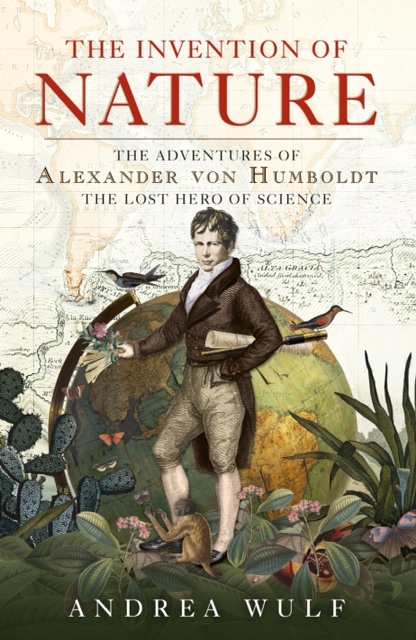
“Andrea Wulf’s new book The Invention of Nature reveals the extraordinary life of the visionary German naturalist Alexander von Humboldt (1769-1859) and how he created the way we understand nature today. Though almost forgotten today, his name lingers everywhere from the Humboldt Current to the Humboldt penguin. Humboldt was an intrepid explorer and the most famous scientist of his age. Perceiving nature as an interconnected global force, Humboldt discovered similarities between climate zones across the world and predicted human-induced climate change. Wulf traces Humboldt’s influences through the great minds he inspired in revolution, evolution, ecology, conservation, art and literature.  In The Invention of Nature Wulf brings this lost hero to science and the forgotten father of environmentalism back to life.”

Source: www.andreawulf.com

I was glad to find this biography of Alexander von Humboldt.  He has been described as the last great ancient geographer concerned with understanding an eclectic cosmography as well as the first modern geographer. He is honored far and wide throughout Europe and especially  Latin America for his explorations, but given that people are confused as how to categorize him and classify his contributions, today he is under-appreciated.  Geographers need to reclaim his memory and call his extensive, globetrotting work on a wide range of subjects ‘geography.’  Here are more articles and videos on the man that I feel geographers should publicly champion as their intellectual ancestor the way that biologists point to Darwin.  


Tags:  historicalbiogeography, book reviews.

Unlocking The National Mall

Lisa Benton-Short, author of The National Mall: No Ordinary Public Space talks about the overlooked urban National park sites, getting inspired by her own neighbourhood, and more.

Source: utpblog.utpress.utoronto.ca

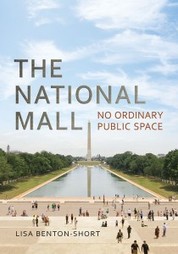
The National Mall has been transformed so much in that last 200 years.  Lisa Benton-Short, in this interview about her book says, “The Mall has been a place where I connect to American history and identity, and our country’s founding principles and ideals. It is place where you can feel the power of the monuments and memorials, the legacy of events, marches and protests. The Mall is an incredibly meaningful place. This book is the result of my intellectual curiosity as a scholar, but also my personal attachment to this place.”


Tags: historicalspace, monumentsplace, landscape.

Cartograms of the Olympic Games

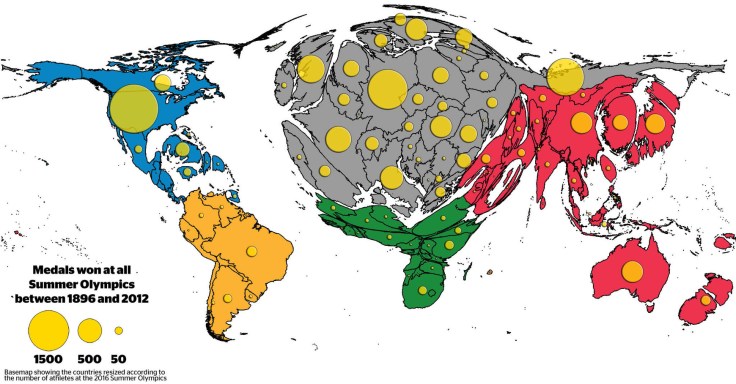
The distribution of medals shows the existing Olympic inequalities: The overall patterns are a reflection of wealth distribution in the world, raising the question whether money can buy sporting success. Besides investment in sports by those countries who can afford it, the medal tables also reflect a battle for global supremacy in political terms.


Tags: sport, popular culture, mapping, historical, cartography.

Source: geographical.co.uk

The Vatican’s Gallery of Maps Comes Back to Life

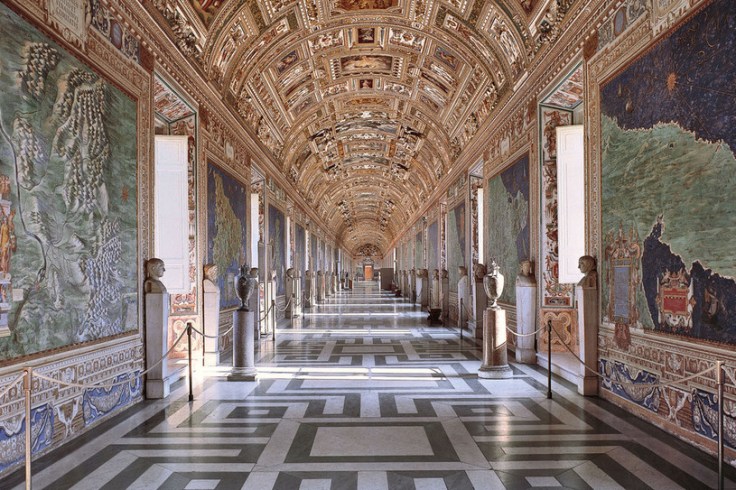
In the 16th century, Pope Gregory assigned the monk and geographer Ignazio Danti to carry out the project. In turn, Danti hired several artistic stars of the day and up-and-comers as well to illustrate the maps, including Girolamo Muziano, Cesare Nebbia and the Flemish brothers Matthijs and Paul Bril. The Brils excelled at landscape paintings—an essential skill for the work.

Source: www.wsj.com

This 4-year restoration project is a great cultural revival, but it also reveals the importance of geographic information.  The Vatican was a great medieval seat of both religious authority and political power.  This attracted prominent visitors from all over Europe and the map gallery served to convey geographic information about the Italian peninsula.  


Tagsart, Italy, historical, Europe, religiontourism, Christianity.

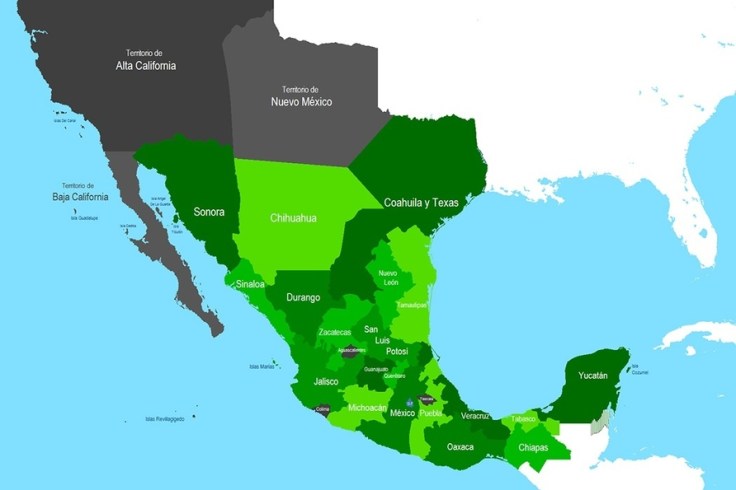
When Mexico Was Flooded By Immigrants

In the early nineteenth-century, Mexico had a problem with American immigrants.

Source: daily.jstor.org

A century and a half ago, the immigration debate and geopolitical shifts in power on the United States-Mexico border reflected a profoundly different dynamic than it does today.  This history has enduring cultural impacts on southwestern states that had the international border jump them.


Tags: culture, demographicsmigration, North Americahistorical, colonialism, borders, political.

Old Mexico lives on

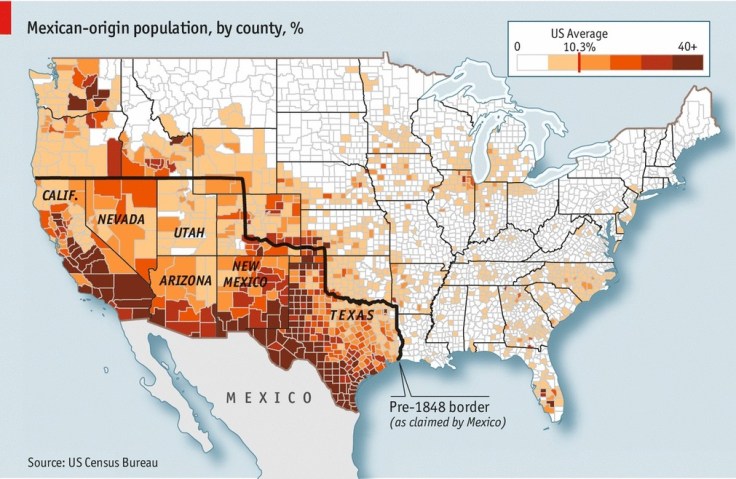
On February 2nd 1848, following a short and one-sided war, Mexico agreed to cede more than half its territory to the United States. An area covering most of present-day Arizona, California, Nevada, New Mexico and Utah, plus parts of several other states, was handed over to gringolandia. The rebellious state of Tejas, which had declared its independence from Mexico in 1836, was recognised as American soil too. But a century and a half later, communities have proved more durable than borders. The counties with the highest concentration of Mexicans (as defined by ethnicity, rather than citizenship) overlap closely with the area that belonged to Mexico before the great gringo land-grab of 1848. Some are recent arrivals; others trace their roots to long before the map was redrawn. They didn’t jump the border—it jumped them.


Tags: culture, demographics, North Americahistorical, colonialism, borders, political.

Source: www.economist.com

Create a free website or blog at WordPress.com.

Up ↑