Search

GEOGRAPHY EDUCATION

Supporting geography educators everywhere with current digital resources.

Tag

industry

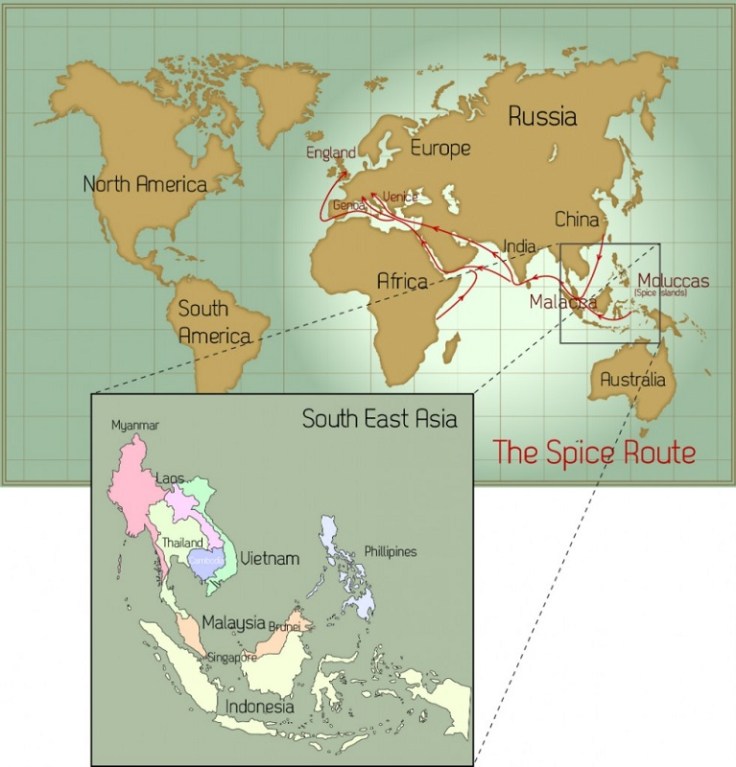
The Spice Trade’s Legacy

“In its day, the spice trade was the world’s biggest industry. It established and destroyed empires and helped the Europeans (who were looking for alternate routes to the east) map the globe through their discovery of new continents. What was once tightly controlled by the Arabs for centuries was now available throughout Europe with the establishment of the Ocean Spice Trade route connecting Europe directly to South Asia (India) and South East Asia.”

Source: cleanfooddirtygirl.com

The spice trade changed how we eat forever but it did so much more.  The fall of Constantinople to the Ottoman Empire cut off Europe from the vital trade routes to the east and access to the most prized commodities of the day.  What drove European exploration to get around Africa and to cross the Atlantic?  It was to reshape their situation location relative to the economic networks that shaped the emerging global economy.  In essence, the spice trade reshaped the fortunes and trajectories of several major world regions.   


Tags: Southeast Asia, food productiondiffusionglobalization, agriculture, economicindustry, economic, historical, regions.
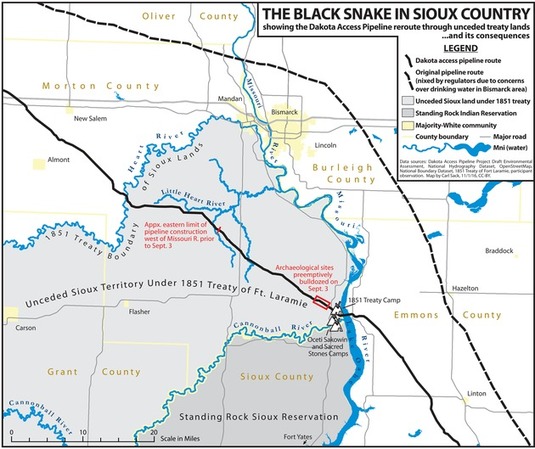
The Dakota Access Pipeline Map

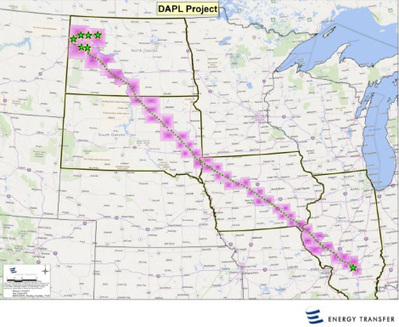
“Thousands of Native Americans and their allies have gathered on unceded Sioux land delimited by the 1851 Treaty of Fort Laramie to try and stand in the way of the “black snake” that could poison the Standing Rock Reservation’s water supply. Many have noted that the pipeline corridor was repositioned from its original route north of Bismarck after white citizens spoke up against the threat a spill would pose to their drinking water ― a threat duly recognized by the U.S. Army Corps of Engineers. Yet the Corps failed its federal mandate for meaningful consultation with the Standing Rock Tribe before signing off on a route that moved the pipeline to their doorstep.”

Source: www.huffingtonpost.com

Maps can tell truths, and maps can be used to obscure other truths. Creating a map, choosing what data to include (and exclude) is an inherently political act.  Maps have the power to convey geographic perspectives that might otherwise be muted.


Tags: industryconflict, economic, energy, resources, environmentindigenous, ecology.

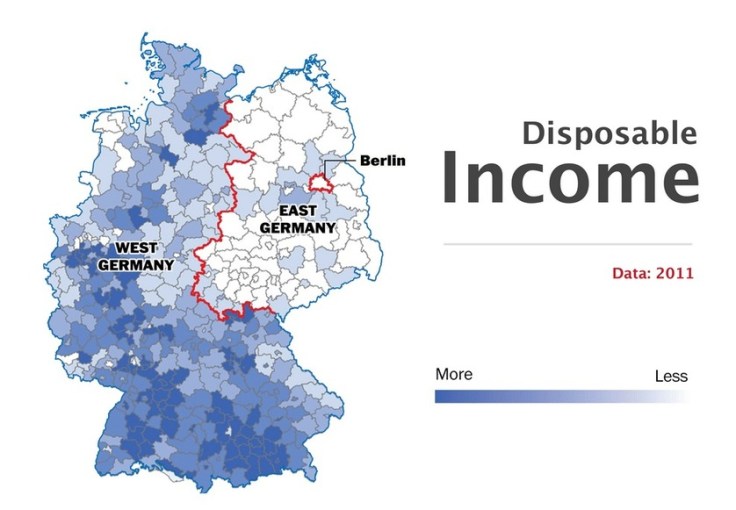
Germany reunified 26 years ago, but some divisions are still strong

“While 75 percent of Germans who live in the east said that they considered their country’s reunification a success, only half of western Germans agreed. With eastern and western Germans blaming each other for past mistakes over the past two years, that frustration has likely increased. Younger citizens, especially — who do not usually identify themselves with their area of origin as strongly anymore — have grown worried about the persistent skepticism on both sides. But where do those divisions come from? And how different are eastern and western Germany today?”

Source: www.washingtonpost.com

This series of 10 maps (and 1 satellite image) highlights many of the cultural and economic divisions between East and West, despite efforts to in the last 26 years to smooth out these discrepancies. The social geographies imposed by the Iron Curtain and the Berlin Wall are still being felt from this relic border and will for years to come. 


Tags: Germany, industry, laboreconomichistorical, politicalborders.

The Environmental Cost of Consumption

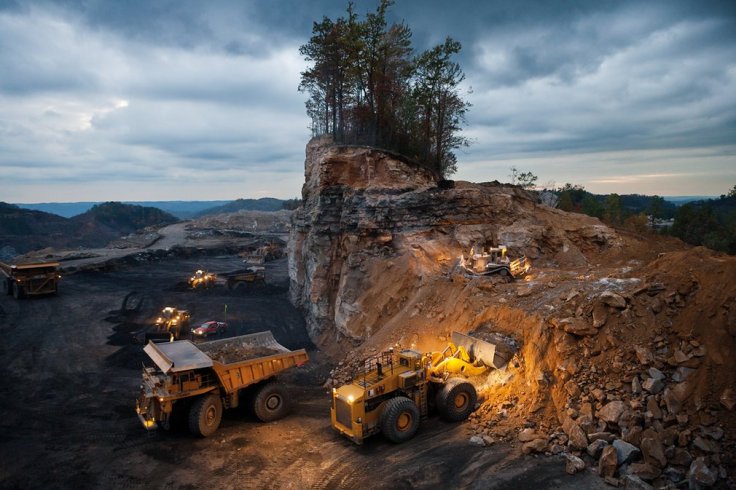
Environmental artist J Henry Fair captures the beauty and destruction of industrial sites to illustrate the hidden impacts of the things we buy – the polluted air, destroyed habitats and the invisible carbon heating the planet

Source: www.theguardian.com

This artistic portrayal shows the extent of the massive modifications we’ve made to the landscape with some striking examples.  Pictured above is one of 17 images in this article that promotes the launch of the new book entitled, Industrial Scars: the Environmental Cost of Consumption.  In the image above we see mountaintop coal mining in West Virginia.  “This lonely stand of trees disappeared in barely a day. The small bulldozer on the upper level pushes loose material down to the loader, which scoops it up into the next earth mover in line, which will in turn dump it into a nearby ‘valley fill’, burying the stream there.” This might be the most beautiful and ugly set of images that you’ll see today. 


Tags: pollution, industry, sustainability, images, art, landscape, unit 6 industry.

Growth of underwater cables that power the web

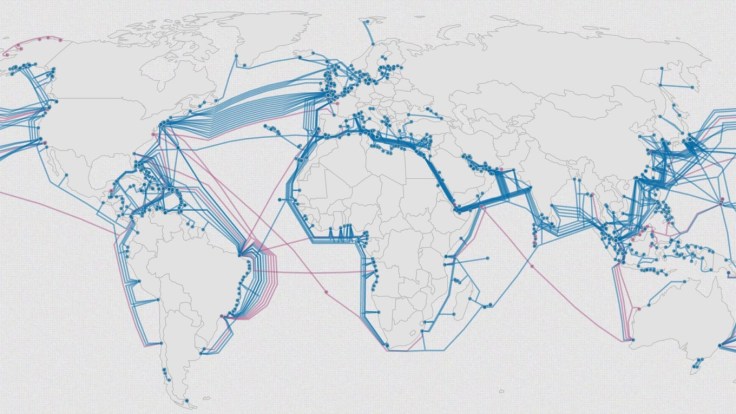
“The map above, created with data from Telegeography, shows how those cables have developed since 1990. Most existing cables were constructed during a period of rapid growth in the mid-2000’s. This was followed by a gap of several years during which companies steadily exhausted the available capacity. Over the last few years, explosive new demand, driven by streaming video, has once again jumpstarted the the construction of new cables.”

Source: qz.com

Twenty years ago, people were still connecting to the internet with a dial-up connection through their modem (if you don’t know what that sounds like, this was once the sound of interconnectivity).  People focus on cell phones, tablets, and cool gadgets when discussing the digital transformation of globalization, but it all rests on the infrastructure of the global connectivity that is mapped out here.  Even still, global trade rests on the back of container ships moving manufactured goods from far-flung factories to major markets.


Tags: technology, globalization, diffusion, industry, economic.

Dakota Access Pipeline: What You Need to Know

Conflict between Native American protesters and private security personnel over construction of the Dakota Access Pipeline has turned violent. What is the Dakota Access Pipeline?


Tags: industryconflict, economic, energy, resources, environmentindigenous, ecology.

Source: blog.education.nationalgeographic.com

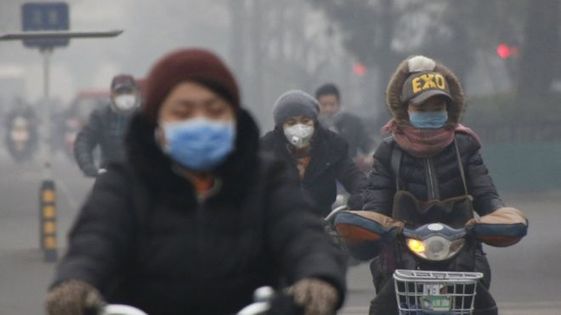
China pollution: First ever red alert in effect in Beijing

“Schools in Beijing are closed and outdoor construction halted as the Chinese capital’s first ever pollution “red alert” comes into effect over smog levels.”

Source: www.bbc.com

A large part of China’s rapid economic growth has been dependent on cutting corners in labor and environmental standards.  This is one reason why I don’t think that the Chinese economy can continue this growth indefinitely.


Tags: pollutionChina, development, economic, megacities, East Asia, industry, sustainability, urban ecology.

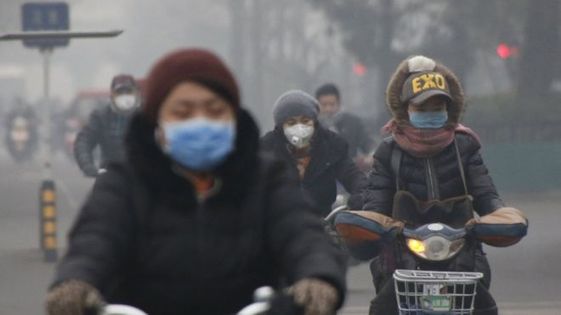
China pollution: First ever red alert in effect in Beijing

“Schools in Beijing are closed and outdoor construction halted as the Chinese capital’s first ever pollution “red alert” comes into effect over smog levels.”

Source: www.bbc.com

A large part of China’s rapid economic growth has been dependent on cutting corners in labor and environmental standards.  This is one reason why I don’t think that the Chinese economy can continue this growth indefinitely.


Tags: pollutionChina, development, economic, megacities, East Asia, industry, sustainability, urban ecology.

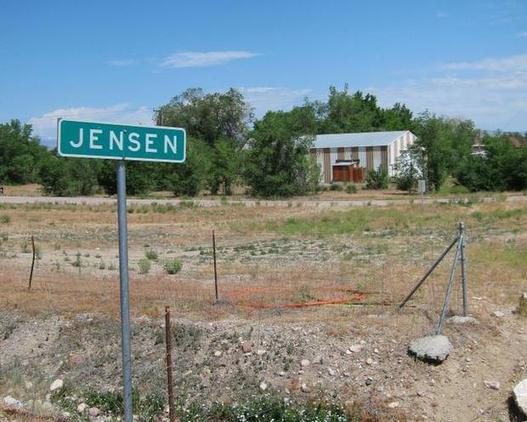
China’s hungry cattle feasting on alfalfa grown on Utah farm

China has long depended on the U.S. breadbasket, importing up to $26 billion in U.S. agricultural products yearly. But increasingly, Chinese investors aren’t just buying from farms abroad. They’re buying the farms.

Source: www.mcclatchydc.com

Globalization is often described as a homogenizing force, but is also pairs together odd bed fellows.  A small Utah town near the Colorado border, Jensen is now home to the largest Chinese-owned hay farm in the United States. Utah’s climate is right for growing alfalfa, and China’s growing cattle industry make this a natural global partnership.  Large container ships come to the United States from China, and return fairly empty, making the transportation price relatively affordable.  Locally back in the United States though, water resources are scarce and many see this as a depletion of local water exported to China.  Some states see this as a threat and are considering banning foreign ownership of farmland.  This article shows the merging various geographic themes: the global and local, the industrial and the agricultural, the human and the physical.         

Tags: agriculture, agribusinesstransportation, globalizationwaterChinaindustry, economic, physical, Utah.

Blog at WordPress.com.

Up ↑