Search

GEOGRAPHY EDUCATION

Supporting geography educators everywhere with current digital resources.

Tag

MiddleEast

Israeli settlements, explained

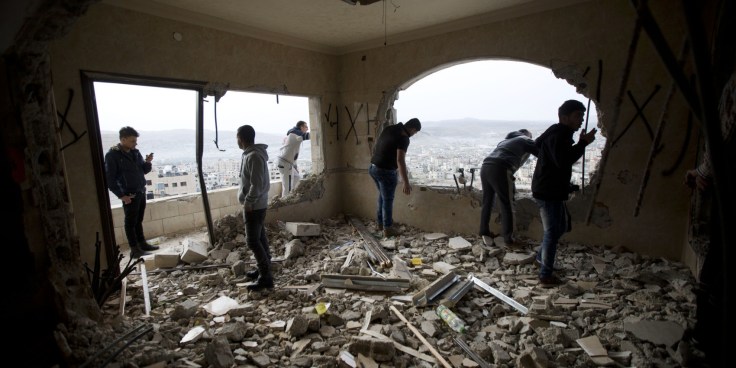
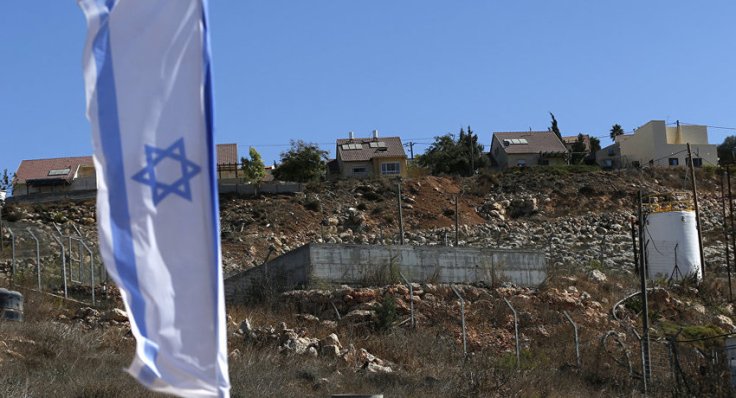
Both sides claim the West Bank as legitimately belonging to them. Over time, and especially as Israeli politics has shifted rightward, the settler movement has become an institutionalized part of Israeli society. Support comes in the form of building permits, public investment, and even incentives for Israelis to move into the West Bank. While peace talks remain frozen, the settlements continue to grow, making any possibility of a Palestinian state in the West Bank faint.”

Source: www.youtube.com

These settlements are considered by most of the international community to be illegal, but since the U.S. has always vetoed sanctions in the UN security council, Israel had never been formally reprimanded.  Just last week, a UN resolution that passed 14-0 (with only the U.S. abstaining) says that Israel’s settlements on Palestinian territory occupied since 1967, including East Jerusalem, have “no legal validity” and demands a halt to “all Israeli settlement activities,” saying this “is essential for salvaging the two-state solution.” 

Questions to Ponder: What is the two-state solution?  Who favors this plan?  What are some reasons why the two-state solution is so difficult to achieve?

Tags: Israel, Palestine, conflict, borders, territoriality, political, Middle East.

Video: Step Into a Refugee Camp

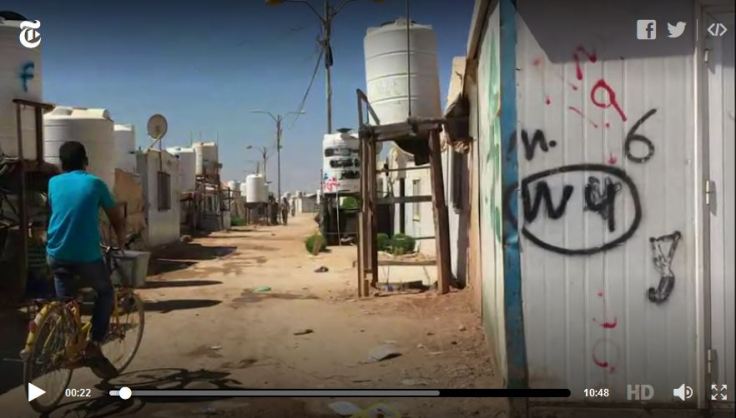
The Zaatari refugee camp in Jordan is one of the largest Syrian camps in the world. In the fall, we visited the camp live with our audience. Here’s what we heard from the refugees and from you.

Source: www.nytimes.com

If you want to humanize the massive refugee crisis, and have lives and stories to connect to statistics, this 11 minute video shows what life is like in a refugee camp, and goes into the hopes, dreams, and life stories of the refugees. 


TagsMiddleEast, Jordan, Syria, political, refugees.

Amid ISIS and Syria, Let’s Not Forget The Quest for Peace In Israel/Palestine

The Israeli-Palestinian conflict has rarely been so far from finding a resolution. Since the cessation of hostilities between Israel and Hamas during the summer of 2014, the desire to seek peace has been diminishing, and instead growing tensions have prevailed, punctuated by stabbings and car-ramming attacks by the Palestinians, and violent acts including arson by the settlers. Yet, the climate has rarely been so favorable to a resolution of the conflict. The chaos that is sweeping the Middle East has been a game-changer in relation to Israel and the Arab countries.

Source: www.huffingtonpost.com

Many Palestinians and Israeli are fearful of a possible breakout of ISIS out of Syria and into Gaza and the West Bank. According to the authors of the op-ed, Europe needs to come together and provide leadership and a plan to enforce so that these issues do not reoccur. The last 17 years have been filled with failed attempts but breaking this cycle of violence is not impossible. 


Tagsop-ed, Israel, Palestine, conflict, political, Middle East.

Israeli-Palestinian Conflict updates, 2016

The Israeli-Palestinian conflict is one that powerfully divides the international community.  Of those living within the state of Israel, Pew Research data shows that they are often deeply divided based on religious affiliation. Not surprisingly, those divisions extend into how they view the peace process, West Bank settlements and U.S. support.  Although the conflict is portrayed as a battle between religious groups, it can be more fairly assessed as two nationalistic groups competing for land.  Broadly speaking, the Muslim world has sided with the Palestinians, and the U.S. and its NATO allies have defended Israel.   In the United Nation’s Security Council, the United States’ veto power has been use to strike down resolutions that would condemn Israeli settlement in the militarily occupied lands of the West Bank.  The 2016 UN resolution that passed 14-0 (with only the U.S. abstaining) says that Israel’s settlements on Palestinian territory occupied since 1967, including East Jerusalem, have “no legal validity” and demands a halt to “all Israeli settlement activities,” saying this “is essential for salvaging the two-state solution.”


These settlements are considered by most of the international community to be illegal, and the UN has condemned them, but since the U.S. has always vetoed this, Israel has never been formally reprimanded.  Earlier this week, the U.S. abstained from the vote, and the many see the U.S. position as hypocritical, (Secretary of State John Kerry strongly defended the position).


Some highly partisan supporters of Israel do not see Israel’s actions as the problem, primarily because Israel’s neighbors have traditionally not recognized its right to exist, and attacked it many times.  Therefore, they see Israel’s actions as necessary for the security of Israel, and do not see Israel’s settlements in the West Bank as illegal since Palestine isn’t a state that was ever legally accepted. 


Tags: Israel, Palestine, conflict, borders, political, Middle East.

Source: geographyeducation.org
Aleppo Is Falling

How Assad and Russia achieved a major victory at a devastating cost


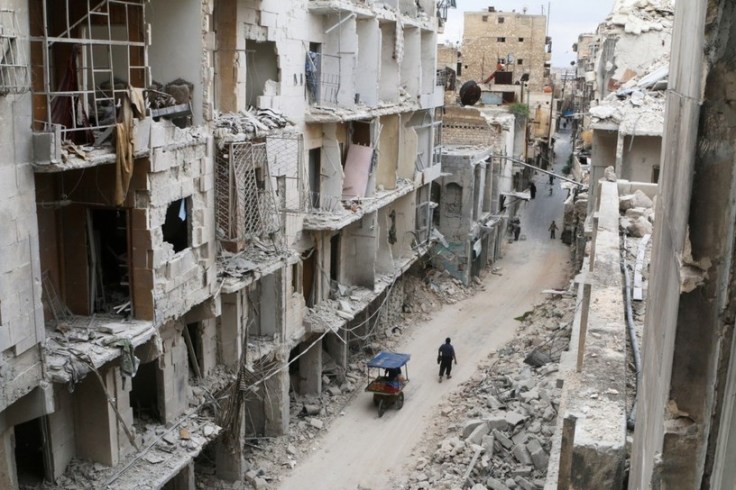
Reports from Aleppo have been particularly harrowing for the past month, as Syrian government forces, supported by Russian airstrikes and Iranian-backed militias, have squeezed the remaining rebels out of the eastern portion of the city. The collapse seemed to come all at once, with fighters loyal to Bashar al-Assad making more territorial gains in the city’s rebel enclaves since mid-November than they had in the previous four years since the opposition first seized it.

As the offensive reached its final stages this week, the United Nations received reports of massacres of civilians; a spokesman for the UN high commissioner for human rights said women and children had been shot trying to flee.

Source: www.theatlantic.com

During the fighting between the Assad regime and the rebels, ISIS has taken advantage of the situation to recapture Palmyra. 


Tags: Syria, war, political, terrorism, ISISMiddle East.

ISIS and the U.S. Presidential Election

The United States is already taking some steps to roll back the Islamic State (ISIS) and restrict its resources and recruits, including airstrikes, armin

Source: www.youtube.com

This is a non-partisan post and a video that is fairly balanced; this video nicely lays out some of the cultural and political factors that the next president of the United States should consider when crafting foreign policy in the especially problematic Middle East.  


Tags: Syria, war, conflict, political, geopolitics, Iraq, devolution, terrorism, ISISMiddle East.

Who Likes Whom in The Middle East? Key players & Notable relationships

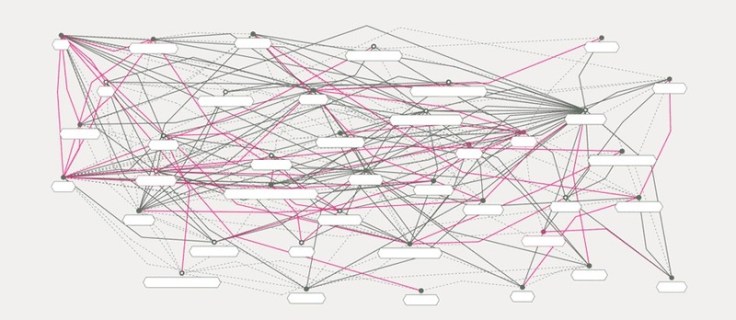
An interactive network visualisation of key players & notable relationships in the Middle East region. Continually updated. Awesome looking.

Source: www.informationisbeautiful.net

News flash:the Middle East is complicated.  In a region where the enemy of an enemy can be your friend, keeping track of local, regional, and global interests can be a staggering proposition.  This flow chart is both incredibly complex, but also aids the user in making sense of the relationships that help to define the region.  


Tags: MiddleEast, conflict, political, geopoliticsregions.

Four maps that explain the chaos of the Middle East

“Without trying to defend or absolve U.S. policy, then, it is worth stepping back to ask what shared historical experiences might have left these four countries — Iraq, Syria, Libya and Yemen — particularly at risk of violent collapse. The following maps help highlight how, at various points over the past century, historical circumstances conspired, in an often self-reinforcing way, to bolster the stability of some states in the region while undermining that of others.”

Source: www.washingtonpost.com

These maps are not cartographically inspiring, but the it’s the historical and political insight that makes them valuable. The goal of this set of maps is to find some underlying causal reasons for political stability(or more importantly instability) in the Middle East. These four maps focus on these key issues:

1. Century-old states are more stable today

2. Colonial rule led to fragile states

3. Instability and regime change

4. The shadow of the Cold War


Tags: MiddleEast, war, conflict, political, geopoliticshistorical.

Introducing ISIS

“The invasion of Iraq was supposed to turn the country into a democracy that posed no threat to the United States, or the rest of the world. Thirteen years later, Iraq has collapsed into three warring states. A third of the country is controlled by ISIS, who have also taken huge amounts of territory in Syria. VICE correspondent Ben Anderson gains exclusive access to the three front lines in Iraq, where Sunni, Shiite and Kurdish forces are fighting for their lives. Anderson visits with the Russian military forces in Syria, meets captured ISIS fighters in Kurdistan, and interviews US policymakers about how the situation in Iraq spun out of control.”

Source: www.youtube.com

Many young students are especially baffled at how a terrorist organization can seize control of large chunks of territory.  If you are looking for a good video introduction that explains how and why ISIS was able to gain power and than gain and maintain territory, this is it (it’s classroom safe despite the source). 


Tags: Syria, war, conflict, political, geopolitics, Iraq, devolution, terrorism, ISISMiddle East.

Create a free website or blog at WordPress.com.

Up ↑