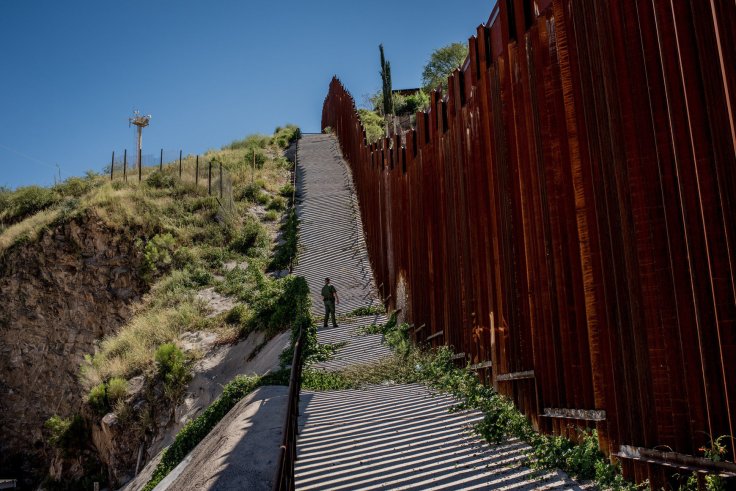
A week in the borderlands with migrants and guards.
Source: www.nytimes.com
This is not a political statement but a reiteration of the geographic realities of borders; they are inherently permeable and unite people just as much as they divide.
A week in the borderlands with migrants and guards.
Source: www.nytimes.com
This is not a political statement but a reiteration of the geographic realities of borders; they are inherently permeable and unite people just as much as they divide.
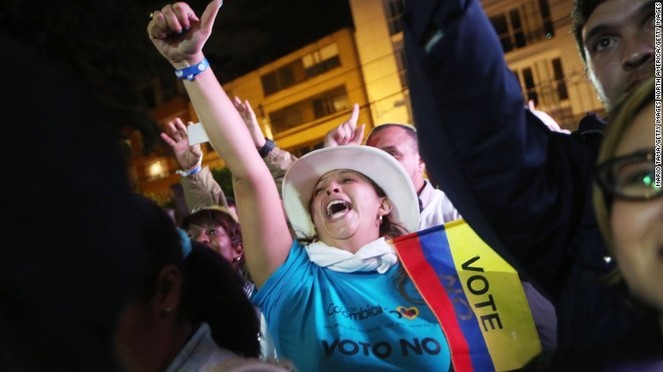
“A narrow win for Colombia’s opponents to a government peace deal with FARC rebels has thrown the country into disarray, leading one journalist to starkly declare, ‘Nobody really knows what will happen tomorrow.’ Likened to the fallout from the United Kingdom’s ‘Brexit’ referendum, the vote’s unexpected failure has left the Colombian political classes reeling and unsure how to respond in order to save four years of hard negotiation with the Marxist militia.”
Source: www.cnn.com
The Colombian peace negotiations with FARC (the insurgent rebels in drug producing regions) were hailed as the key for Colombia to move past it’s violent, drug-cartel past and move into the future. As the Colombian population rejected the deal by the slimmest of margins (50.22% against), it leaves the government “without a Plan B.” There are more questions than answers at this point about what might happen (if you are asking what’s FARC?, then this primer will walk you through it).
Tags: South America, Colombia, political, narcotics, conflict.
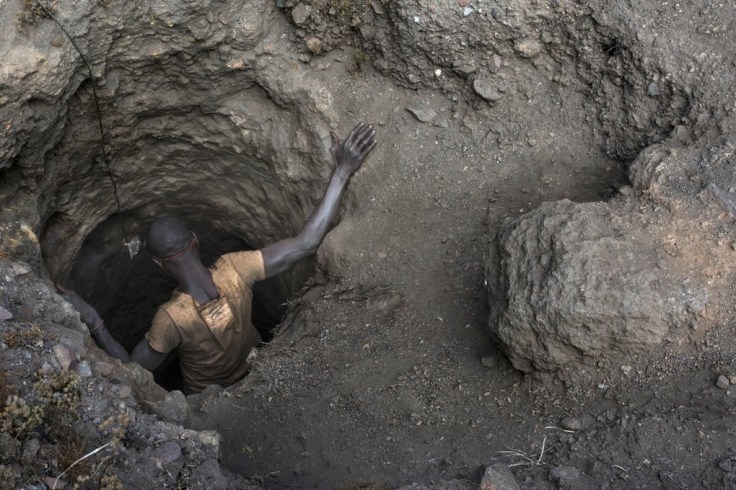
Workers, including children, labor in harsh and dangerous conditions to meet the world’s soaring demand for cobalt, a mineral essential to powering electric vehicles, laptops, and smartphones, according to an investigation by The Washington Post.
Source: www.washingtonpost.com
The Democratic Republic of the Congo (DRC) is a land rich with minerals and resources vital for high end consumer goods (laptops, cellphones, electric cars, etc.). This in-depth investigation from the Washington Post of the cobalt mining districts in the DRC (60% of global cobalt production) is incredible. It has great videos, maps, and an detailed article that cuts across the geographic themes (exploited local labor, global commodity chains, political governance, polluted water supply, medical geography, etc.).
Just two days ago, the United States pulled the families of all governmental officials out of the DRC amid political turmoil and violence in the streets of Kinshasa, highlighting the fact that the weakness of political institutions in the DRC are a major reason for this situation.
Tags: Congo, labor, water, medical, environment, pollution, political, conflict, resources, political ecology, Africa.
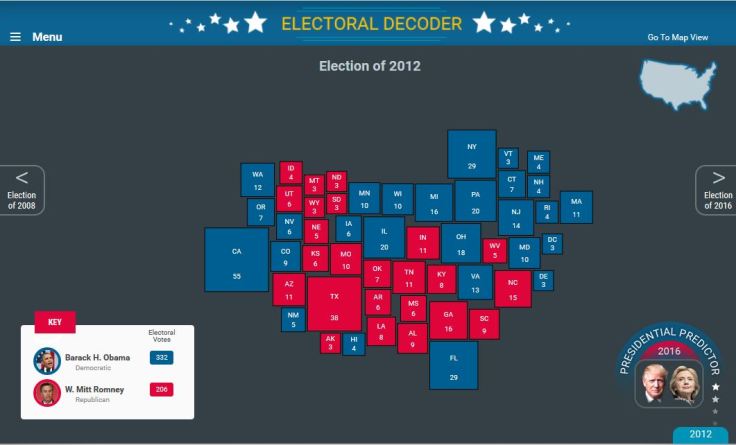
Check out Election Central from PBS with tools, resources & solutions to engage students in the political process.
Source: www.pbseduelectioncentral.com
The first presidential election last night has intensified the already polarized political conversation in the United States. This is a great resource to explore historic political maps and cartograms. It also has rich tools to project the possibilities for the 2016 election with ready-made lesson plans.
Tags: electoral, political, historical, mapping.
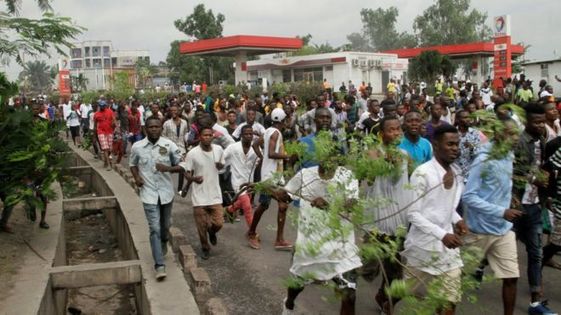
Three police officers and 14 civilians die in Kinshasa, capital of DR Congo, during protests calling for President Joseph Kabila to step down.
Source: www.bbc.com
The DRC is a land of great wealth but is impoverished. This may seem strange to outsiders but the weakness of their social institutions pays a key role in keeping the economy from reaching it’s potential. Strong institutions matter more than resources for sustained economic development. The most important line in the article was the last one: “DR Congo has never had a smooth transfer of power since independence more than 55 years ago.” That is a staggering historical burden.
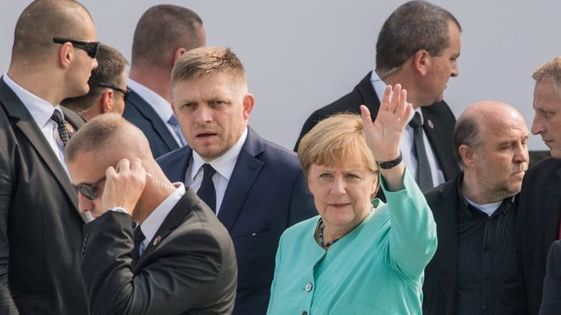
The EU is in a “critical situation”, the German chancellor says, as leaders meet to discuss ways to regain trust after the UK’s vote to leave the bloc.
Source: www.bbc.com
Some of this article is focused on the micro-issues of the day, but the larger issues of what is the proper role for an economic supranational organization is front and center. Should the EU have a military headquarters? How should the member states respond to the underlying tensions in the Union? Attached is a video showing residents of EU countries with a wide range of opinions about the organization and what it’s future should be and another video about the major topics on the table. Given that the politicians there are balancing personal, national, and European interests, it is a sticky wicket (if British phrases are still allowed, even if they are the only member state not invited to the summit).
Tags: Europe, supranationalism, economic, political, video.
“The invasion of Iraq was supposed to turn the country into a democracy that posed no threat to the United States, or the rest of the world. Thirteen years later, Iraq has collapsed into three warring states. A third of the country is controlled by ISIS, who have also taken huge amounts of territory in Syria. VICE correspondent Ben Anderson gains exclusive access to the three front lines in Iraq, where Sunni, Shiite and Kurdish forces are fighting for their lives. Anderson visits with the Russian military forces in Syria, meets captured ISIS fighters in Kurdistan, and interviews US policymakers about how the situation in Iraq spun out of control.”
Source: www.youtube.com
Many young students are especially baffled at how a terrorist organization can seize control of large chunks of territory. If you are looking for a good video introduction that explains how and why ISIS was able to gain power and than gain and maintain territory, this is it (it’s classroom safe despite the source).
Tags: Syria, war, conflict, political, geopolitics, Iraq, devolution, terrorism, ISIS, Middle East.
Video and Photographs of the event. All media is from the internet and not my own. I compiled all media from the internet and edited them together to tell the story of the deadliest attack on America.
Source: www.youtube.com
The compilation above was created by a teacher who realized that now none of his students were alive to remember how emotional it was for people to watch the horrific news unfold. Additionally, this video of how Canadians helped the U.S. paired with this lesson plan from the Choices Program will help students explore the human dimension of the September 11 attacks as will this lesson from Teaching History. For a geospatial perspective on 9/11, this page from the Library of Congress, hosted by the Geography and Map Division is a visually rich resources (aerial photography, thermal imagery, LiDAR, etc.) that show the extent of the damage and the physical change to the region that the terrorist attacks brought. The images from that day are a part of American memory and change how the event is remembered and memorialized in public spaces (if you want a touching story of heroism, the Red Bandana is moving). .
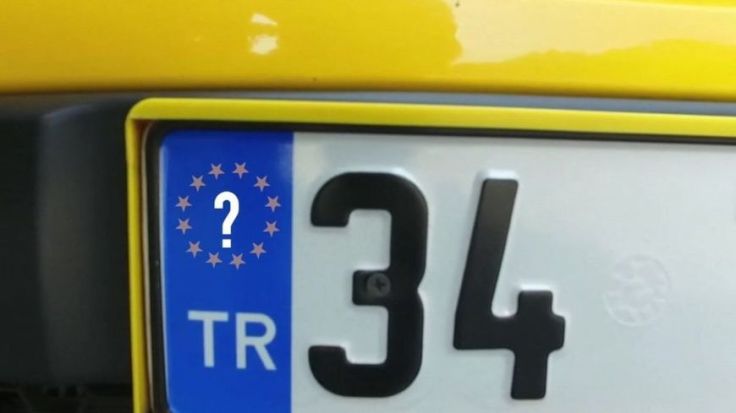
“As the UK prepares for what looks like a slow and painful divorce from the European Union, the people of Turkey are wondering how their relationship with Europe will now develop.
The government in Ankara has been seeking to strengthen its case to join the EU, but as Europe grapples with Brexit – is the Turkey’s membership closer or further away?”
Source: www.bbc.com
This video show some of the recent shifts in the always important, often rocky Turkey/EU relationship. Economically, Turkey has consistently sought greater ties with Europe for the past few decades and Europe keeps Turkey at arms length. Turkey has applied to join the EU, but that is not going to happen without some massive social restructuring that would take years.
Tags: Europe, Turkey, supranationalism, economic, refugees, political, video.




