Search

GEOGRAPHY EDUCATION

Supporting geography educators everywhere with current digital resources.

Tag

political

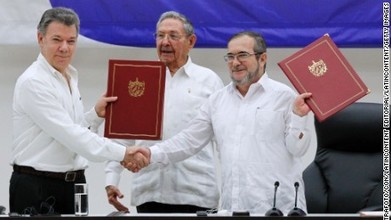
FARC-Colombia peace deal finalized

Negotiators seeking to end the insurgency in Colombia, one of the world’s longest-running conflicts, said they had reached a final peace deal.

Source: www.cnn.com

Farclandia has long been an insurgent state where the Colombian government had no real power to enforce the rule of law and their sovereignty over this area that all the political maps say are Colombia.   This shadowy place became a place where drug cartels could operate freely and many of the concessions that Colombia is making for this deal to happen involve amnesty for past crimes. 


TagsSouth America, Colombiapoliticalnarcotics. conflict.

Ethiopian runner makes protest sign as he crosses line in Rio

Feyisa Lilesa crosses his arms as he wins a silver medal – a gesture used by his Oromo people at home to protest against the government.

Source: www.bbc.com

The Olympics can bring to interesting cultural and political issues to a larger international audience.  The Oromo people in Ethiopia are off our collective radar, but this marathoner made the world pay attention and start to ask questions about a part of the world that rarely gets global attention.  Some other examples of how you can link students’ interest in the Olympics to expand their understanding about the world include:

What was your favorite ‘teaching moment’ from the Olympics?

Tags:  political, conflict, sport.

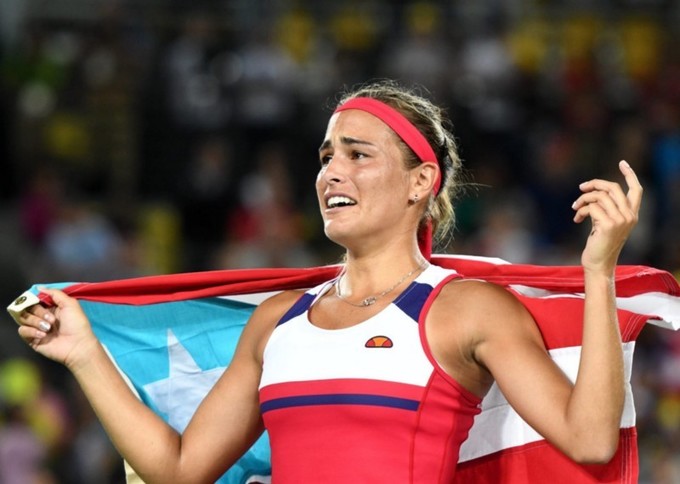
No America, You can’t claim Monica Puig’s Puerto Rico gold medal win as your own

“Like many boricuas on Saturday, Aug. 13, I celebrated when tennis player Monica Puig won gold in the single women’s division and became both Puerto Rico’s first gold win and a woman’s first gold win for the island. It was an overall historic moment that everyone back in the island basked in with full pride. I’ve noticed a trend on social media regarding the Olympics: multiple posts and tweets about how Puerto Rico shouldn’t compete independently, confused as to why Puerto Rico is competing in the first place or that a victory for Puerto Rico supposedly ‘counts’ because it’s a U.S. commonwealth.”

Source: medium.com

This is good article showing the distinct nationalism of Puerto Rico and its political ties with the United States.  This is but one of the many example of how you can link students’ interest in the Olympics to expand their understanding about the world.  Also, this protest of Iran’s gendered spaces is another poignant article.


Tags: Puerto Rico, political, autonomysport, popular culture.


Japan’s Emperor Akihito fears age could impact ability to rule

“In a rare televised speech, Japan’s Emperor Akihito has addressed his people directly about his declining health. A Japanese monarch has not stepped down in about 200 years.

Once revered as a living God, the Japanese emperor became a ceremonial figure in Japan’s constitutional monarchy after World War II. Occupying forces seized much of the imperial family’s wealth and today Parliament controls the household’s annual budget and allowances, which total well over $100 million.”

Source: www.cnn.com

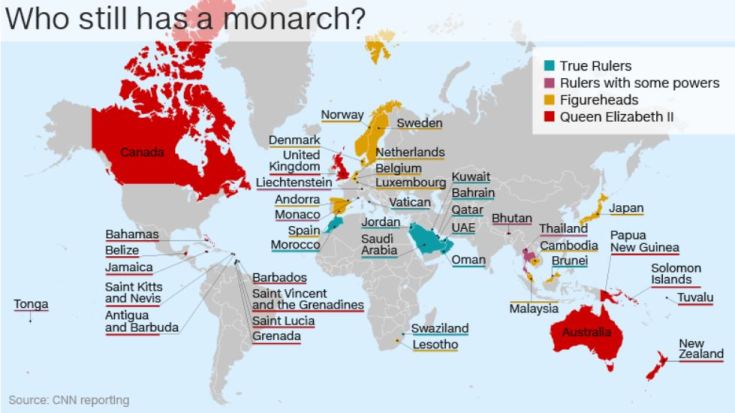
It’s amazing to think that this is only the 3rd public message from an Emperor since the invention of TV and the radio.  (1-Surrender to end WWII, 1945. 2-Fukushima nuclear disaster, 2011, 3-Emperor’s Declining health, 2016).  This news though, brings up the questions of how many monarchs still rule today, and with what amount of power do they actually have?  The map accompanying this gives the quick run-down.  


Tags: Japan, political.

When Mexico Was Flooded By Immigrants

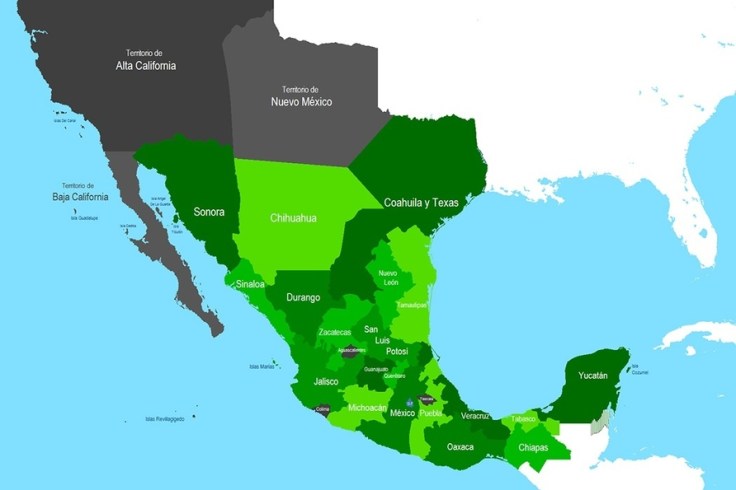
In the early nineteenth-century, Mexico had a problem with American immigrants.

Source: daily.jstor.org

A century and a half ago, the immigration debate and geopolitical shifts in power on the United States-Mexico border reflected a profoundly different dynamic than it does today.  This history has enduring cultural impacts on southwestern states that had the international border jump them.


Tags: culture, demographicsmigration, North Americahistorical, colonialism, borders, political.

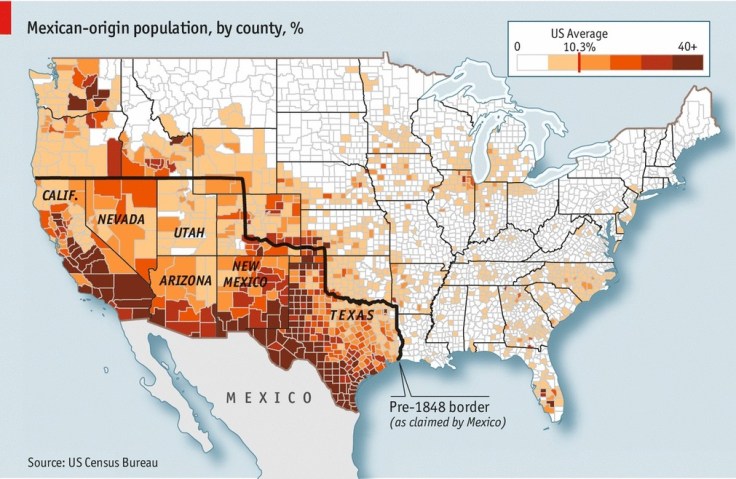
Old Mexico lives on

On February 2nd 1848, following a short and one-sided war, Mexico agreed to cede more than half its territory to the United States. An area covering most of present-day Arizona, California, Nevada, New Mexico and Utah, plus parts of several other states, was handed over to gringolandia. The rebellious state of Tejas, which had declared its independence from Mexico in 1836, was recognised as American soil too. But a century and a half later, communities have proved more durable than borders. The counties with the highest concentration of Mexicans (as defined by ethnicity, rather than citizenship) overlap closely with the area that belonged to Mexico before the great gringo land-grab of 1848. Some are recent arrivals; others trace their roots to long before the map was redrawn. They didn’t jump the border—it jumped them.


Tags: culture, demographics, North Americahistorical, colonialism, borders, political.

Source: www.economist.com

Why the Ukraine Crisis Is the West’s Fault

Conventional wisdom in the West blames the Ukraine crisis on Russian aggression. But this account is wrong: Washington and its European allies actually share most of the responsibility, having spent decades pushing east into Russia’s natural sphere of interest.

Source: www.foreignaffairs.com

Ukraine is culturally, economically, and geographically connected with Russia. It is a territory that Russia cannot afford to lose as a part of their sphere of influence.  John Mearsheimer, in his article Why Ukraine Crisis is the West’s Fault, gives a detailed account of NATO expansion and how it effected the Russian demand for hegemony in East Europe. Ultimately it is his conclusion that it was this expansion that provoked the Russians, and the current crisis is on the hands of the West. The will of a majority of Ukrainians is be begin economically aligning more with EU/NATO countries.  Ukraine decided against Russia, and Russia responded with force.   Here is an article where scholars weigh in and mostly disagree with the author’s provocative assessment


Tags: op-ed, Ukrainesupranationalism, Russia, geopoliticspolitical.


London Should Secede From the United Kingdom

Beyond the stunning act that has become Britain’s vote to leave the European Union lies a deeper message: Democracy is not destiny, but devolution. Ceaseless entropy — the second law of thermodynamics — applies to politics as well. The more countries democratize, the more local populations seek greater self-rule.

Source: foreignpolicy.com

In his book Connectography by Parag Khanna, he argues that connectivity and networks are more important today.  Using those ideas, Khanna discusses London’s options after the recent Brexit vote in this op-ed.

Brexit: Reaction and the Aftermath

“The reactions to the Brexit have come in from all corners.  Since this was so shocking, newspapers articles that are insightful are using hyperbole in their titles to get our attention (Britain just killed globalization as we know it–Washington Post; Will Brexit mark the end of the age of globalization?–LA Times).  There have also been some excellent political cartoons and memes, so I wanted to archive a few of them here.”  


Tags: Europe, supranationalismglobalization, economic, political, images.

Source: geographyeducation.org

Blog at WordPress.com.

Up ↑