Search

GEOGRAPHY EDUCATION

Supporting geography educators everywhere with current digital resources.

Tag

population

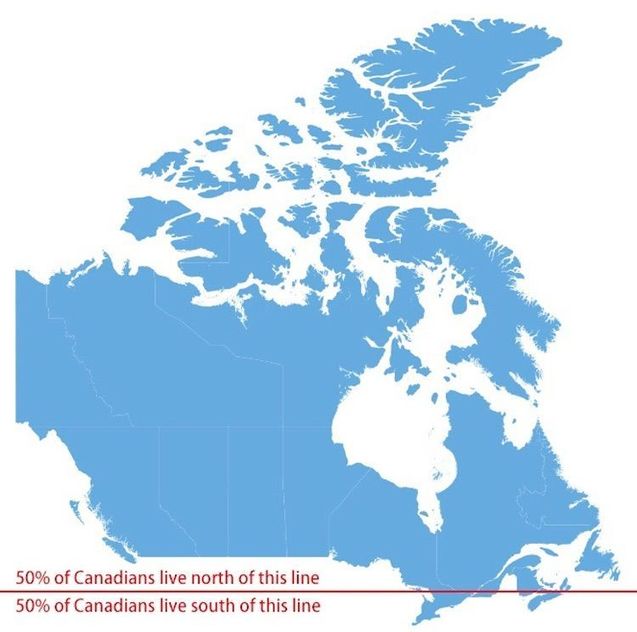
Canada is a huge country. Most of it is unfit for human habitation.

“The area below the red line includes most of Nova Scotia, in Canada’s east, but most of the population comes from the area a little farther west, in a sliver of Quebec and a densely populated stretch of Ontario near the Great Lakes.”

Source: www.vox.com

Admitted, the web Mercator projection of this map distorts the far northern territories of Canada, but still it hammers home some fascinating truths about Canada’s population distribution.  Land-wise, Canada one of the world’s biggest countries, but population-wise, most of it is quite barren.  What geographic factors explain the population concentration and distribution in Canada?  


TagsCanada, map, North America, population, density.

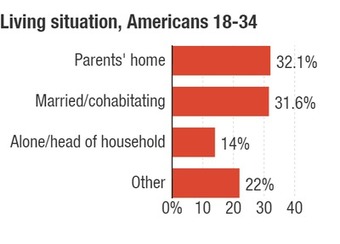
For First Time In 130 Years, More Young Adults Live With Parents Than With Partners

“For the first time in more than 130 years, Americans ages 18-34 are more likely to live with their parents than in any other living situation, according to a new analysis by the Pew Research Center.  Less educated young adults are also more likely to live with their parents than are their college-educated counterparts — no surprise, Pew notes, given the financial prospects in today’s economy.  Black and Hispanic young people, compared with white people, are in the same situation.  But the overall trend is the same for every demographic group — living with parents is increasingly common.  Still, young Americans are still less likely to live with their parents than their European counterparts, Pew says.

Source: www.npr.org

I find that the best statistics have great explanatory power, make sense when placed in the right context, and STILL manage to leave you amazed.  These stats fit that bill for me and as the school year is ending, it’s a milestone that doesn’t mean what it did for generations past.  32.1% of young adults in the U.S live with parents, and 48.1% of young adults in the European Union Union live with parents.   


Questions to Ponder: What are some contributing factors to this trend in the United States and Europe?  What does this say about housing costs, economic, and cultural conditions? 


Tags: socioeconomic, housingstatisticspopulation, cultural norms, culture.

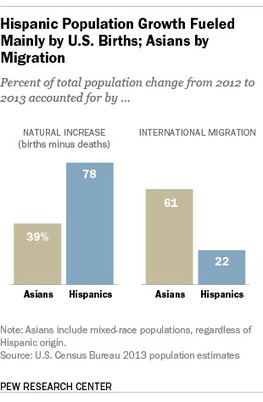
U.S. Hispanic and Asian populations growing, but for different reasons

Both Hispanics and Asians been among the fastest-growing racial/ethnic groups in recent years, but since 2010, number of Asians have increased at a faster rate.

Source: www.pewresearch.org

It is often noted that the cultural composition of the United States is undergoing a shift, referred to by some as the “Browning of America.”  The story of Asian and Hispanic growth in the United States are occurring simultaneously, which makes many assume that they are growing for the same reasons.  The data clearly shows that this is not the case.  

Tags: migration, USA, ethnicity.

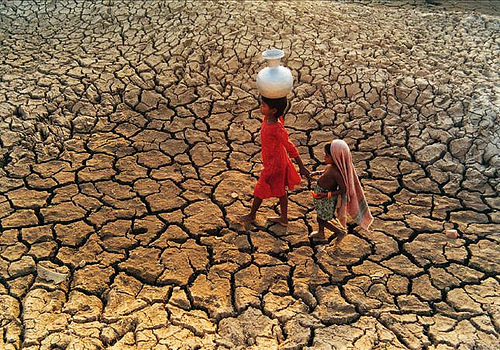
U.S. Intelligence Says Water Shortages Threaten Stability

Via Scoop.itGeography Education

“Competition for increasingly scarce water in the next decade will fuel instability in regions such as South Asia and the Middle East that are important to U.S. national security, according to a U.S. intelligence report.”

Geographic thinking is about uncovering the spatial connections between issues that on the surface might not seem related.  Multinational river basins are a perfect example of environmental resources that demand international cooperation for successful management, and it regions of scarcity and population growth, it is easy to envision clashing viewpoints on how to fairly share such resources.

Discussion questions: What geographic themes are evident in this article? What geographic problems could exacerbate the problem? What could alleviate these issues in the future?

Via www.businessweek.com

The Islamic World’s Quiet Revolution

Via Scoop.itGeography Education
“Forget politics. Muslim countries are poised to experience a new wave of change — but this time it’s all about demographics.”   
For generations the talk about demographics has been that Muslim-majority societies have cultural factors that keep fertility rates high despite the global trend that indicates that fertility rates will drop as societies become more wealthy and developed.  This ‘cultural immunity’ is not as impermeable as was once thought and we are now seeing falling birth rates and fertility rates throughout the Muslim World.  This article is heavy on statistics and charts, which would be a benefit to student as a potential Free Response Question.
Via www.foreignpolicy.com

The Russian Cross

Via Scoop.itGeography Education

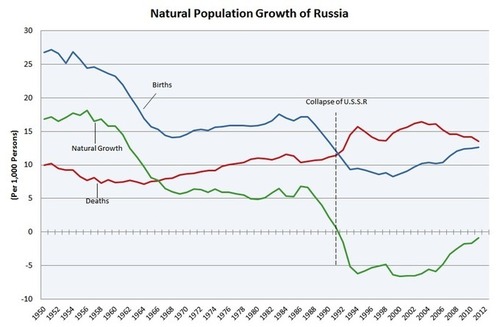
The economic and social turmoil after the fall of the Soviet Union was profound enough to be seen in the demographic statistics.  Birth rates dropped as the death rates went up.  Typically when birth rates drop it is presented as an indicator of social development, but it clearly is not in this instance.  What explains these statistics?
Via en.wikipedia.org

Create a free website or blog at WordPress.com.

Up ↑