Search

GEOGRAPHY EDUCATION

Supporting geography educators everywhere with current digital resources.

Author

sethdixon

I am a geography professor at Rhode Island College.

U.S. Intelligence Says Water Shortages Threaten Stability

Via Scoop.itGeography Education

“Competition for increasingly scarce water in the next decade will fuel instability in regions such as South Asia and the Middle East that are important to U.S. national security, according to a U.S. intelligence report.”

Geographic thinking is about uncovering the spatial connections between issues that on the surface might not seem related.  Multinational river basins are a perfect example of environmental resources that demand international cooperation for successful management, and it regions of scarcity and population growth, it is easy to envision clashing viewpoints on how to fairly share such resources.

Discussion questions: What geographic themes are evident in this article? What geographic problems could exacerbate the problem? What could alleviate these issues in the future?

Via www.businessweek.com

A Cartographic Rendering of Panem.

Via Scoop.itGeography Education

The Hunger Games fascination is at a high-water mark, and this dystopian Young Adult novel is set in a futuristic, post-apocalyptic, North America. While much of what was written isn’t geographically accurate, the capital and the districts that serve as its hinterland have numerous clues that connect with the current (and actual) geography of North America. Why not try to map it? While not an “accurate” project, this can be a fun way to infuse geography into an English class or vice versa. What would your map of Panem look like? How come?

Via aimmyarrowshigh.livejournal.com

The Sun Never Sets: How Facebook Connections Mirror Old Empires

Via Scoop.itGeography Education

How Facebook connections mirror old empires EIGHT years ago Facebook launched as an online social network connecting a small college community from a dorm room at Harvard University.

These graphic show how in a post-colonial world, former colonies are still socially intertwined in a cultural network that mirrors the empires of yesteryear.  Why are these modern social networks so similar to imperial patterns?  What economic explanations are there for these patterns?  What is the cultural impact?

Via www.economist.com

United States Holocaust Memorial Museum

Via Scoop.itGeography Education

I attended an outstanding workshop on Holocaust Education sponsored by the United States Holocaust Memorial Museum and was introduced to these excellent teaching materials that they have online. The Holocaust can be taught with a goal of making connections with present day prejudice, persecution and crimes of hate that mar this world. Collectively, the geographic legacies of genocide are long-lasting, and must be remembered.  For some local sources in Rhode Island, see: http://hercri.org/

Via www.ushmm.org

The Political Geography of Gasoline Prices

Via Scoop.itGeography Education

Rising gas prices make people unhappy, but the pain is felt most acutely in states where it is unlikely to make an electoral difference.

There are numerous geographic themes that make this article a worthwhile read.  The evidence suggests that states the vote more solidly Republican are being hit hardest at the pump.  Gasoline expenditures as a share of personal income are higher in pro-Republican states than pro-Democrat states.  Understanding the demographic base of each party as well as population density explains much of this issue: states that are very rural drive greater distances with less public transit option, spending more per capita on gasoline.  Also, since the most affluent urban centers are Democrat-leaning, they spend a less sizeable portion of their income on gasoline.  This article would be a nice resource for a classroom/small group discussion.

Via economix.blogs.nytimes.com

NYTimes Video: Linking Gaza to the Outside World

Via Scoop.itGeography Education

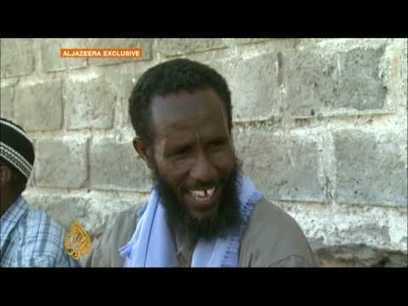
A look inside the controversial underground tunnels that link Egypt and the Gaza Strip, where smugglers funnel fuel, food, and potentially weapons into the isolated territory.

This video is a look inside the some of the hundreds of tunnels that are used to smuggle goods into Gaza that have become more intensely used since the blockade on goods that went into effect in 2007 when Hamas came to power.  Also, members of the Israeli military demonstrate the evidence they have that these tunnels are being used to bring weapons.

Via video.nytimes.com

Despite Restrictions, Gaza Finds A Way To Build

Via Scoop.itGeography Education

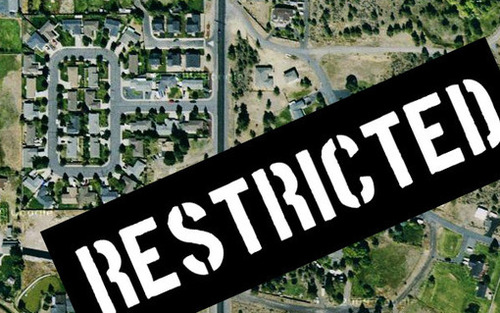
The Palestinian territory is in the midst of a construction boom, more than three years after a major Israeli assault that left much of the territory in ruins.


There has been a formal ban on building materials entering Gaza since 2007 (when Hamas took over the territory) since the Israeli government fears they could be weaponized or aid the military efforts.  Still, if the demand is high enough, some of the supply will still enter as we goods entering Gaza through smuggling tunnels from the Egyptian city of Rafah. 

Via www.npr.org

How do you tell which car is more American?

Via Scoop.itGeography Education

Joe Luehrmann likes American cars, has owned a string of them and is considering buying another. But he faces a problem in trying to figure out what’s American anymore.


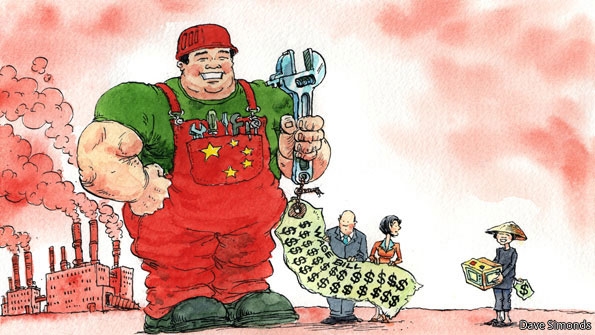
The globalization of industrial output and manufacturing had erased much of the meaning between ‘foreign’ and ‘domestic’ products.  Is it foreign if the company is headquartered in Japan, but has a manufacturing plant in California?  Is it domestic is Detroit company produces the car the maquiladora region of Northern Mexico?  This doesn’t even address this issue that any one vehicle with parts that are literally made all over the world.  Interestingly truck buyers are seen as the more patriotic, and companies emphasize their “Americanness” to cater to the cultural and economic sensibilities of their key demographic. 

Via www.usatoday.com

Guns, Germs and Steel

Via Scoop.itGeography Education

This video (like the book of the same title) explores the course of human history to find the geographic factors that can help to explain the global inequalities between societies. Jared Diamond’s answer lies in the military strength (guns), superior pathogens (germs) and industrial production (steel) that agricultural societies were able to develop as the critical advantages over hunter/gatherer societies. The raw materials at the disposal of the societies inhabiting particular environments partially explain the economic possibilities before them.

Diamond hypothesizes that the orientations of the continents play a critical role in the relative advantages among agricultural societies (East-West orientations allow for greater diffusion of agricultural technologies than North-South orientations since the growing seasons and ecology are more compatible), giving Eurasia an advantage over Africa and the Americas. The Fertile Crescent had native plant and animal species ideal for domestication, which then diffused to Europe. Societies that have more developed animal husbandry develop a resistance to more powerful germs. Consequently, when two societies come in contact those with the best resistance to the worse diseases are more successful. Similarly, industrial production depends on an agricultural surplus since specialization requires that some workers not needing to produce their own food to work on technological innovations. Societies that had agricultural advantages were able to invest in technologies (primarily steel) that would enhance their advantages over other societies, as seen during colonization. Societies that had the best environments had access to large plant eating mammals suitable for domestication and the most productive grains would be poised to produce more dangerous guns, germs and steel—the key resources for economic dominion resulting in global inequalities.

Diamond’s critics argue that the ‘geography hypothesis’ is environmental determinism that does not properly value human choices into the equation. Still, the core of this book is the search for connections between the themes of Geography with a spatial framework and the video is available via Netflix, public libraries and many other outlets.

Via www.pbs.org

Blog at WordPress.com.

Up ↑