Search

GEOGRAPHY EDUCATION

Supporting geography educators everywhere with current digital resources.

Author

sethdixon

I am a geography professor at Rhode Island College.

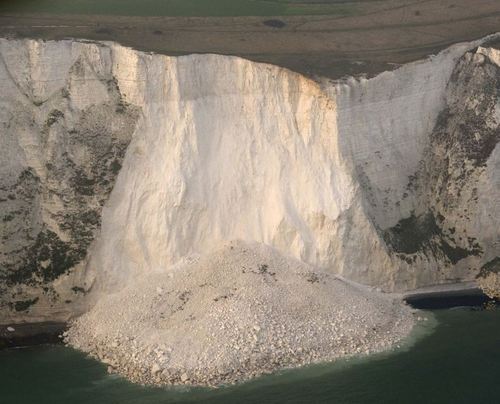
Anthropocene: Why You Should Get Used to the Age of Man (and Woman)

Via Scoop.itGeography Education

The cover package of this week’s TIME—which should still be on newsstands—detailed the 10 ideas that are changing your life. What kind of ideas, you ask?

“Welcome to the Anthropocene. It’s a new geological epoch, one where the planet is shaped less by natural forces then by the combined activity, aspirations—and emissions—of more than 7 billion human beings.”  Humanity’s technological advancements and impact on the Earth’s planetary systems is significant enough that many scientists agree that it has fundamental shifted the geologic paradigm.

Via ecocentric.blogs.time.com

Tajik Remittances From Russia up 30%

Via Scoop.itGeography Education

Tajik migrants working in Russia sent to $2.96 billion in remittances to their families in Tajikistan in 2011, over 30 percent more than the previous year, National Bank Deputy Chairman Malokhat Kholikzoda said on Thursday.   The higher the national dependence on remittances, the worse off the country is essentially at being economically independent and viable. 
Via en.ria.ru

Will There Be a Central Asian Spring?

Via Scoop.itGeography Education

Kazakhstan may not be ripe for revolution, but the West is making the same mistakes it made in the Arab world.
Via www.foreignpolicy.com

The meaning of ‘Kony 2012’

Via Scoop.itGeography Education
A warlord goes viral….

This video was the most explosively viral video in the young history of online media content that is distributed through social media networks.  What does it all mean?  I find this to be a thoughtful article that isn’t a wholehearted embrace, nor is it a knee-jerk reaction against the #stopkony movement.

For geography teachers, I see several take-home points from this: 1) this is a teaching moment to discuss ethnic conflicts and political instability in Sub-Saharan Africa and the social problems that plague a society in that context.  2) This is a powerful demonstration of the impact that social media.  Social Media is much more than chatting with friends, it can be a key component to what Friedman would describe as the ‘flattening’ of the Earth, a technological tool that has accelerated the pace of globalization.  3) This is also a teaching moment to correct some of the cultural bias that was evident in the video.  Chances are, students in your classroom have seen the video, have heard some of the reaction, and could use some direction in evaluating the meaning behind the phenomenon.
Via www.washingtonpost.com

What America Manufactures

Via Scoop.itGeography Education

“It’s a myth that the U.S. doesn’t make anything anymore.” 

The U.S. economy still produces more through manufacturing tangible goods ($1.5 trillion) than it does in providing services ($600 billion) for the international market.  The maps and graphs in this article are great teaching materials.  The impact of NAFTA is shown powerfully in the regionalization of U.S. trade partners, making this salient material for a discussion on supranationalism as well.
Via www.npr.org

Genetically Modified Foods

Via Scoop.itGeography Education

“93% of Americans want the FDA to label genetically engineered foods. Watch the new video from Food, Inc. Filmmaker Robert Kenner to hear why we have the right to know what’s in our food.”

Clearly this video has a political agenda, but this is a pertinent video to show in an Agriculture unit.  Many countries around the world require the labeling of genetically modified food products, while the United States (currently) does not.  The organization that sponsored this video and  Health blog‘s are concerned about how this impacts nutrition in the United States, having uninformed food consumers.  Political action is currently underway in the United States to change this.
Via www.youtube.com

Sporcle: Geography Quizzes

Via Scoop.itGeography Education

The best trivia games and quizzes on the internet.   With over 800 games and quizzes on this site with varying skill levels, there is something for everyone here.  Some are standard quizzes such as “European Countries” or “Asian capital cities.”  However some get you to reorganize your global knowledge in ways you’ve never considered.  For example, What is the most populous city in the world for each given time zone (not that easy right)?   
Via www.sporcle.com

For Afghan Policewomen, Sex Abuse Is A Job Hazard

Via Scoop.itGeography Education
The Afghan security forces now include hundreds of women, but they can face significant risks. In the northern city of Mazar-e-Sharif, policewomen say abuse is widespread and even includes rape by their male colleagues.  

Warning: this podcast is an uncomfortable listen, but truly highlights how different a world it can be for women in countries with rigid gender norms.  Gender norms and public space play a critical role in how many societies think about what is often considered “appropriate” behavior.

Discussion Points: what efforts should be encouraged in Afghanistan to prevent this sort of problem?  WHO should be sponsoring these efforts for them to be most successful? How might a ‘good plan on paper’ backfire if you don’t understand the cultural geography of the region?
Via www.npr.org

Mercator’s 500th birthday: ArcGIS Resource Center

Via Scoop.itGeography Education

While the web mapping world still relies too much on the Mercator projection for my preference, it is a testament to the enduring impact that his ideas have had in literally shaping our World.  When discussing map projections, this article has some valuable materials. 
Via blogs.esri.com

Create a free website or blog at WordPress.com.

Up ↑