Search

GEOGRAPHY EDUCATION

Supporting geography educators everywhere with current digital resources.

Author

sethdixon

I am a geography professor at Rhode Island College.

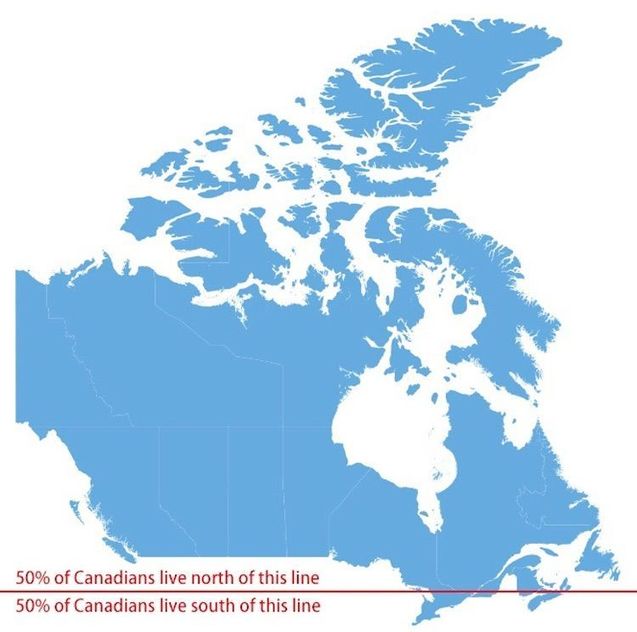
Canada is a huge country. Most of it is unfit for human habitation.

“The area below the red line includes most of Nova Scotia, in Canada’s east, but most of the population comes from the area a little farther west, in a sliver of Quebec and a densely populated stretch of Ontario near the Great Lakes.”

Source: www.vox.com

Admitted, the web Mercator projection of this map distorts the far northern territories of Canada, but still it hammers home some fascinating truths about Canada’s population distribution.  Land-wise, Canada one of the world’s biggest countries, but population-wise, most of it is quite barren.  What geographic factors explain the population concentration and distribution in Canada?  


TagsCanada, map, North America, population, density.

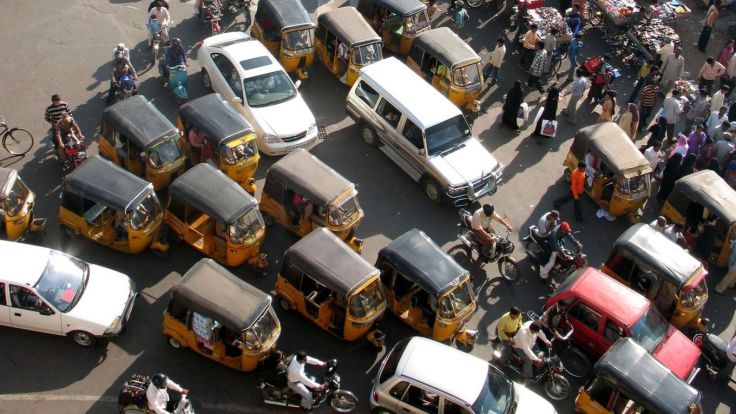
Bad drivers are a good indicator of a corrupt government

“Traffic accidents kill 1.25 million people per year, and it’s well-known that those deaths are disproportionately in low- and middle-income countries. Over at CityMetric, writer James O’Malley has added an interesting wrinkle, by showing a correlation between the number of traffic fatalities in a country and the corruptness of its government.”

Source: qz.com

I love the last paragraph in this article because it echoes the “Broken Windows” theory–not at the neighborhood scale, but for the state.  Horrible driving isn’t the worse thing for a country, but it is indicative of the degree of social trust in each other and in the collective system; corruption erodes both. 


“Bottom line: If you’re in a country where everyone drives on the sidewalk and nobody stops at stop signs, you can be pretty sure the government isn’t working right.”


Tags: political, governancetransportation.

2016 APHG Reading Newletters

APHG Newsletter Banner Greetings from Cincinnati, OH, home of the 2016 AP Human Geography reading.  Over 600 professionals are here to score over 187,000 exams.  I’ve been delighted in the past to share the Professional Development activities and newsletters and will continue to do so.  This post will be updated throughout the reading (June 2-8).

Pisa tests to include ‘global skills’ and cultural awareness

Pisa tests, an international standard for comparing education systems around the world, could include a new measurement of global skills in the next round of tests in 2018. The OECD, which runs the tests in maths, reading and science, is considering adding another test which would look at how well pupils can navigate an increasingly diverse world, with an awareness of different cultures and beliefs. The OECD’s education director Andreas Schleicher explains why there is such a need for new rankings to show young people’s competence in a world where globalisation is a powerful economic, political and cultural force.

Education leaders around the world are increasingly talking about the need to teach ‘global competences’ as a way of addressing the challenges of globalisation.”

Source: www.bbc.com

They define global competence as: “the capacity to analyse global and intercultural issues critically and from multiple perspectives, to understand how differences affect perceptions, judgements, and ideas of self and others, and to engage in open, appropriate and effective interactions with others from different backgrounds on the basis of a shared respect for human dignity”.


So I guess geography does matter then.  Who knew? 


Tagsgeography education, unit 1 GeoPrinciples.

Crafting a Sense of Place

Talk about creating a sense of place! This neighborhood in #Covington draws on German roots to create a restaurant/pub district. Even the non-German restaurants in the area evoke an old world cultural landscape aesthetic in a way that makes the neighborhood appealing to visitors and prospective residents. #culturallandscape #placemaking.”


Source: www.instagram.com

I love exploring the cultural landscapes in and around Cincinnati every year during the #APHGreading.   


Tags: neighborhoodlandscapeurban, place, social media, APHG, Cincinnati


VIDEO: Saving the art of mapmaking

“If you’re heading out on the road for your vacation this year, you’ll probably get directions from a GPS or navigational system. Does that mean that the traditional map is a relic of the past? Mark Albert hits the road to find out.”

Source: www.cbsnews.com

This video is designed for a general news audience and it nicely shows the public how cartography is not rendered unimportant in the era of digital maps, but has become all the more useful.  I could see this video as useful resource to share with parents who are worried that studying geography won’t lead to careers.  


Tags: GIS, video, mapping, cartography, geospatial, technology.

Cutting Haiti’s Forests

The major environmental problem facing Haiti’s biodiversity is explained, including video of tree-cutting within a national park.

Source: www.youtube.com

Deforestation does not happen in a vacuum–it occurs in an economic, political, and historical context.  Having successfully staged a slave revolution against France in 1806, they were ostracized from the global community (since the powers that be did not want to see slave rebellions or colonial uprising elsewhere) and were forced to look within for their own energy resources.  The nation’s forests were (and still are) converted into charcoal, leading to long-term environmental problems such as soil erosion, flooding, and habitat destruction for many species.  All of this increased  increased Haiti’s disaster vulnerability in the earthquake of 2010.     


Tags: Haiti, biogeography, environmentecology, video, poverty, development, economic, labor.

Why Africa’s migrant crisis makes no sense to outsiders

“Violence and insecurity are so bad that other war-torn countries have become sites of refuge.”


In 2015, nearly 100,000 Ethiopians and Somalis traveled by boat to Yemen, one of the world’s most dangerous countries. Last year, nearly 5,000 citizens of Congo, which is fighting powerful rebel groups, were seeking refuge in the Central African Republic, itself torn apart by civil war. And yet 10,000 Burundians have fled their country’s own growing civil unrest for Congo. Thousands of Nigerians escaping the extremist Islamist group Boko Haram have gone to Chad, where different strains of that same insurgency conduct frequent deadly attacks. 


Developing countries have long taken in a disproportionate number of the world’s refugees — roughly 80 percent, according to the United Nations. But even for migration experts and relief workers, the willingness of refugees to leave one war for another is shocking. It’s also proving an enormous challenge for humanitarian agencies, which are already overstretched and often not equipped to welcome refugees in countries that are still racked by conflict.


Tags: refugeesAfrica, migration, conflict, political, war

Source: www.washingtonpost.com

Haiti: From Recovery to Sustainable Development

//cdn.embedly.com/widgets/media.html?src=https%3A%2F%2Flink.brightcove.com%2Fservices%2Fplayer%2Fbcpid74508896001%3Fbctid%3D4651761801001%26secureConnections%3Dtrue%26secureHTMLConnections%3Dtrue%26linkSrc%3Dtwitter%26autoStart%3Dfalse%26height%3D100%2525%26width%3D100%2525&wmode=opaque&url=http%3A%2F%2Flink.brightcove.com%2Fservices%2Fplayer%2Fbcpid74508896001%3Fbckey%3DAQ%7E%7E%2CAAAAADraVCk%7E%2C_iousidU67F4p_MQwYYMqwTlZK8h4hDh%26bctid%3D4651761801001&image=http%3A%2F%2Fbrightcove.vo.llnwd.net%2Fe1%2Fpd%2F987386921%2F987386921_4651835419001_4651761801001-vs.jpg%3FpubId%3D987386921&key=359ed8ab27db4f02a128049b1f89d6a1&type=text%2Fhtml&schema=brightcove

“Since the 2010 earthquake, Haiti has successfully pulled through the humanitarian recovery phase and seen significant socioeconomic gains. Yet as Haiti moves toward long-term, sustainable development, the country faces significant challenges. The political system remains fragile, sustainable jobs are scarce, and the environment is still as vulnerable now as it was then.”

Source: link.brightcove.com

While this is primarily a promotional campaign for the UNDP’s efforts in Haiti, it nicely contextualizes the problems that Haiti faces before discussing how to improve the situation.  Some keys for the future include: 

  • Governance and Rule of Law
  • Recovery and Poverty Reduction
  • Disaster Risk Reduction
  • Environmental Management
  • Medical Outbreak Management  


Tagsdisasters, Haiti, NGOspoverty, development, video.

Create a free website or blog at WordPress.com.

Up ↑