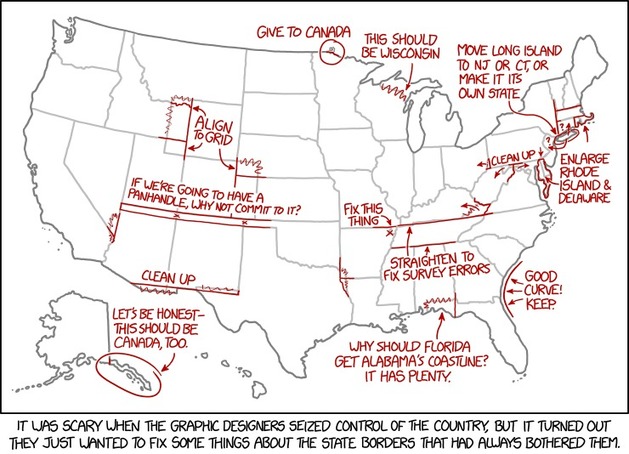
I imagine most geographers have wanted to tinker with state or international borders to ‘fix them’ in one way or another…but if any ‘correction’ were to be made, whose criteria would be used? Which people in which regions would be upset by the changes? Historical inertia is a power force in maintaining the status quo. When France was preparing to consolidate it’s administrative regions, 68% recognized that consolidating regional administration would be more efficient but 77% didn’t want it to impact their own local region.
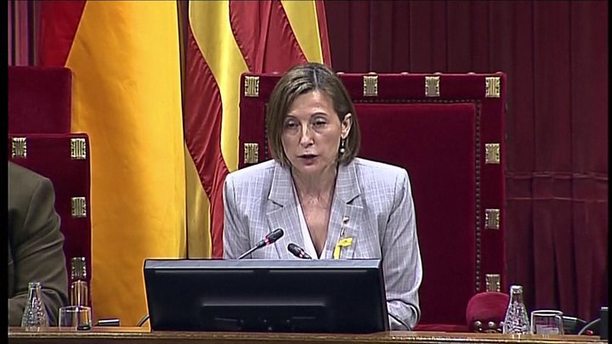
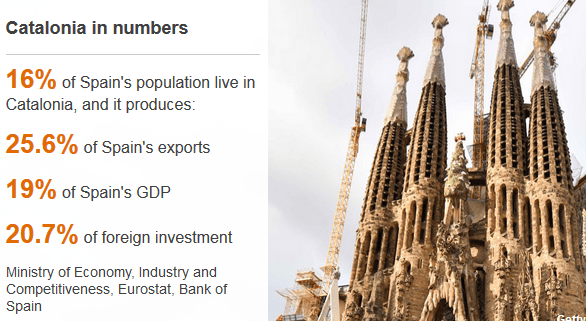
“The Catalan regional parliament has voted to declare independence from Spain, while the Spanish parliament has approved direct rule over the region. Catalan MPs backed the motion 70-10 in a ballot boycotted by the opposition. Spanish Prime Minister Mariano Rajoy had told senators direct rule was needed to return ‘law, democracy and stability’ to Catalonia. The crisis began when Catalans backed independence in a disputed vote earlier this month. The Catalan government said that of the 43% of potential voters who took part in the referendum, 90% were in favour of independence. But Spain’s Constitutional Court had ruled the vote illegal.”
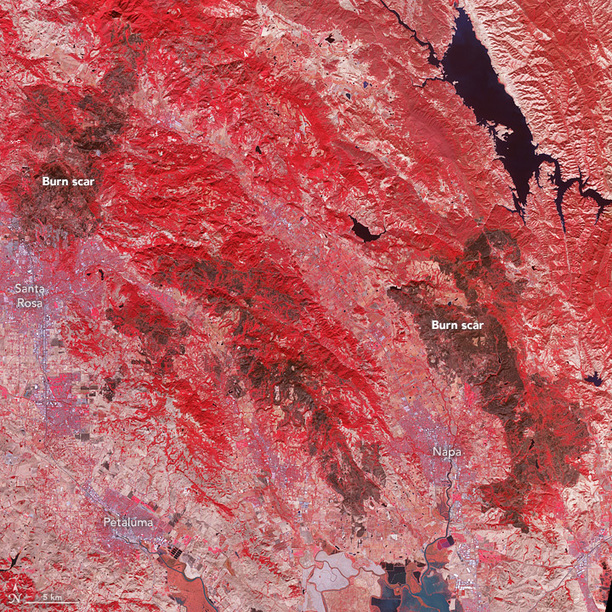
“Devastating wildfires burned through California’s wine country in October 2017, taking several lives and leaving thousands of people homeless. On October 21, the Advanced Spaceborne Thermal Emission and Reflection Radiometer (ASTER) on the Terra satellite acquired this false-color image of the burn scars left by the Tubbs (upper left), Nuns (center), and Atlas (lower right) fires. Unburned vegetation appears red; burned vegetation appears brown. Buildings, roads, and other developed areas appear light gray and white.”
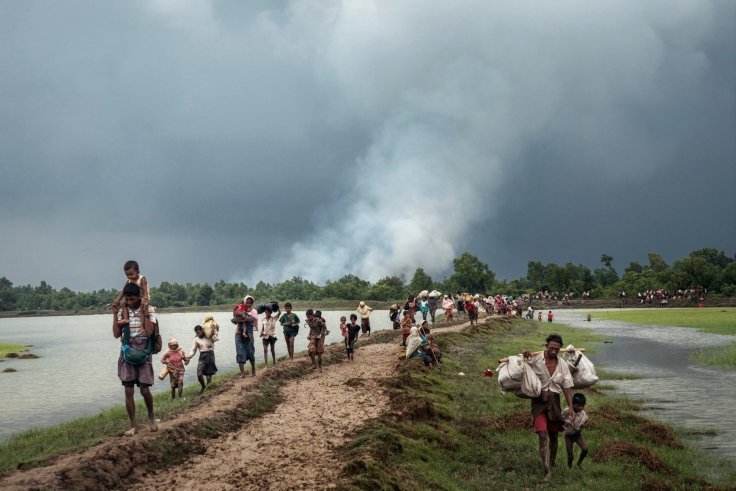
“Why are hundreds of thousands of Rohingya refugees fleeing Myanmar? Who are the Rohingya and why are they being persecuted? What responsibility does the world have to end what the United Nations is calling ‘ethnic cleansing’ and manyare labeling ‘genocide’? In this lesson, students will first learn about the crisis unfolding in Myanmar using Times reporting, videos, podcasts and photography. Then, we suggest a variety of activities for going deeper, such as tackling universal questions about national identity and minority rights, considering the responsibility of the world community, and going inside the squalid refugee camps sprawling across the border in Bangladesh.”
This video explores some of the impacts of a declining population on a country (for example, a smaller workforce, economic decline, and growing public debt). Eastern Europe as a region is used as the principle example and the countries of Bulgaria, Moldova, and Japan are highlighted.
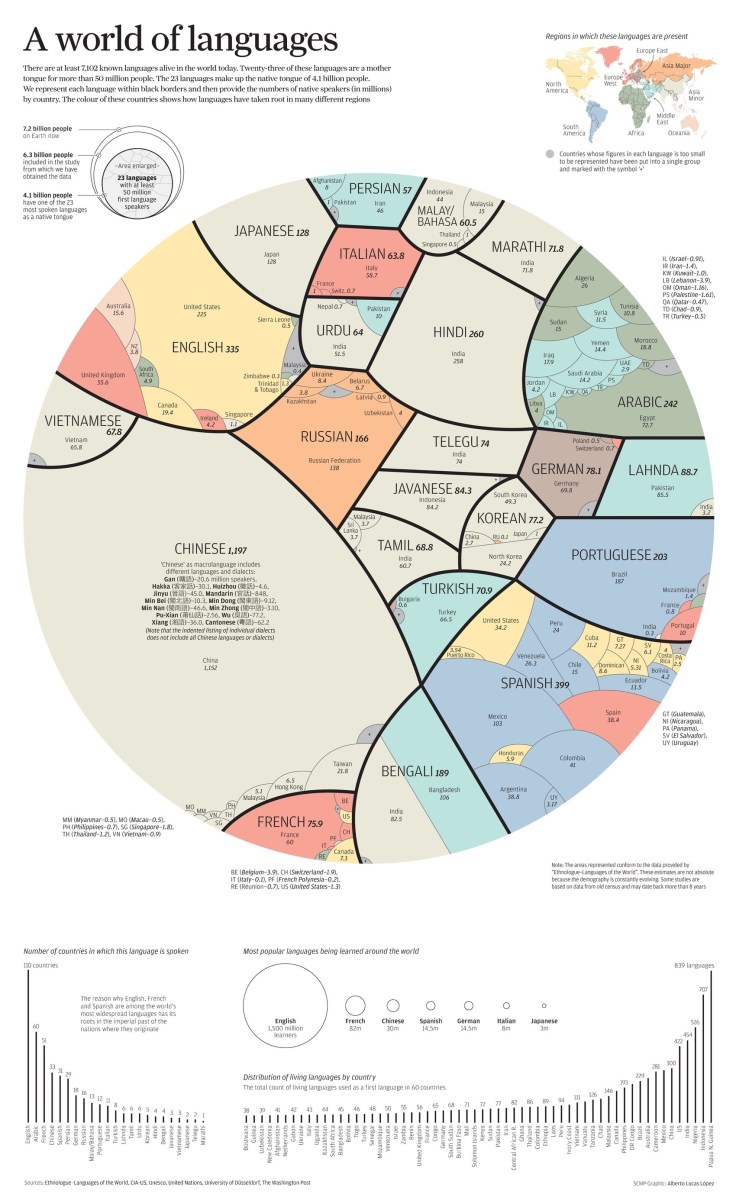
This infographic has been making the rounds again this year and it is worth shaing again. It is a great way to visualize the dominant languages on Earth. Since this only counts one language per person, mother tongues are listed. Consequently, lingua franca’s such as English and France are smaller than you might have presumed them to be.
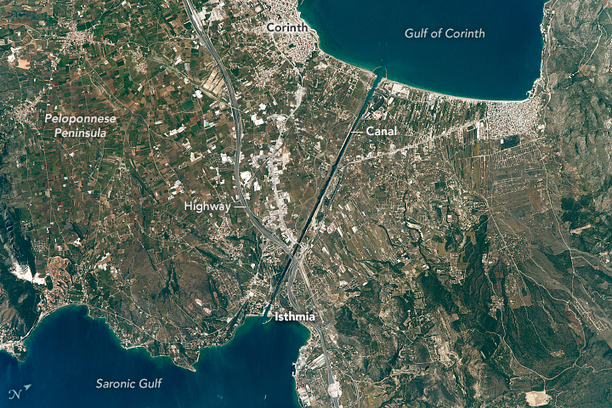
“This photograph, taken by an astronaut aboard the International Space Station, shows the straight line of the Corinth Canal as it crosses a narrow isthmus between mainland Greece (right) and the Peloponnese Peninsula. The canal cuts through the narrowest part of the isthmus of Corinth. The goal was to save ships from the dangerous 700-kilometer voyage around the ragged coastline of the peninsula.”
Questions to Ponder: What does the word Isthmus mean and how does this image help tell that story? When did people start modifying Earth’s physical systems? What factors do we need to consider when evaluating the impacts of human modifications to the environment?
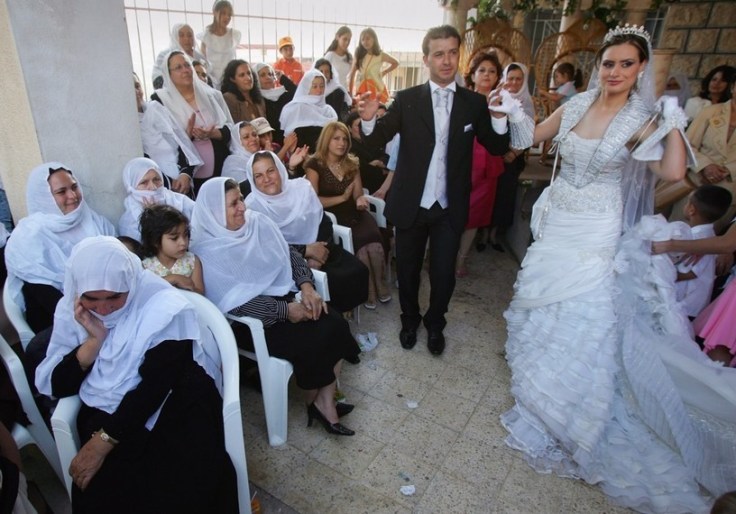
“Think modern dating is tough? Try hunting for a husband or wife in the Druze community—adherents are forbidden from marrying outside of the faith. This desire to marry someone within the faith is not just a preference—the religion prohibits exogamy. If a Druze marries a non-Druze, it will not be a Druze wedding, nor can the couple’s children be Druze—the religion can only be passed on through birth to two Druze parents. There are no conversions into the Druze faith.”
Baseball in South Korea is more than a game. It’s akin to a religion. American missionaries first brought the sport to the peninsula in 1905, and the country absolutely loved it. Today, the Korean Baseball Organization (KBO) features 10 teams and a unique sporting culture all its own. The city of Busan and its hometown Lotte Giants have a particularly passionate fan base. From the hitters’ flashy bat flips, to the team’s famous “cheermaster” and its unlikely American super fan, consider this is your crash course on the joyful madness that is Lotte Giants fandom.
If a sport (or other cultural practice) diffuses to a new place, is it going to look exactly the same as it does in the original cultural hearth? The bat flip is the go-to difference between Korean and American baseball, but there are other differences. Maybe, or like baseball in South Korea, it can have a culture all its own. This is an interesting story that shows how the diffusion of cultural traits around the globe doesn’t have to lead to a more bland cultural mosaic. As cultural traits are reterritorialized into new places, they add vibrancy to the cultural fabric of the institution/sub-culture that they’ve adopted.



 GEOGRAPHY EDUCATION