Search

GEOGRAPHY EDUCATION

Supporting geography educators everywhere with current digital resources.

Category

Uncategorized

U.S. Protestants Lose Majority Status

For the first time in its history, the United States does not have a Protestant majority, according to a new study.

Interestingly, this is not due to the rise of a new religious group, but the rise of secularism in the United States. The fastest growing group in the United States is the religiously unaffliliated. Click here for a simplified AP news story on the report. 

Questions to ponder: What are some causal factors that might explain why there is an increase in the non-religious population in the United States today? How does this impact American culture and politics?

Tags: religion, USA, culture, unit 3 culture.

See on www.pewforum.org

Geographic Ignorance

Chelsie Hightower is confused on DWTS. Helio Castroneves does his best to educate her. Does he succeed? LET’S FIND OUT.

This is painful, but highlights once again why everyone should learn some basic geography.

Tags: GeographyEducation, video.

See on www.youtube.com

The Archipelago of Eastern Palestine

The shape of a state can greatly impact the political cohesion of a country as well as it’s economic viability.  While this is obviously a fictitious map, it draws our attention to the logistic difficulties that confront Palestine with the Israelis controlling crucial transportation access points and corridors.   

Questions to Ponder:  How is the a ‘persuasive map?’ What are some of the geographic impacts of this fragmentation on Palestine? For Israel?


Tags: cartography, MiddleEast, political, states, territoriality, unit 4 political.

See on bigthink.com

The Digitally Curated Textbook–My NCGE Presentation

The 2012 NCGE conference has been tremendous; I plan on sharing many of the resources that I’ve discovered with you over the next few weeks.  October 6th is the day of my presentation an I’ve uploaded my slides (with hyperlinks included) here: Empowering Students: The Digitally Curated Textbook.

The Economic and Political Impact of Immigrants, Latinos and Asians State by State

Not every state is equally impacted by migration, and the demographic profile of migrants is different for every state. This is an online mapping tool to search a large database that can give the user state specific information about the impact of economics and politics based on migration from Latin America and Asia on any given state.

Tags: Immigration, unit 2 population, migration, economic, statistics, mapping, political.

See on www.immigrationpolicy.org

80% of Americans Live Within 20 Miles of a Starbucks

The green dots on this map representing Starbucks locations which are obviously clustered in major metropolitan centers.  Cross-referencing this Starbucks address location with population data, Davenport explains his mapping technique: “By counting the number of people who live within a given distance to each Starbucks, we can measure how well centered Frappuccinos are to the US citizenry. In other words: draw a 1-mile circle around every store, then add up the % of the population living within the circles. Repeat for 2, 3, 4….100 miles.”   The result of this data is a fabulous logrithmic S-curve which explains much about the American population distribution.   

Tags: statistics, density, consumption, mapping, visualization, urban.

See on www.theatlanticwire.com

Mixing Past And Present In Papua New Guinea

Papua New Guinea, once home to cannibals, still has an exotic aura. The local tourist economy caters to those notions, and visitors may see a hybrid of the traditional and the modern.

This story is an intriguing blend–we see traditional cultures engaging in the global economy. They have created two villages: a traditional one designed for tourism filled with emblems of their folk cultures, and another one where people work, live eat and play with various markers of outside cultural and technological influence.

“Tourists are taking pictures. They don’t want to take pictures of those who are in Western clothes.  People who are in Western clothes are not allowed to get close to people who are dressed up in the local dressings.”

Questions to Ponder: Which village do you see as the more “authentic” one? How can culture also be a commodity?

Tags: folk culture, tourism, indigenous, culture, economic, rural, historical, unit 3 culture, Oceania.

See on www.npr.org

Making Sense of Maps

TED Talks Map designer Aris Venetikidis is fascinated by the maps we draw in our minds as we move around a city — less like street maps, more like schematics or wiring diagrams, abstract images of relationships between places.

This video touches on numerous themes that are crucial to geographers including: 1) how our minds arrange spatial information, 2) how to best graphically represent spatial information in a useful manner for your audience and 3) how mapping a place can be the impetus for changing outdated systems. This is the story of how a cartographer working to improve a local transportation system map, which in turn, started city projects to improve the infrastructure and public utilities in Dublin, Ireland. This cartographer argues that the best map design for a transport system needs to conform to how on cognitive mental mapping works more so than geographic accuracy (like so many subway maps do).

Tags: transportation, urban, mapping, cartography, planning, TED, video, unit 7 cities.

See on www.ted.com

Martin Luther King Street


A teaser trailer for the MLK Streets Project, a documentary film examining the state of the many avenues, boulevards and thoroughfares named after the slain …

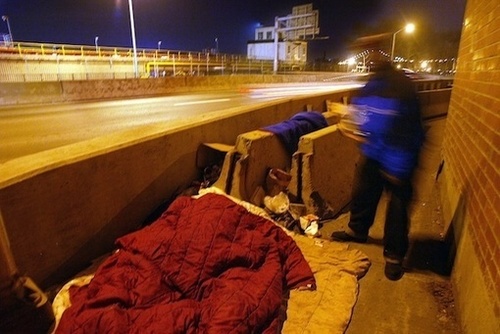
This video echoes much of what the authors of the fantastic book “Civil Rights Memorials and the Geography of Memory” say (in fact one of the authors is shown in this video).  Throughout America, streets that are named after Martin Luther King Jr. frequently are in poor, crime-ridden neighborhoods.  This video highlights the irony between the historical memory of Martin Luther King Jr. and places of memorialization that bear his name.

Questions to ponder: If Matin Luther King Jr. represents non-violence, then why are streets bearing his name often in ‘violent’ neighborhoods?  Where should Martin Luther King be memorialized in the United States?  Only in the South?  Only in predominantly African-American communities?  Do the geography of the spaces where he is memorialized say something about the United States?

Tags: historical, culture, landscape, place, race, unit 3 culture, USA, urban, poverty, unit 7 cities, book review.

See on www.youtube.com

Blog at WordPress.com.

Up ↑