Search

GEOGRAPHY EDUCATION

Supporting geography educators everywhere with current digital resources.

Category

Uncategorized

Syria’s war: Who is fighting and why

Watch how the Syrian civil war became the mess it is today.

Source: www.youtube.com

A few weeks back I posted a shorter (90 seconds) BBC video on the Syrian war.  This Vox video adds more detail and includes a very helpful timeline to show how more internal and external forces became involved in the fighting.  This is an incredibly complicated geopolitical situation because of all the regional and international players involved.  


TagsSyria, war, conflict, political, geopolitics.

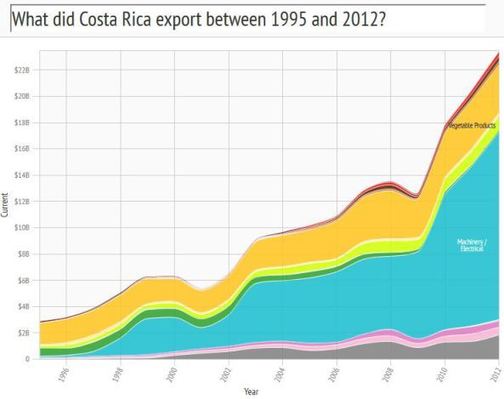
The Atlas of Economic Complexity: the Case of Costa Rica

“Understanding global trade and economic data can feel overwhelming, but fortunately there are online tools that help us to visualize complex economic data. The data in these charts was incredibly easy to gather, thanks to the Atlas of Economic Complexity.”

Source: geographyeducation.org

Before these tools existed, my first observations of economic geography and industrial development came when I left the US and was living in Central America.  I wrote this article to use the example of the shifts in the Costa Rican economy to demonstrate how to use the Atlas of Economic Complexity (which uses complicated data, but super easy to use).  


Tags: development, statistics, economic, Costa Rica, mapping.


How being surrounded by water made the Dutch different

While researching a book on ‘Why the Dutch are Different’, Ben Coates realised that an amazingly large number of the things which an outsider might think of as ‘typically Dutch’ could be explained at least in part by a single factor: water.

Source: www.dutchnews.nl

Cultural, political and economic patterns of a region are heavily influenced by the environmental settings.  Occasionally though, geographers can get overly-cautious when discussing how the environment can shape culture, worried about straying into realm of environmental determinism.  However, environmental factors can profoundly influence cultural attributes.  This article shows how Dutch cultural attributes such as diet, history, politics and landscape are influenced by their maritime physical setting. 


TagsNetherlands, culture, place, water, environment.

Is Cultural Appropriation Always Wrong?

We sometimes describe this mingling as ‘‘cross-pollination’’ or ‘‘cross-fertilization’’ — benign, bucolic metaphors that obscure the force of these encounters. When we wish to speak more plainly, we talk of ‘‘appropriation’’ — a word now associated with the white Western world’s co-opting of minority cultures.

Source: www.nytimes.com

The distinction between cultural diffusion and cultural appropriation can get very blurry, and I doubt that there is a ‘final word’ on the topic.  What is perceived as culturally inappropriate or exploitative is not clear cut.  In addition to this NY Times article about the concept of cultural appropriation, below are a few articles that can be used to discuss this idea.  These topics are by nature controversial, and you can use your discretion to know which articles are appropriate for your students given their maturity level.  I don’t agree with all the authors of these articles; I also don’t think these issues are perfect examples of cultural appropriation, but that is why they are helpful for a discussion. 


Questions to Ponder: What pushes something from cultural diffusion to cultural appropriation?  What makes these examples inappropriate or okay in your estimation? When do you feel cultural commodification is ‘crossing the line’ or is everything marketable fair game?  What are other examples of cultural appropriation that you can think of? 

Tagsculture, popular culturefolk cultureseconomic, unit 3 culture.

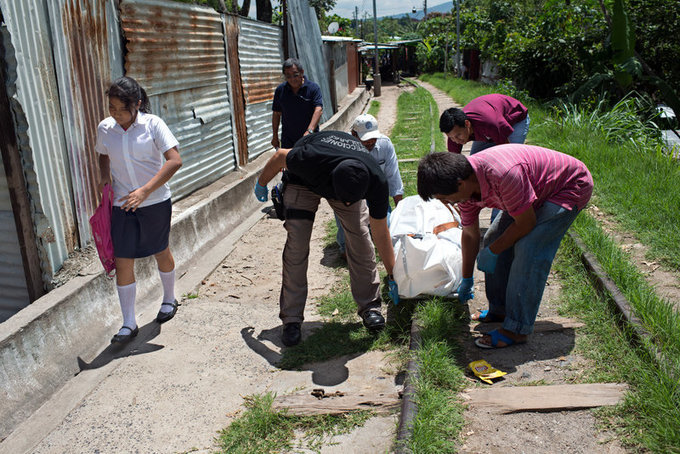
The Surreal Reasons Girls Are Disappearing In El Salvador

Refuse to share a pencil, reject a boy, say no to your imprisoned dad — all of these can get a teen girl killed in El Salvador’s gang war.

Source: www.npr.org

Central America has the highest homicide rates in the Western Hemisphere, with violence being embedded into political and social institutions and norms (see this map to analyze the spatial patterns–see crime rate tabs).  Navigating this cultural status quo leads to incredibly difficult situations for young people, and especially girls, trying to gain stable employment and plan for a safe, secure future.  This is a very sobering article/podcast, with some graphic materials.  This podcast is the first in the new series, #15Girls, exploring global health issue for teenage girls.       

Tags: podcast, gender, place, cultural norms, culture.

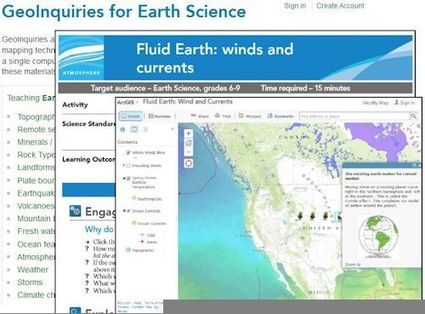
GIS and Earth Science Week 2015

“The 2015 Earth Science Week theme is ‘Visualizing Earth Systems.’   Esri’s Earth Science GeoInquiries help educators show and explore critical content in earth science.”


Tags physical, mapping, geospatialESRI.

Source: blogs.esri.com

The Top Language Spoken Globally in 2050 Will Be…

“French is currently ranked sixth among world languages, after Mandarin Chinese, English, Spanish, Hindi and Arabic. But it is gaining speakers quickly and, the study reports, will be spoken by 750 million in 2050, up from 220 million today. A demographic boom in French-speaking African states could bump the percentage of global French speakers from 3 percent to 8 percent by 2050, but some skeptics think the predictions are overrated.”

Source: www.ozy.com

I can’t verify the projections in the article, but the thought exercise is a great exploration into future global geographies. As some populations are shrinking, others and still growing very quickly and it is clear that the future has the distinct possibility that the linguistic composition of the world might be very different from today.  


Questions to Ponder: Considering current trends, what do you think the world will be like in the future?  What will be better?  What will be worse? 

Tags: language, culture, demographics

This Is My Land

How do the Palestinian and Israeli (Arab and Jewish) education systems teach the history of their nations? The film follows several Israeli and Palestinian teachers over one academic year. Observing their exchanges and confrontations with students, debates with the ministries curriculum and its restrictions, the viewers obtain an intimate glimpse into the profound and long lasting effect that the Israeli/Palestinian conflict transmits onto the next generation.

Tags: Israel, Palestine, conflict, borders, territoriality, political, Middle East.

Source: www.youtube.com

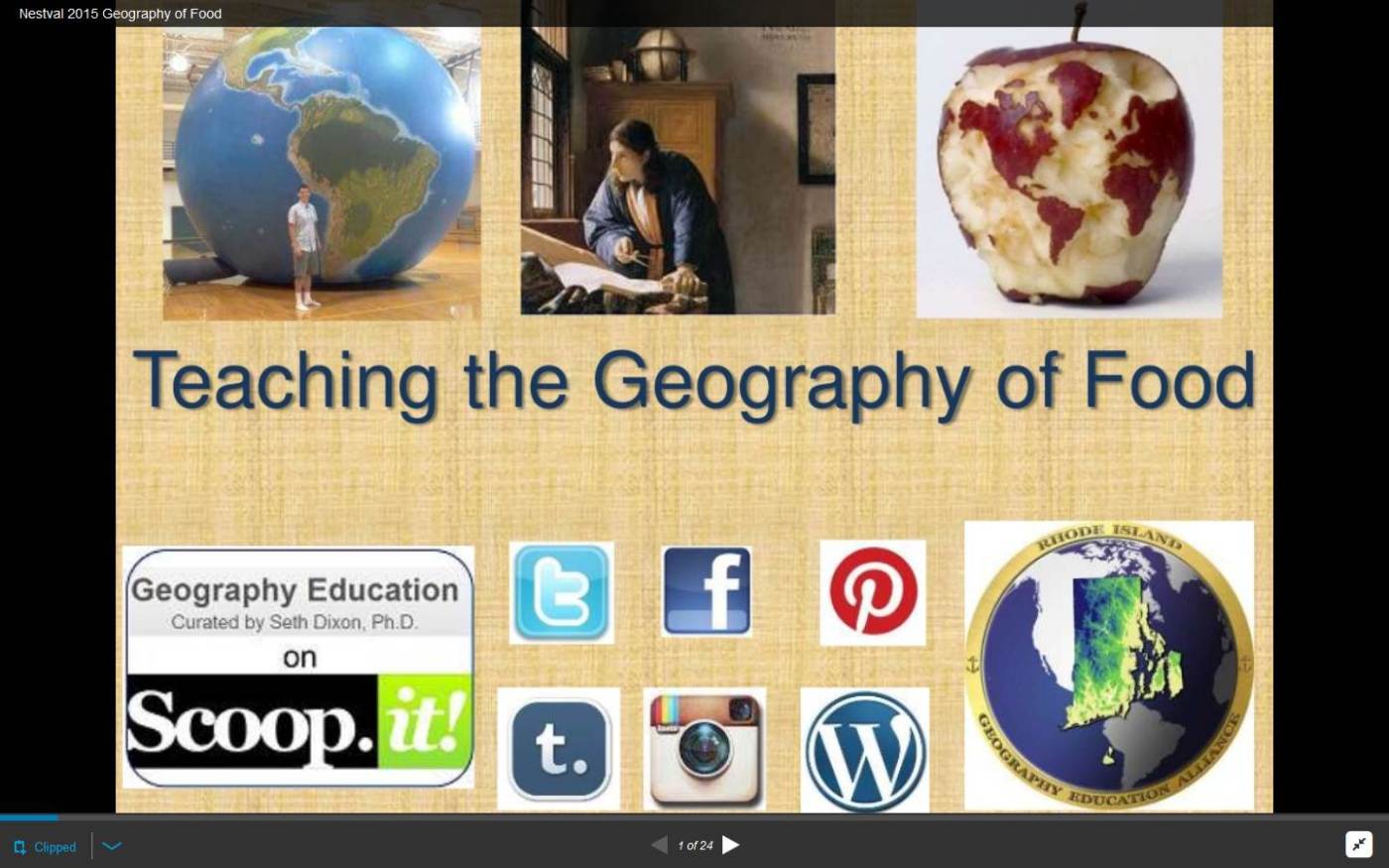
NESTVAL 2015: The Geography of Food

“My 2015 NESTVAL presentation in an APHG session on the geography of food.”

Source: www.slideshare.net
In this presentation (PPTx file here), I’ll share some of my favorite resources for teaching the content as well as some pedagogical tips.  Some of these resources are found in an article I wrote for National Geographic or shared on this site earlier.  Here are some pedagogical tips to APHG students about food systems:  

  • Tip#1: Don’t demonize agribusiness or romanticize the family farm. 
  • Tip #2: Use data and maps.  Here is a map in ArcGIS online on rural land use activities with a handy dandy instruction guide, ready to go (many more APHG GeoInquiries from ESRI set to be released soon). 
  • Tip #3: Connect them personally into the web of food systems and show how it impacts them. 
  • Tip #4: Let this be one of those units that connects to all the themes of the course, especially population, culture, political, and the environment.  

Tags: foodeconomicfood production, agribusiness, agriculture, APHG.

Blog at WordPress.com.

Up ↑