Search

GEOGRAPHY EDUCATION

Supporting geography educators everywhere with current digital resources.

Category

Uncategorized

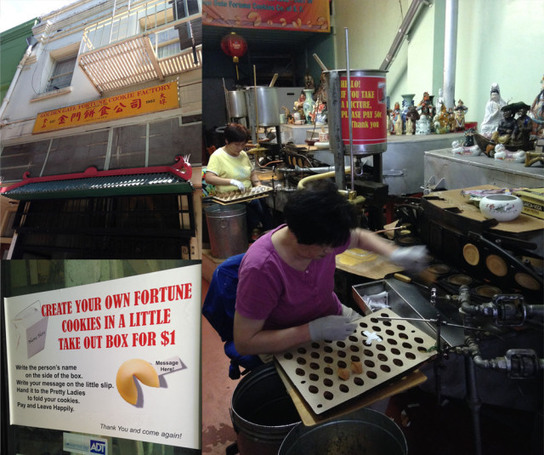
The Historical Geographies of the Fortune Cookie

“What we call Chinese food (including the fortune-filled cookies) has become an integral part of the American culture and cuisine, with a complex history that dates back to the 19th Century.”

Source: 99percentinvisible.org

This  99 Percent Invisible podcast explores the fascinating story of the Americanization of Chinese food, and the icon of Chinese food in the States, the  fortune cookie (no, that is decidedly NOT from China).  This is yet another podcast from 99 Percent Invisible that is rich in geographic content. 


That first podcast is reminiscent of a second podcast from  NPR about an American-style Chinese restaurant that opened in Shanghai to cater to Americans living in China who miss ‘Chinese food’ as it’s made back home.  What’s the name of the restaurant?  Fortune Cookie, of course. 

Tags: foodglobalization, culture, California, podcast, historical.

Dear smug urbanites, stop ridiculing the suburb I love

I’m always disappointed that my urban acquaintances know very little of the suburbs surrounding their city. But I’m never more disappointed than when urbanites spout clichéd opinions about suburban living.

Source: www.startribune.com

This is a interesting op-ed that defends suburban living when many critics of routinely argue that the suburbs symbolize what’s wrong with American urbanism.  

Tags: neighborhoodsuburbs, op-ed.

How People Around the World Take Exams

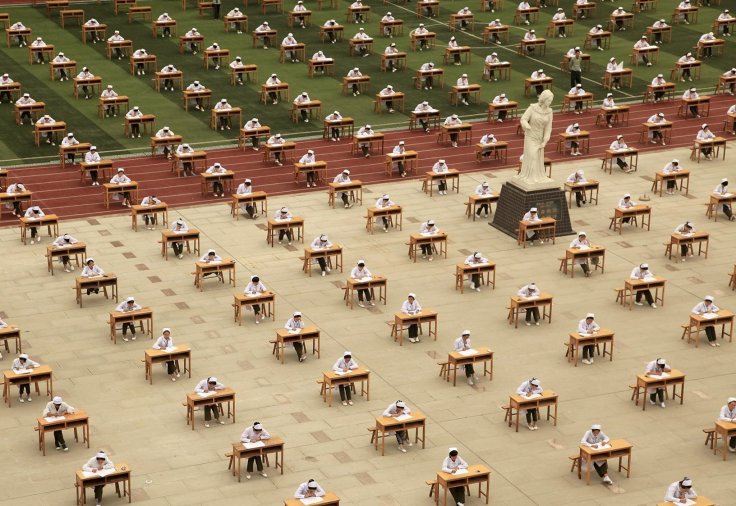
“Examinations, tests, assessments—whatever the nomenclature, it’s hard to imagine schooling without them. Testing is the most popular method of quantifying individuals’ knowledge, often with the intention of objectively measuring aptitude and ability. Test-taking is a dreaded experience that the country’s kids and young adults share with their counterparts across the globe. The ritual at its core doesn’t vary much: Students sit at a table or a computer desk (or sometimes, as shown below, on the floor), pencil and/or mouse in hand, the clock ticking away mercilessly.”

Source: www.theatlantic.com

I am torn on how to teach these two ideas about cultures and societies all around the world:

  1. People and cultures are different all over the world.
  2. People and cultures are the same all over the world.

Cultural practices are often so similar, are done in slight different fashion.  This photo gallery can create opportunities for our students to ‘see’ themselves in other cultures while at the same time seeing the richness of global cultural practices. 

TagseducationK12, worldwide.

Who is fighting whom in Syria?

“There has been an intense wave of Russian air strikes in two areas of Syria, activists say. Moscow says it is targeting jihadist groups like Islamic State in co-ordination with Syria’s government. But NATO is worried some of the attacks are hitting rebel groups opposed to President Bashar al-Assad – some of whom are backed by the West. So just who is fighting whom in Syria?”

Source: www.youtube.com

Following the old adage, “an enemy of an enemy is a friend” can make for a very complicated geopolitical situation in a hurry.  This video is a nice overview of the complexity without being complicated.   


TagsSyria, war, conflict, political, geopolitics.

Where U.S. Immigrants Came From

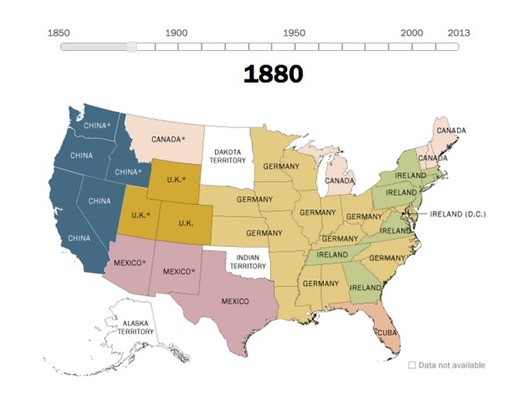
“The new Pew interactive map covers 1850 to 2013.”

Source: www.citylab.com

The source of migrants today has changed the cultural composition of the United States from what is was 100 years ago.  Cultures are not static and migration is one of the key drivers of change. These maps are produced by the Pew Research Center and show the main country of origin of each states’ foreign born population.  Despite what media reports would have you believe, immigration into the United States is not on the dramatically on the rise, maps such as these can be construed to imagine that there is a massive flow of immigrants coming from south of the border.  The reality is that percentage of foreign-born migrants in the United States from Mexico, and most Latin American countries, has steadily dropped since 2000.  

Tags: migration, historical, USA, mappingcensus, ethnicity.

Why Little Kids in Japan Are So Independent

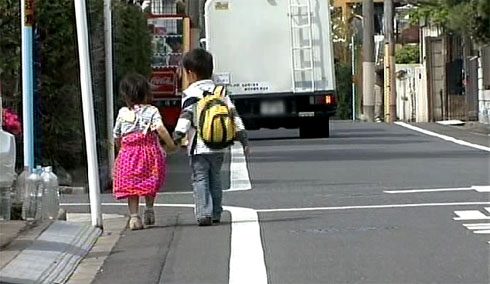
In Japan, small children take the subway and run errands alone, no parent in sight. The reason why has more to do with social trust than self-reliance.

Source: www.citylab.com

Some cultural practices can be transplanted just about anywhere; others require a cultural environment wherein that particular practice is sufficiently well-known and communally supported for it to thrive.  The idea of sending kids this young out on errands is almost unthinkable in the United States given our cultural norms connected to youth and space.  As additional food for thought, here is an article about 9 parenting strategies around the world that culturally don’t mesh well within the United States.  


Questions to Ponder: Why do cultural norms vary so much from place to place?  How are your actions shaped by cultural norms?  Can you think of an example of a cultural practice that is accepted somewhere, but wouldn’t work in most other societies?

Tags: JapanEast Asia, place, perspective, cultural norms, culture.

Is it time to scrap “Eastern Europe”?

“Europe’s divisions are indeed grave. But counting the ex-communist countries as a single category is outdated and damaging “

Source: www.youtube.com

What places belong in a region together?  What are the boundaries of that region?  How has this region changed over time?  Regional classification is inherently an exercise that relies on our geographic knowledge and requires some spatial thinking.  Each semester I have students divide the United States into the regions that explain how they conceptualize the different parts of the country.  This 2 minute video is a great example that argues that the regional category of Eastern Europe is less meaningful today mainly because of the changing political and economic geography that is blurring the regional borders of Europe.   

TagsEurope, regions.

Map quiz: How well do you know the American landscape?

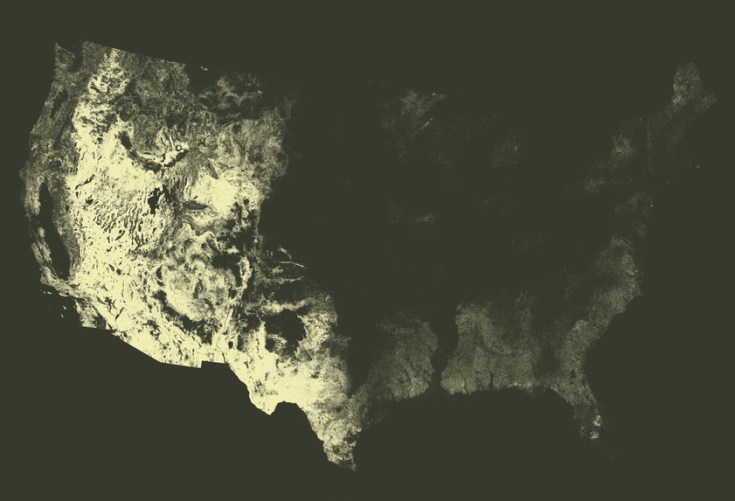
Using data from the USDA, Pecirno has mapped the lower 48 states by picturing just one single subject, and nothing else – no political borders or backgrounds. The project aims to show how richly detailed single-subject maps can give people a new way to understand their landscape, Pecirno says.

Can you guess what Pecirno is picturing in the minimalist maps below? To make it easier, we’ve given you a few options to choose from.

Tags: games, USA, mapping.

Source: www.washingtonpost.com

Singapore’s Pro-Natalist Policies

“Today, it’s no longer unusual to see married couples not wanting to have any children or delaying parenthood. Regardless of big or small changes between the past and present, one thing remains constant –  the joy & bliss that are seen in the parents’ eyes. Parenthood is not without its challenges, but you can’t put a price on seeing the smile on your little ones’ faces.”

Source: www.youtube.com

This video is part of the “Maybe Baby?” campaign in Singapore designed to boost the low fertility rate in this small Southeast Asian country.  Singapore’s National Night was another innovative campaign to boost fertility rates (although much more provocative than this one).

There are several countries these days that are adopting pro-natalist policies (including Denmark) and their favorite travel agency); they officially encourage citizens to have more children to boost fertility rates that are below the replacement level, fearful that it will have negative social and economic impacts for their population.


Tag: declining populations, Singaporepopulation, demographics, unit 2 population, .

Create a free website or blog at WordPress.com.

Up ↑