Search

GEOGRAPHY EDUCATION

Supporting geography educators everywhere with current digital resources.

Where We Came From, State by State

Charts showing how Americans have moved between states for 112 years.

Source: www.nytimes.com

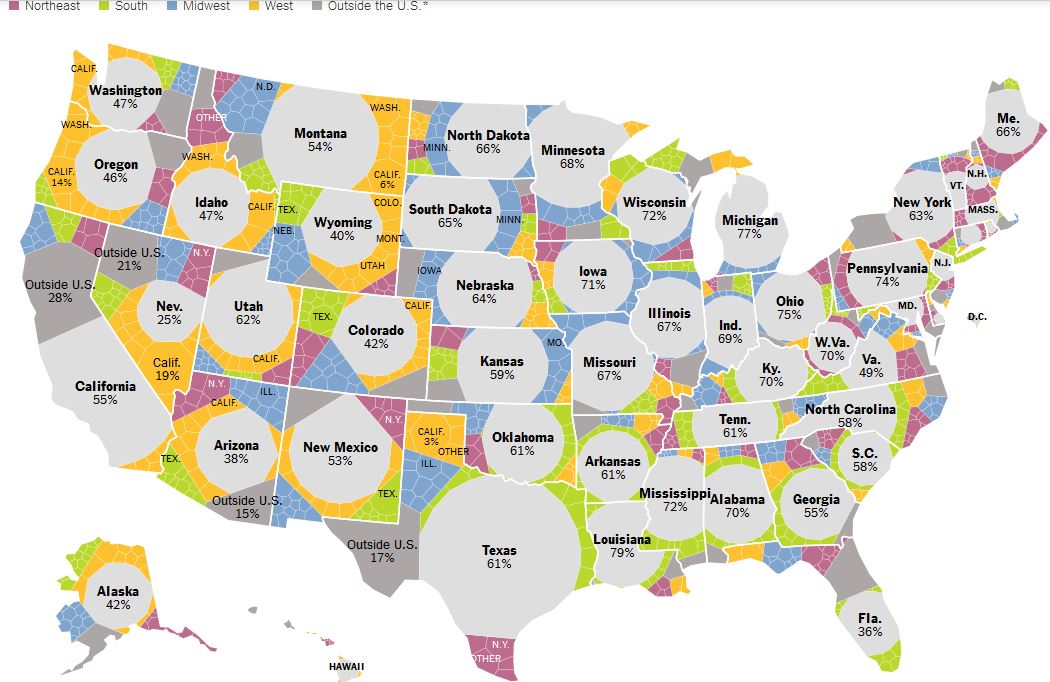
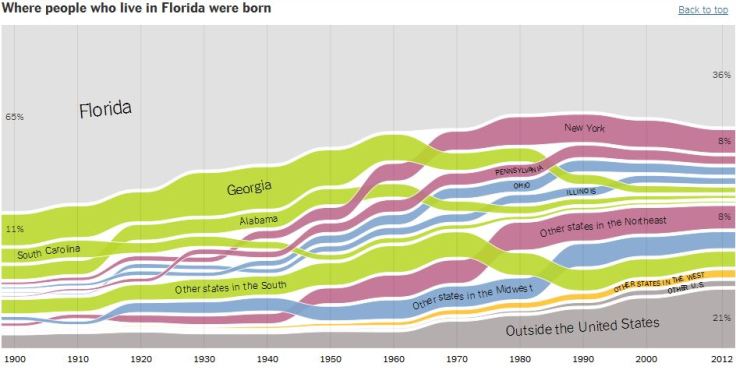
This incredible series of interactive charts from the New York Times show where the residents of every U.S. state were born and how that data has changed over time (update: now available as an interactive map).  This graph of Florida shows that around 1900, most people living in Florida were from the South.  Around the middle of the 20th century more people from other parts of the U.S. and from outside the U.S. started moving in.  What changes in U.S. society led to these demographic shifts?  How has demographics of your state changes over the last 114 years? 

On the flip side, many people have been leaving California and this article charts the demographic impact of Californians on other states.

Tags: migration, USAvisualization, census, unit 2 population.

MigMap

Start of the Year Videos

“A great Florida teacher produced this video.  Visit his course website for additional incredible resources.”

Source: www.youtube.com

This just one of my favorite “start of the year” videos.  I’ve compiled them here so they can be used to at the beginning of the school year to show the importance of geography, spatial thinking and geo-literacy.  They show why taking geography courses is so important, useful and interesting.  Do you know of a great video that I should put on the list?  Send me a tweet.

Tags: geo-inspiration, geography education, APHG.

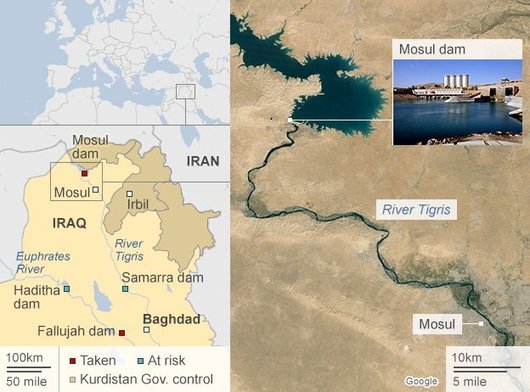
Mosul Dam key win for Islamic State

“Islamic State’s capture of the Mosul dam gives it control over the water and electricity supply in northern Iraq.”

Source: www.bbc.com

There is a geography to insurgency.   This dam controls both the energy and water resources in the region, which gives the insurgents/rebels/terrorists greater local power.  On a related noted, this op-ed entitled, “How America Lost the Middle East” has plenty of foreign policy and geopolitical material worth discussing.  

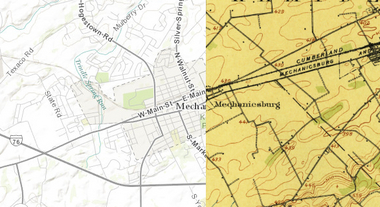
Explore old maps of US cities

“This cool new historic mapping app from the folks at esri and the U.S. Geological Survey is worth exploring.  What it does is take 100 years of USGS maps and lets you overlay them for just about any location in the nation. That allows users to see how a city – say Harrisburg – developed between 1895 and today.  The library behind the project includes more than 178,000 maps dating from 1884 to 2006.”

Source: www.pennlive.com

For more ESRI maps that let you explore urban environmental change, the ‘spyglass’ feature gives these gorgeous vintage maps a modern facelift (but not available for as many places). The cities that are in this set of interactive maps are: 


Tags: cartography, mapping, visualization, urban, historical.

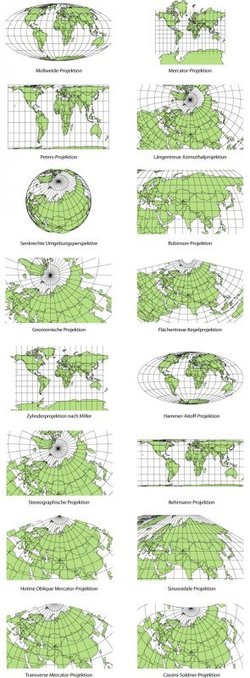
Cartographic Anomalies: How Map Projections Have Shaped Our Perceptions of the World

Elizabeth Borneman explores how cartography and cartographic projections help and hinder our perception of the world.

“How do you think the world (starting with our perceptions) could change if the map looked differently? What if Australia was on top and the hemispheres switched? By changing how we look at a map we truly can begin to explore and change our assumptions about the world we live in.”

Geography doesn’t just teach us about the Earth; it provides ways for thinking about the Earth that shapes how we see the world.  Maps do the same; they represent a version of reality and that influences how we think about places. 

Tags: mapping, perspective.

Source: www.gislounge.com

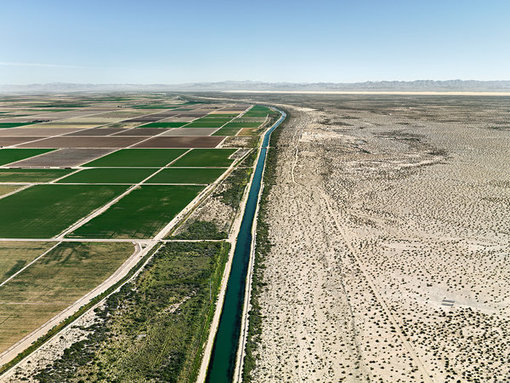
Artful, Aerial Views of Humanity’s Impact

Using aerial photographs that render imperiled landscapes almost abstract, Edward Burtynsky explores the consequences of human activity bearing down on the earth’s resources.

Source: lens.blogs.nytimes.com

This set of over a dozen images highlight the extent that humanity has modified the physical landscape.  These thoughtfully selected images are excellent ‘teaching images’ with a wide range of classroom applications.

Tags: remote sensing, geospatialenvironment modify, images, perspective.

Charting culture

“This animation distils hundreds of years of culture into just five minutes. A team of historians and scientists wanted to map cultural mobility, so they tracked the births and deaths of notable individuals like David, King of Israel, and Leonardo da Vinci, from 600 BC to the present day. Using them as a proxy for skills and ideas, their map reveals intellectual hotspots and tracks how empires rise and crumble. The information comes from Freebase, a Google-owned database of well-known people and places, and other catalogues of notable individuals. The team is based at the University of Texas at Dallas.”

Source: www.youtube.com

This video has garnered a lot of academic and mainstream attention–while I wouldn’t describe in as the Entire History of Human Culture in 5 minutes as the Huffington Post did, it is a stellar visualization that uses big data and was created with some solid academic research.  Hierarchical diffusion patterns are powerfully depicted in this video created by Nature that as are other geographic concepts such as urban settlement patterns (e.g.-primate cities and rank-size rule in Europe).

Tags: historical, culturediffusion, mapping, visualization.

What Happens When a Hurricane Meets a Volcano?

When Iselle crosses the Big Island of Hawaii, it will offer a rare glimpse at a clash of the titans

Tags: disastersOceania, physicalweather and climate.

Source: www.smithsonianmag.com

Changes in the U.S. Economic Geography

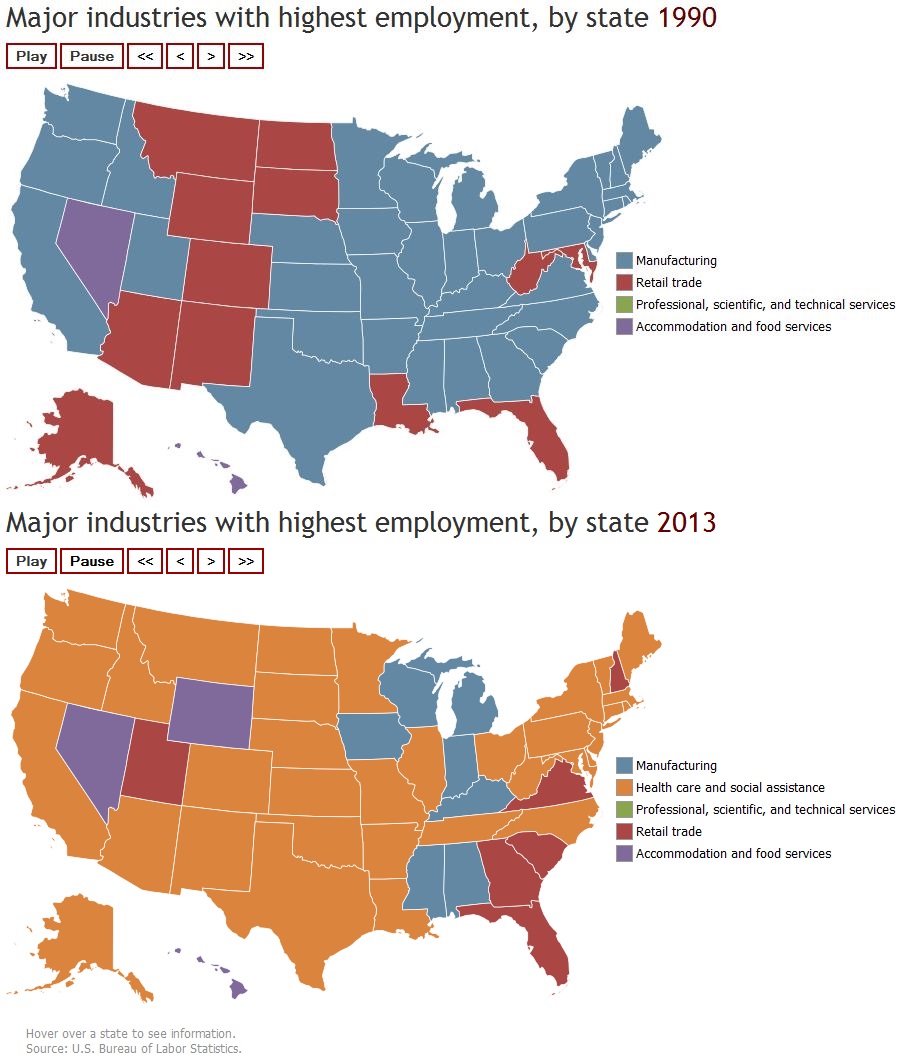
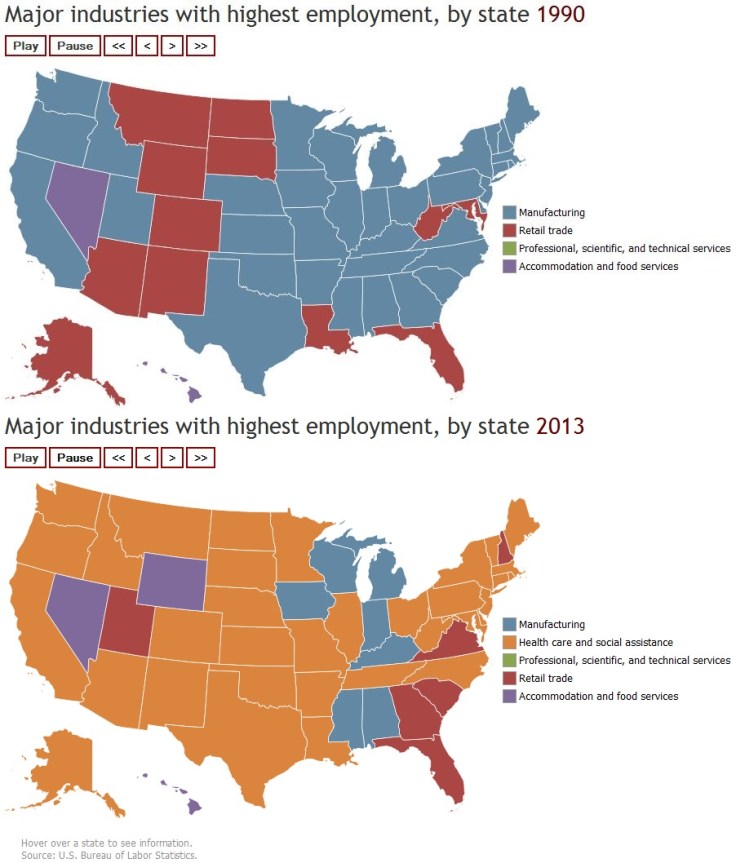
In 1990, the manufacturing industry was the leading employer in most U.S. states, followed by retail trade. In 2003, retail trade was the leading employer in a majority of states. By 2013, health care and social assistance was the dominant industry in 34 states. This animated map shows the top industry in each state and the District of Columbia from 1990 to 2013.

Source: www.bls.gov

This interactive map is a powerful way to visually display the changes in the economic geography of the United States.  It is especially useful when discussing the transition of an economy from the secondary sector to tertiary sector.  

Tags: manufacturing, economic, North America, labor, USA.

Blog at WordPress.com.

Up ↑