Search

GEOGRAPHY EDUCATION

Supporting geography educators everywhere with current digital resources.

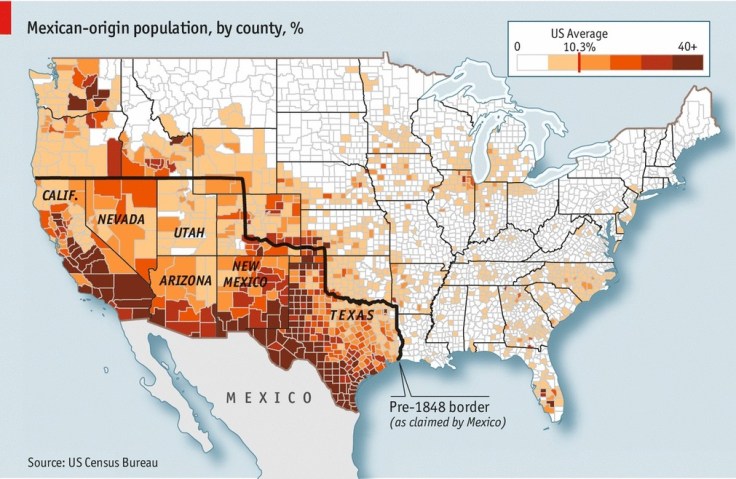
Old Mexico lives on

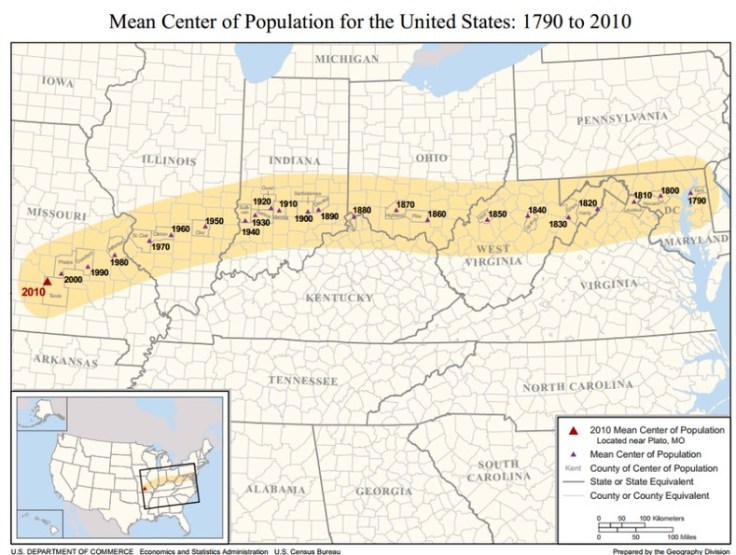
On February 2nd 1848, following a short and one-sided war, Mexico agreed to cede more than half its territory to the United States. An area covering most of present-day Arizona, California, Nevada, New Mexico and Utah, plus parts of several other states, was handed over to gringolandia. The rebellious state of Tejas, which had declared its independence from Mexico in 1836, was recognised as American soil too. But a century and a half later, communities have proved more durable than borders. The counties with the highest concentration of Mexicans (as defined by ethnicity, rather than citizenship) overlap closely with the area that belonged to Mexico before the great gringo land-grab of 1848. Some are recent arrivals; others trace their roots to long before the map was redrawn. They didn’t jump the border—it jumped them.


Tags: culture, demographics, North Americahistorical, colonialism, borders, political.

Source: www.economist.com
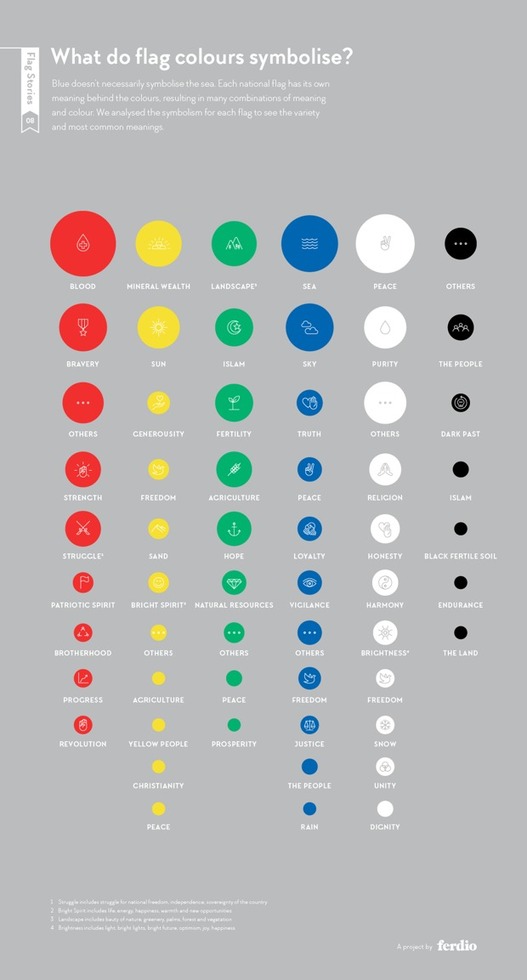
What’s in a Flag’s Design?

A new infographic by a pair of Danish designers has everything you never knew you wanted to know about the world’s flags.


Tags: flag, language, culture.

Source: www.citylab.com

Projected Religious Population Changes in Sub-Saharan Africa

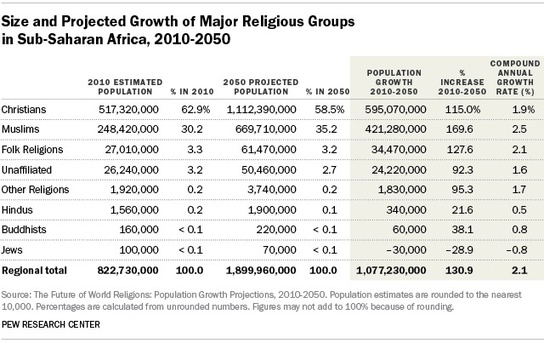
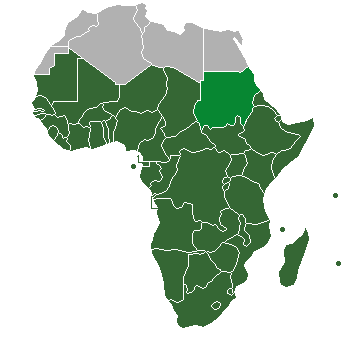
“The total population in sub-Saharan Africa is expected to grow at a faster pace than in any other region in the decades ahead, more than doubling from 823 million in 2010 to 1.9 billion in 2050. As a result, the two dominant religions in the region – Christianity and Islam – both are expected to have more than twice as many adherents in 2050 as in 2010.”

Source: www.pewforum.org

Sub-Saharan Africa is one of the poorest regions of the world. While the economy is growing, the rate at which poverty is falling is less than the population growth rate.  Nearly all of the population growth in Africa between now and 2050 is expected to occur in Sub-Saharan Africa.  As the population grows, the religious dynamics of Sub-Saharan Africa will change.  The share of residents practicing Christianity, the majority religion of the region, is expected to decline from 2010 to 2050 while the share of Muslims is expected to increase in the same time frame.  The changes in religious demographics is occurring alongside the region’s youth bulge (click here for a population pyramid).  Understanding religious demographics is key to understanding the challenges faced by the African people.   


Question to Ponder: What impact are the region’s two fastest-growing religions having on Sub-Saharan Africa’s overall fertility rate?    


Tagsreligionpopulation, ChristianityIslam, Africa.

The Very Great Alexander von Humboldt

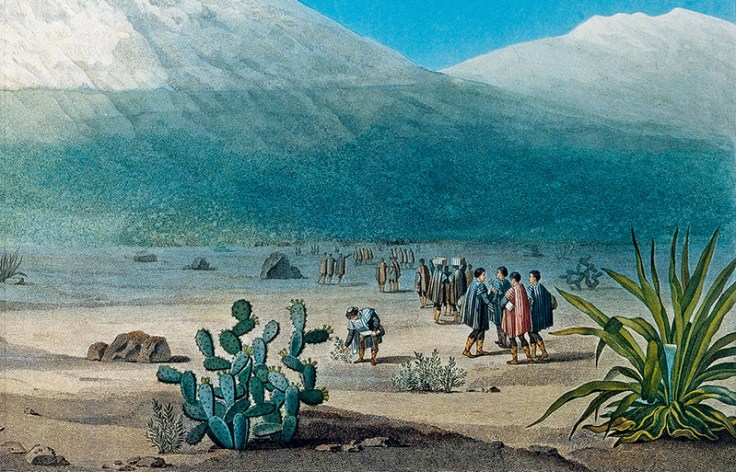
The Prussian naturalist Alexander von Humboldt (1769–1859) is all around us. Yet he is invisible. “Alexander von Humboldt has been largely forgotten in the English-speaking world,” writes Andrea Wulf in her thrilling new biography. “It is almost as though his ideas have become so manifest that the man behind them has disappeared.” Wulf’s book is as much a history of those ideas as it is of the man. The man may be lost but his ideas have never been more alive.

Source: www.nybooks.com

Alexander von Humboldt has been described as the last great ancient geographer concerned with understanding an eclectic cosmography as well as the first modern geographer. He is honored far and wide throughout Europe and especially Latin America for his explorations, but given that people are confused as how to categorize him and classify his contributions, today he is under-appreciated.  Geographers need to reclaim his memory and call his extensive, globetrotting work on a wide range of subjects ‘geography.’  Here are more articles and videos on the man that I feel geographers should publicly champion as their intellectual ancestor the way that biologists point to Darwin.   


Tags:  historicalbiogeography, book reviews.

India explained in 20 maps

The following set of 20 maps of India look into the story of this riveting country. A captivating place to both travel and read about.

Source: calloftravel.com

Some of these maps nicely highlight some regional differences within India. There are plenty of articles like this now (for example, 40 maps that explain the Middle East, and 38 Maps that explain Europe). While we can all agree that maps are great analytical tools that can be very persuasive, sometimes we can pretend that they are the end all, be all for any situation.  Also, any list like this, it is bound to have a few clunkers, but it is worth it  to find those teaching gems.   


TagsIndia, South Asiamap, map archives, culturedevelopment, economicreligion.

Why the Ukraine Crisis Is the West’s Fault

Conventional wisdom in the West blames the Ukraine crisis on Russian aggression. But this account is wrong: Washington and its European allies actually share most of the responsibility, having spent decades pushing east into Russia’s natural sphere of interest.

Source: www.foreignaffairs.com

Ukraine is culturally, economically, and geographically connected with Russia. It is a territory that Russia cannot afford to lose as a part of their sphere of influence.  John Mearsheimer, in his article Why Ukraine Crisis is the West’s Fault, gives a detailed account of NATO expansion and how it effected the Russian demand for hegemony in East Europe. Ultimately it is his conclusion that it was this expansion that provoked the Russians, and the current crisis is on the hands of the West. The will of a majority of Ukrainians is be begin economically aligning more with EU/NATO countries.  Ukraine decided against Russia, and Russia responded with force.   Here is an article where scholars weigh in and mostly disagree with the author’s provocative assessment


Tags: op-ed, Ukrainesupranationalism, Russia, geopoliticspolitical.


21 charts that explain how the US is changing

The US is a big, complicated place that has undergone some big changes over its 238 years, and even in the last few decades. Here are 21 charts that explain what life is like today in the US — who we are, where we live, how we work, how we have fun, and how we relate to each other.


Tags: USA, map, map archives

Source: www.vox.com

Making Ethanol from Sugarcane

This segment highlights how sugarcane is processed into ethanol for fuel and other uses.

Source: www.youtube.com

Sugarcane ethanol has proven to be one of the most environmentally safe alternative fuel sources. In addition to its green energy properties, sugarcane ethanol has fueled the Brazilian economy for over a decade. The Brazilian automotive industry have developed a complex, “Flex Fuel” engine that allows vehicles to run off of both gasoline and ethanol. Also, sugarcane ethanol has been one of their leading exports in the global economy. Due to recently discovered fuel deposits in Brazil and around the globe, there has been a decline in the need for sugarcane ethanol. This has negatively impacted the economy in addition to the Brazilian job market. But thanks to the engineering of cellulosic ethanol, Brazil is striving to become the green energy superpower yet again.


Questions to Ponder: Since cellulosic ethanol production is so expensive, do you think that will deter production and customers from purchasing it? Do you think that Brazil will ever become independent of fossil fuels as a result of their successful sugarcane ethanol production?


Tagsenergy, resourcespolitical ecologyagriculture, food production, land use, Brazil, South America.

Live chart: Fish stocks

“The world’s fish are in danger—as is everyone who depends on them.”

Source: www.youtube.com

Every semester I share with my students this New York Times video about the rapid rise in industrial fishing and the production of Talapia.  Even with the rise of aquaculture as a major source of seafood, the world’s oceans are still depleted.  As the world’s population rises, many folk cultures with their roots in small fishing villages have transformed into primarily urban societies, but these urban societies still have a strong cultural preference for seafood and consume at levels that are not sustainable.    


Tags: environment modifyfolk culturesconsumption, water, physical.

Blog at WordPress.com.

Up ↑