Search

GEOGRAPHY EDUCATION

Supporting geography educators everywhere with current digital resources.

Tag

conflict

Amid ISIS and Syria, Let’s Not Forget The Quest for Peace In Israel/Palestine

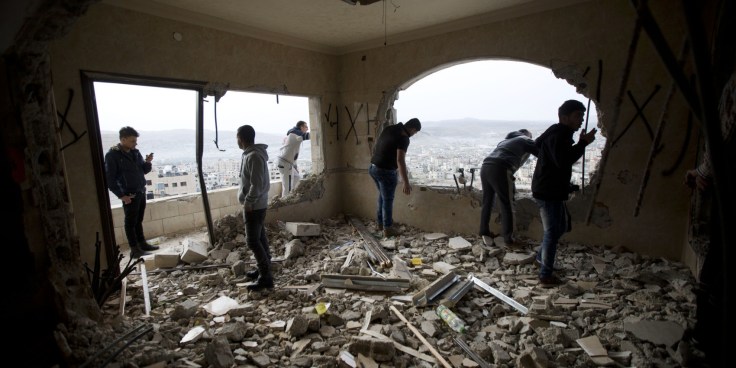
The Israeli-Palestinian conflict has rarely been so far from finding a resolution. Since the cessation of hostilities between Israel and Hamas during the summer of 2014, the desire to seek peace has been diminishing, and instead growing tensions have prevailed, punctuated by stabbings and car-ramming attacks by the Palestinians, and violent acts including arson by the settlers. Yet, the climate has rarely been so favorable to a resolution of the conflict. The chaos that is sweeping the Middle East has been a game-changer in relation to Israel and the Arab countries.

Source: www.huffingtonpost.com

Many Palestinians and Israeli are fearful of a possible breakout of ISIS out of Syria and into Gaza and the West Bank. According to the authors of the op-ed, Europe needs to come together and provide leadership and a plan to enforce so that these issues do not reoccur. The last 17 years have been filled with failed attempts but breaking this cycle of violence is not impossible. 


Tagsop-ed, Israel, Palestine, conflict, political, Middle East.
Israeli-Palestinian Conflict updates, 2016

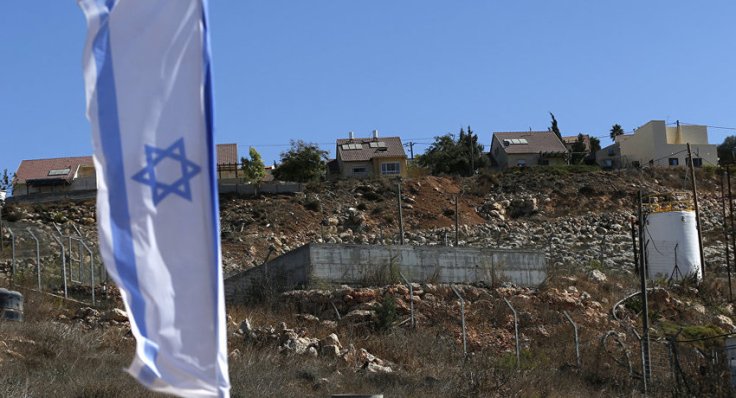
The Israeli-Palestinian conflict is one that powerfully divides the international community.  Of those living within the state of Israel, Pew Research data shows that they are often deeply divided based on religious affiliation. Not surprisingly, those divisions extend into how they view the peace process, West Bank settlements and U.S. support.  Although the conflict is portrayed as a battle between religious groups, it can be more fairly assessed as two nationalistic groups competing for land.  Broadly speaking, the Muslim world has sided with the Palestinians, and the U.S. and its NATO allies have defended Israel.   In the United Nation’s Security Council, the United States’ veto power has been use to strike down resolutions that would condemn Israeli settlement in the militarily occupied lands of the West Bank.  The 2016 UN resolution that passed 14-0 (with only the U.S. abstaining) says that Israel’s settlements on Palestinian territory occupied since 1967, including East Jerusalem, have “no legal validity” and demands a halt to “all Israeli settlement activities,” saying this “is essential for salvaging the two-state solution.”


These settlements are considered by most of the international community to be illegal, and the UN has condemned them, but since the U.S. has always vetoed this, Israel has never been formally reprimanded.  Earlier this week, the U.S. abstained from the vote, and the many see the U.S. position as hypocritical, (Secretary of State John Kerry strongly defended the position).


Some highly partisan supporters of Israel do not see Israel’s actions as the problem, primarily because Israel’s neighbors have traditionally not recognized its right to exist, and attacked it many times.  Therefore, they see Israel’s actions as necessary for the security of Israel, and do not see Israel’s settlements in the West Bank as illegal since Palestine isn’t a state that was ever legally accepted. 


Tags: Israel, Palestine, conflict, borders, political, Middle East.

Source: geographyeducation.org

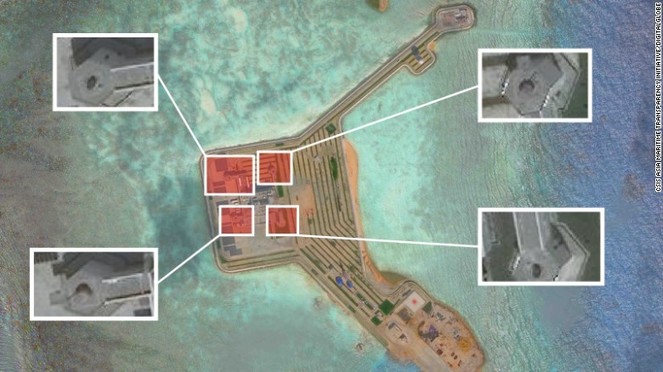
China installs weapons on contested South China Sea islands

New satellite imagery indicates that China has installed weapon systems on all seven artificial islands it has built in the contested waters of the South China Sea, a move that’s likely alarm the country’s neighbors.

UPDATE: After this news, the Pentagon says a Chinese warship has seized a US Navy underwater drone collecting unclassified data in international waters in the South China Sea.

Tags: borders, political, conflict, China, remote sensing, East Asia.

Source: www.cnn.com

ISIS and the U.S. Presidential Election

The United States is already taking some steps to roll back the Islamic State (ISIS) and restrict its resources and recruits, including airstrikes, armin

Source: www.youtube.com

This is a non-partisan post and a video that is fairly balanced; this video nicely lays out some of the cultural and political factors that the next president of the United States should consider when crafting foreign policy in the especially problematic Middle East.  


Tags: Syria, war, conflict, political, geopolitics, Iraq, devolution, terrorism, ISISMiddle East.

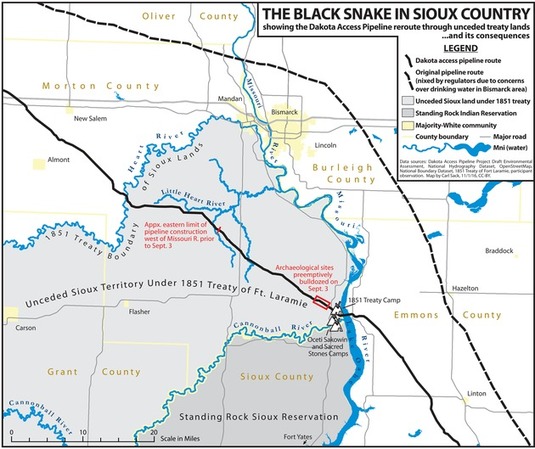
The Dakota Access Pipeline Map

“Thousands of Native Americans and their allies have gathered on unceded Sioux land delimited by the 1851 Treaty of Fort Laramie to try and stand in the way of the “black snake” that could poison the Standing Rock Reservation’s water supply. Many have noted that the pipeline corridor was repositioned from its original route north of Bismarck after white citizens spoke up against the threat a spill would pose to their drinking water ― a threat duly recognized by the U.S. Army Corps of Engineers. Yet the Corps failed its federal mandate for meaningful consultation with the Standing Rock Tribe before signing off on a route that moved the pipeline to their doorstep.”

Source: www.huffingtonpost.com

Maps can tell truths, and maps can be used to obscure other truths. Creating a map, choosing what data to include (and exclude) is an inherently political act.  Maps have the power to convey geographic perspectives that might otherwise be muted.


Tags: industryconflict, economic, energy, resources, environmentindigenous, ecology.

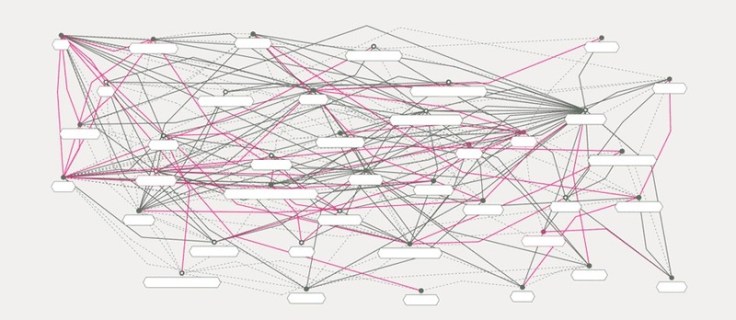
Who Likes Whom in The Middle East? Key players & Notable relationships

An interactive network visualisation of key players & notable relationships in the Middle East region. Continually updated. Awesome looking.

Source: www.informationisbeautiful.net

News flash:the Middle East is complicated.  In a region where the enemy of an enemy can be your friend, keeping track of local, regional, and global interests can be a staggering proposition.  This flow chart is both incredibly complex, but also aids the user in making sense of the relationships that help to define the region.  


Tags: MiddleEast, conflict, political, geopoliticsregions.

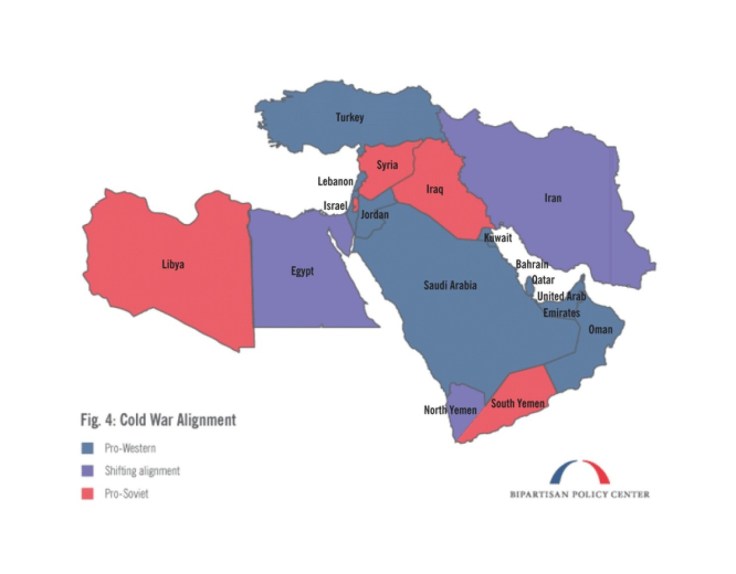
Four maps that explain the chaos of the Middle East

“Without trying to defend or absolve U.S. policy, then, it is worth stepping back to ask what shared historical experiences might have left these four countries — Iraq, Syria, Libya and Yemen — particularly at risk of violent collapse. The following maps help highlight how, at various points over the past century, historical circumstances conspired, in an often self-reinforcing way, to bolster the stability of some states in the region while undermining that of others.”

Source: www.washingtonpost.com

These maps are not cartographically inspiring, but the it’s the historical and political insight that makes them valuable. The goal of this set of maps is to find some underlying causal reasons for political stability(or more importantly instability) in the Middle East. These four maps focus on these key issues:

1. Century-old states are more stable today

2. Colonial rule led to fragile states

3. Instability and regime change

4. The shadow of the Cold War


Tags: MiddleEast, war, conflict, political, geopoliticshistorical.

Colombia rejects FARC deal: What’s next?

“A narrow win for Colombia’s opponents to a government peace deal with FARC rebels has thrown the country into disarray, leading one journalist to starkly declare, ‘Nobody really knows what will happen tomorrow.’  Likened to the fallout from the United Kingdom’s ‘Brexit’ referendum, the vote’s unexpected failure has left the Colombian political classes reeling and unsure how to respond in order to save four years of hard negotiation with the Marxist militia.”

Source: www.cnn.com

The Colombian peace negotiations with FARC (the insurgent rebels in drug producing regions) were hailed as the key for Colombia to move past it’s violent, drug-cartel past and move into the future.  As the Colombian population rejected the deal by the slimmest of margins (50.22% against), it leaves the government “without a Plan B.” There are more questions than answers at this point about what might happen (if you are asking what’s FARC?, then this primer will walk you through it). 


TagsSouth America, Colombiapoliticalnarcotics, conflict.

This is where your smartphone battery begins

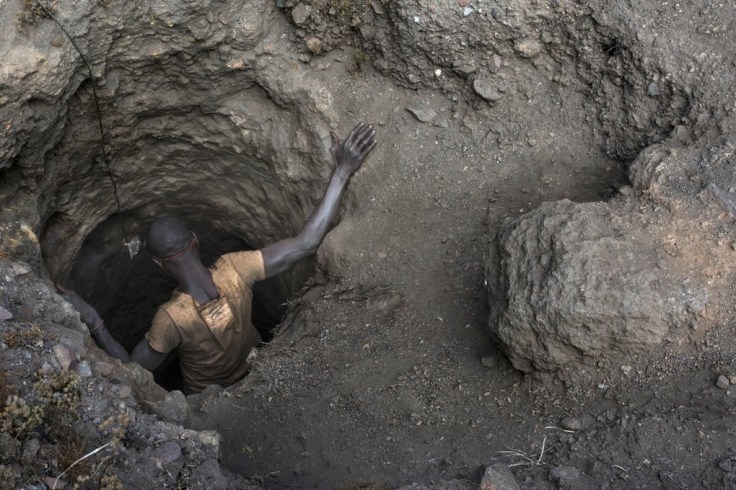
Workers, including children, labor in harsh and dangerous conditions to meet the world’s soaring demand for cobalt, a mineral essential to powering electric vehicles, laptops, and smartphones, according to an investigation by The Washington Post.

Source: www.washingtonpost.com

The Democratic Republic of the Congo (DRC) is a land rich with minerals and resources vital for high end consumer goods (laptops, cellphones, electric cars, etc.).  This in-depth investigation from the Washington Post of the cobalt mining districts in the DRC (60% of global cobalt production) is incredible.  It has great videos, maps, and an detailed article that cuts across the geographic themes (exploited local labor, global commodity chains, political governance, polluted water supply, medical geography, etc.).  


Just two days ago, the United States pulled the families of all governmental officials out of the DRC amid political turmoil and violence in the streets of Kinshasa, highlighting the fact that the weakness of political institutions in the DRC are a major reason for this situation.  


Tags: Congolaborwatermedical, environmentpollution, political, conflict, resourcespolitical ecology, Africa.

Create a free website or blog at WordPress.com.

Up ↑