Search

GEOGRAPHY EDUCATION

Supporting geography educators everywhere with current digital resources.

Tag

culture

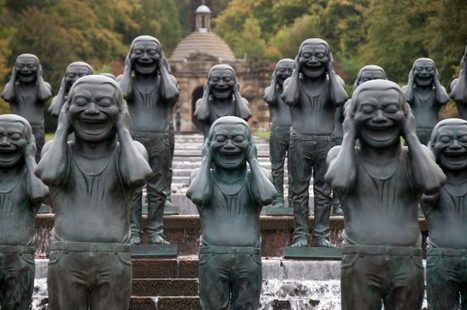
Looking for Love in Small Religion

“Think modern dating is tough? Try hunting for a husband or wife in the Druze community—adherents are forbidden from marrying outside of the faith. This desire to marry someone within the faith is not just a preference—the religion prohibits exogamy. If a Druze marries a non-Druze, it will not be a Druze wedding, nor can the couple’s children be Druze—the religion can only be passed on through birth to two Druze parents. There are no conversions into the Druze faith.”

Source: www.theatlantic.com

Korean Baseball 101: Way Beyond the Bat Flips

Baseball in South Korea is more than a game. It’s akin to a religion. American missionaries first brought the sport to the peninsula in 1905, and the country absolutely loved it. Today, the Korean Baseball Organization (KBO) features 10 teams and a unique sporting culture all its own. The city of Busan and its hometown Lotte Giants have a particularly passionate fan base. From the hitters’ flashy bat flips, to the team’s famous “cheermaster” and its unlikely American super fan, consider this is your crash course on the joyful madness that is Lotte Giants fandom.

Source: www.youtube.com

If a sport (or other cultural practice) diffuses to a new place, is it going to look exactly the same as it does in the original cultural hearth? The bat flip is the go-to difference between Korean and American baseball, but there are other differences.  Maybe, or like baseball in South Korea, it can have a culture all its own. This is an interesting story that shows how the diffusion of cultural traits around the globe doesn’t have to lead to a more bland cultural mosaic. As cultural traits are reterritorialized into new places, they add vibrancy to the cultural fabric of the institution/sub-culture that they’ve adopted.

Tags: sport, popular culturediffusion, culturecultural norms, South Korea, East Asia.

Why Don’t We All Speak the Same Language?

There are 7,000 languages spoken on Earth. What are the costs — and benefits — of our modern-day Tower of Babel?

Source: freakonomics.com

These two podcasts are great mainstream looks at issues that filled with cultural geography content.  So many languages on Earth is clearly inefficient (the EU spends $1 billion per year on translation), and yet, linguistic diversity is such a rich part of humanity’s cultural heritage.  Listen to the first episode, Why Don’t We All Speak the Same Language? as well as the follow-up episode, What Would Be the Best Universal Language?


Tags: languagecultureworldwide, English, regions, diffusiontechnology.

Pakistan’s traditional third gender isn’t happy with the trans movement

For centuries, South Asia has had its own Khawaja Sira or third gender culture. Now, some third gender people in Pakistan say the modern transgender identity is threatening their ancient culture.

Source: www.pri.org

Sometimes our assumptions about a society, and how they might react to cultural issues are just that…assumptions.  I for one was very surprised to learn that Pakistan had a a traditional third gender. 


Tags: culture, developmentpodcast, genderPakistansexuality, South Asia, religion.

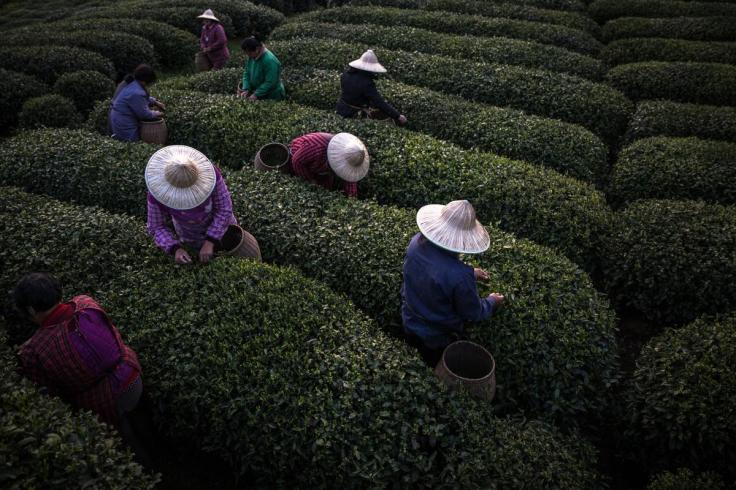
Homeland of tea

“China is the world’s biggest tea producer, selling many varieties of tea leaves such as green tea, black tea, oolong tea, white tea and yellow tea. Different regions are famous for growing different types of tea. Hangzhou is famous for producing a type of green tea called Longjing or the Dragon Well tea. Tea tastes also vary regionally. Drinkers in Beijing tend to prefer jasmine tea while in Shanghai prefer green tea. Processing raw tea leaves for consumption is a time and labor-intensive activity and still done by hand in many areas in China. The Chinese tea industry employs around 80 million people as farmers, pickers and sales people. Tea pickers tend to be seasonal workers who migrate from all parts of the country during harvest time. In 2016, China produced 2.43 million tons of tea.”

Source: www.bostonglobe.com

Tea, the world’s most popular beverage, doesn’t just magically appear on kitchen tables–it’s production and consumption is shaped by geographic forces, cultural preferences, and regional variations.  These 21 images show the cultural, region, and environmental, economic, and agricultural context of tea.  


Tagsimages, foodChina, East Asia, economic, labor, food production, agriculture.
Jordanian parliament repeals rape law

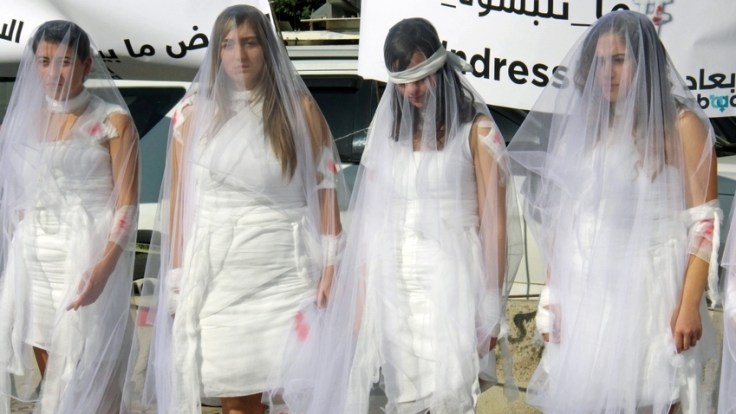
“The Jordanian parliament voted on Tuesday to abolish a provision in the penal code that allows rapists to escape punishment if they marry their victims – a move that is being hailed as ‘historic’ by activists and locals. Article 308 permit[ed] pardoning rape perpetrators if they marry their victims and stay with them for at least three years.  The controversial provision has for decades divided Jordan between those who believe the law is necessary to protect women’s ‘honour’, and others who see it as a violation of basic human rights.”

Source: www.aljazeera.com

Cultural norms and political practices are so often intertwined that understanding local laws means that one has to understand the cultural context within which they were created, and in this case, the cultural processes that led to a political will to change them.  


Tagsculture, cultural norms, gender, MiddleEast, Jordan, political.

Five gentrification myths debunked

‘Gentrification’ is a messy bogeyman of a term deserving more critical analysis. If ‘gentrification’ is ‘exclusive economic development’, what we want is INCLUSIVE economic development.

Source: www.youtube.com

This post will need many disclaimers, but I think that it is a valuable addition to our gentrification materials since the key take-home point is that gentrification doesn’t happen the same way in all places (geographic context matters!). Some of the generalizations about gentrification around the country might not apply to some specific examples.  Are these generalizations true in some (and possibly most) contexts?  Sure, but unfortunately once people hear the word gentrification, they assume a base set of assumptions about the situation which may or may not be true.  The 5 myths outlined in this video (more detail in this Washington Post article) are:

  1. Gentrification leads to lower crime.
  2. Gentrification causes widespread displacement.
  3. Longtime residents hate gentrification.
  4. Gentrifiers are white.
  5. Gentrification happens naturally.

Tags: neighborhood, gentrificationurban, place, culture, economic   

‘This is death to the family’: Japan’s fertility crisis is creating economic and social woes never seen before

Shrinking GDP and a falling population are poised to turn Japan into what economists call a “demographic time bomb,” and other countries could be next.

Source: www.businessinsider.com

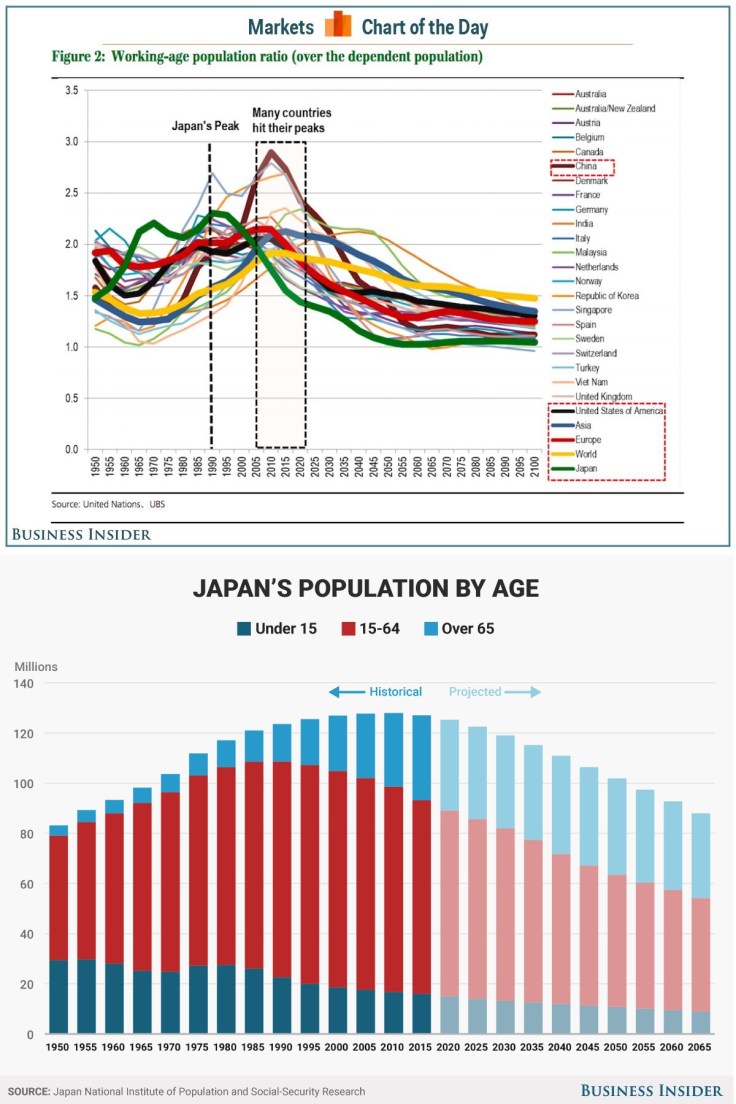
The article headline is quite click-baity, but there is some real substance to this article.  The graphs are especially useful to teach concepts such as population momentum and the age-dependency ratio. These were the key parts of the article that caught my eye:

  • An aging population will mean higher costs for the government, a shortage of pension and social security-type funds, a shortage of people to care for the very aged, slow economic growth, and a shortage of young workers.
  • Following feminism’s slow build in Japan since the 1970s, today’s workers strive for equality between the sexes, something Japan’s pyramid-style corporate structure just isn’t built for. That’s because institutional knowledge is viewed as a big deal in Japan.
  • The elderly now make up 27% of Japan’s population. In the US, the rate is only 15%. Experts predict the ratio in Japan could rise to 40% by 2050. With that comes rising social-security costs, which the shrinking younger generations are expected to bear.
  • To make up for an aging population and aversion toward immigrant work, Japan’s tech sector has stepped up its efforts in robotics and artificial intelligence.

Tags: culture, genderlabor, populationmigration, JapanEast Asia.

My Family’s Slave

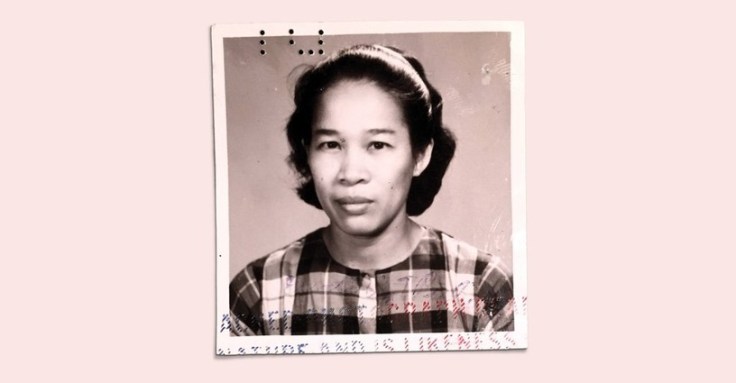
She lived with us for 56 years. She raised me and my siblings without pay. I was 11, a typical American kid, before I realized who she was.


The Spanish Crown eventually began phasing out slavery at home and in its colonies, but parts of the Philippines were so far-flung that authorities couldn’t keep a close eye. Traditions persisted under different guises, even after the U.S. took control of the islands in 1898. Today even the poor can have utusans or katulongs (“helpers”) or kasambahays (“domestics”), as long as there are people even poorer. The pool is deep.

Source: www.theatlantic.com

This article created a huge stir from the moment it was published, especially within the U.S. Filipino community.  Slavery is reprehensible, but to most people today, it is incomprehensible to imagine how one human could ever enslave another.  This story of a Filipino family that brought a ‘domestic worker’ with them to the United States is a riveting tale that offers glimpses into the cultural context of modern-day slavery.  The author was born into this family and it’s a painful tale intermingled with agony, love, cruelty, tenderness, guilt, and growth.  This article is a long read, but well worth it.  You can listen to a 55-minute audio version of the article, or also listen to the NPR 5-minute version.    


Tags: migrationlaborPhilippines, culture.

Create a free website or blog at WordPress.com.

Up ↑