Search

GEOGRAPHY EDUCATION

Supporting geography educators everywhere with current digital resources.

Tag

political

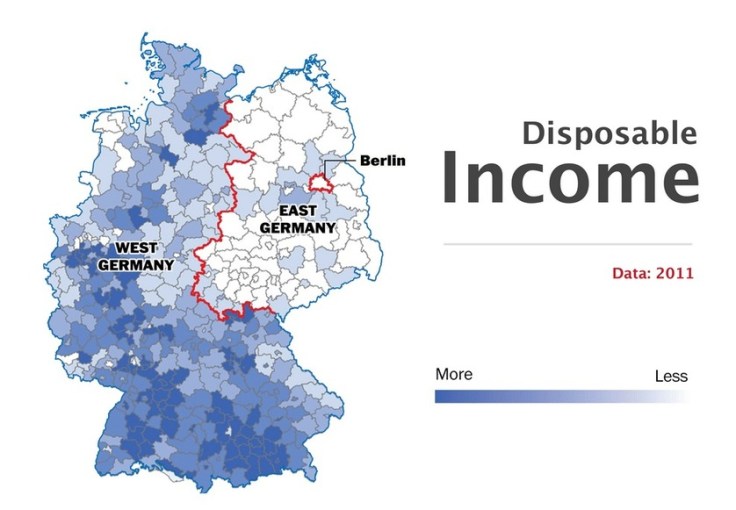
Germany reunified 26 years ago, but some divisions are still strong

“While 75 percent of Germans who live in the east said that they considered their country’s reunification a success, only half of western Germans agreed. With eastern and western Germans blaming each other for past mistakes over the past two years, that frustration has likely increased. Younger citizens, especially — who do not usually identify themselves with their area of origin as strongly anymore — have grown worried about the persistent skepticism on both sides. But where do those divisions come from? And how different are eastern and western Germany today?”

Source: www.washingtonpost.com

This series of 10 maps (and 1 satellite image) highlights many of the cultural and economic divisions between East and West, despite efforts to in the last 26 years to smooth out these discrepancies. The social geographies imposed by the Iron Curtain and the Berlin Wall are still being felt from this relic border and will for years to come. 


Tags: Germany, industry, laboreconomichistorical, politicalborders.

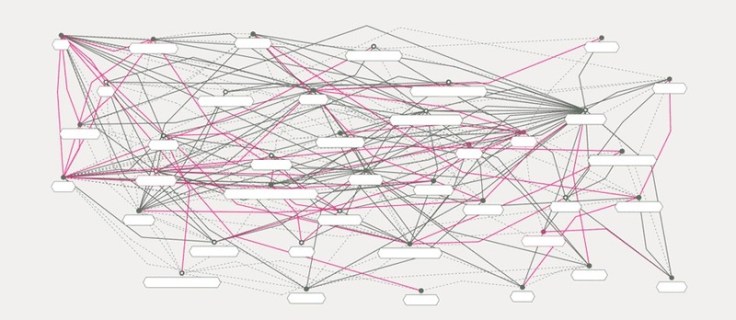
Who Likes Whom in The Middle East? Key players & Notable relationships

An interactive network visualisation of key players & notable relationships in the Middle East region. Continually updated. Awesome looking.

Source: www.informationisbeautiful.net

News flash:the Middle East is complicated.  In a region where the enemy of an enemy can be your friend, keeping track of local, regional, and global interests can be a staggering proposition.  This flow chart is both incredibly complex, but also aids the user in making sense of the relationships that help to define the region.  


Tags: MiddleEast, conflict, political, geopoliticsregions.

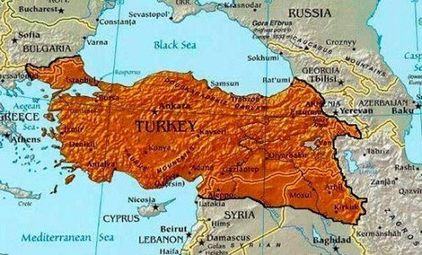
Turkey’s New Maps Are Reclaiming the Ottoman Empire

Erdogan’s aggressive nationalism is now spilling over Turkey’s borders, grabbing land in Greece and Iraq.


In the past few weeks, a conflict between Ankara and Baghdad over Turkey’s role in the liberation of Mosul has precipitated an alarming burst of Turkish irredentism. President Erdogan criticized the Treaty of Lausanne, which created the borders of modern Turkey, for leaving the country too small. Turkey won’t be annexing part of Iraq anytime soon, but this combination of irredentist cartography and rhetoric nonetheless offers some insight into Turkey’s current foreign and domestic policies and Ankara’s self-image.  The military interventions and confrontational rhetoric this nationalism inspires may worsen Turkey’s security and regional standing.


Tags: political, irredentism, culture, Turkeyhistorical, bordersempire, geopolitics.

Source: www.yahoo.com

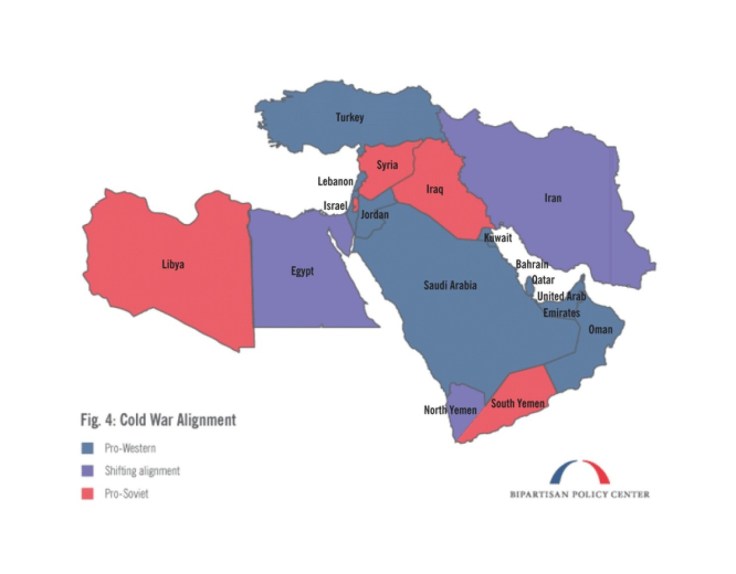
Four maps that explain the chaos of the Middle East

“Without trying to defend or absolve U.S. policy, then, it is worth stepping back to ask what shared historical experiences might have left these four countries — Iraq, Syria, Libya and Yemen — particularly at risk of violent collapse. The following maps help highlight how, at various points over the past century, historical circumstances conspired, in an often self-reinforcing way, to bolster the stability of some states in the region while undermining that of others.”

Source: www.washingtonpost.com

These maps are not cartographically inspiring, but the it’s the historical and political insight that makes them valuable. The goal of this set of maps is to find some underlying causal reasons for political stability(or more importantly instability) in the Middle East. These four maps focus on these key issues:

1. Century-old states are more stable today

2. Colonial rule led to fragile states

3. Instability and regime change

4. The shadow of the Cold War


Tags: MiddleEast, war, conflict, political, geopoliticshistorical.

What This 2012 Map Tells Us About America, and the Election

History, race, religion, identity, geography: The 2012 election county-level map has many stories to tell, including about the 2016 race.

Source: www.nytimes.com

The coverage of this election feels less objective than in past years (maybe that’s just my perception, but that is why I’ve shared less electoral resources than in past years).  This article show’s good map analysis and electoral patterns without much of any ideological or partisan analysis of the political platforms.  


Tags: electoral, political, mapping.

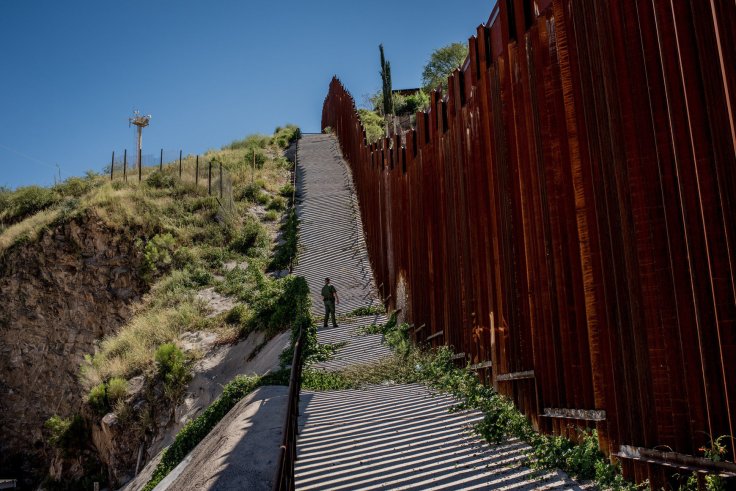
‘The Wall Is a Fantasy’

A week in the borderlands with migrants and guards.

Source: www.nytimes.com

This is not a political statement but a reiteration of the geographic realities of borders; they are inherently permeable and unite people just as much as they divide. 


Tags: Mexico, borders, political.   

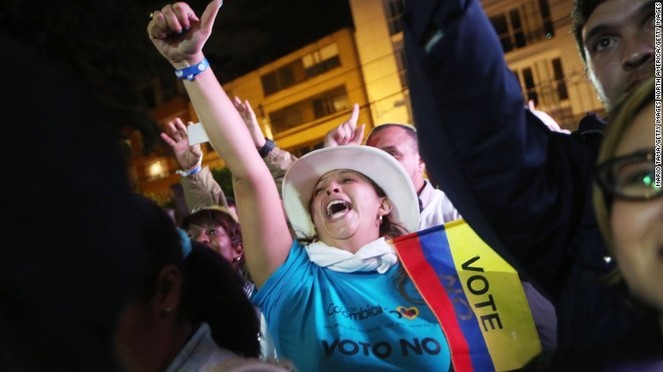
Colombia rejects FARC deal: What’s next?

“A narrow win for Colombia’s opponents to a government peace deal with FARC rebels has thrown the country into disarray, leading one journalist to starkly declare, ‘Nobody really knows what will happen tomorrow.’  Likened to the fallout from the United Kingdom’s ‘Brexit’ referendum, the vote’s unexpected failure has left the Colombian political classes reeling and unsure how to respond in order to save four years of hard negotiation with the Marxist militia.”

Source: www.cnn.com

The Colombian peace negotiations with FARC (the insurgent rebels in drug producing regions) were hailed as the key for Colombia to move past it’s violent, drug-cartel past and move into the future.  As the Colombian population rejected the deal by the slimmest of margins (50.22% against), it leaves the government “without a Plan B.” There are more questions than answers at this point about what might happen (if you are asking what’s FARC?, then this primer will walk you through it). 


TagsSouth America, Colombiapoliticalnarcotics, conflict.

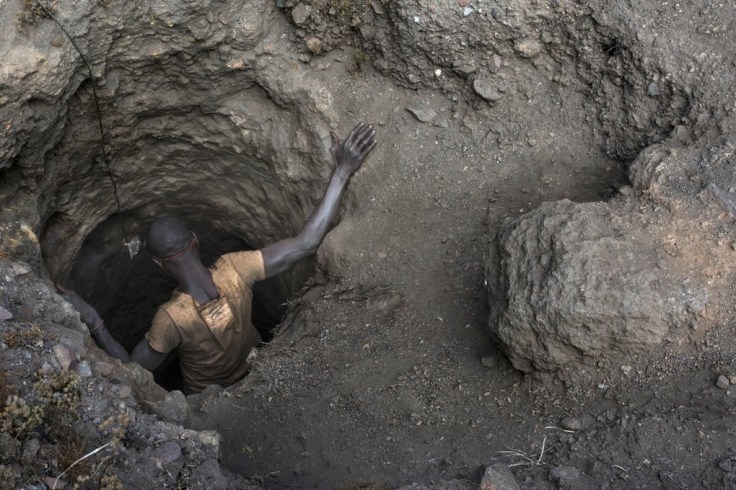
This is where your smartphone battery begins

Workers, including children, labor in harsh and dangerous conditions to meet the world’s soaring demand for cobalt, a mineral essential to powering electric vehicles, laptops, and smartphones, according to an investigation by The Washington Post.

Source: www.washingtonpost.com

The Democratic Republic of the Congo (DRC) is a land rich with minerals and resources vital for high end consumer goods (laptops, cellphones, electric cars, etc.).  This in-depth investigation from the Washington Post of the cobalt mining districts in the DRC (60% of global cobalt production) is incredible.  It has great videos, maps, and an detailed article that cuts across the geographic themes (exploited local labor, global commodity chains, political governance, polluted water supply, medical geography, etc.).  


Just two days ago, the United States pulled the families of all governmental officials out of the DRC amid political turmoil and violence in the streets of Kinshasa, highlighting the fact that the weakness of political institutions in the DRC are a major reason for this situation.  


Tags: Congolaborwatermedical, environmentpollution, political, conflict, resourcespolitical ecology, Africa.

PBS Election Central

Check out Election Central from PBS with tools, resources & solutions to engage students in the political process.

Source: www.pbseduelectioncentral.com

The first presidential election last night has intensified the already polarized political conversation in the United States. This is a great resource to explore historic political maps and cartograms.  It also has rich tools to project the possibilities for the 2016 election with ready-made lesson plans. 


Tags: electoral, politicalhistorical, mapping.

Create a free website or blog at WordPress.com.

Up ↑