Search

GEOGRAPHY EDUCATION

Supporting geography educators everywhere with current digital resources.

Tag

political

Japan’s Emperor Akihito fears age could impact ability to rule

“In a rare televised speech, Japan’s Emperor Akihito has addressed his people directly about his declining health. A Japanese monarch has not stepped down in about 200 years.

Once revered as a living God, the Japanese emperor became a ceremonial figure in Japan’s constitutional monarchy after World War II. Occupying forces seized much of the imperial family’s wealth and today Parliament controls the household’s annual budget and allowances, which total well over $100 million.”

Source: www.cnn.com

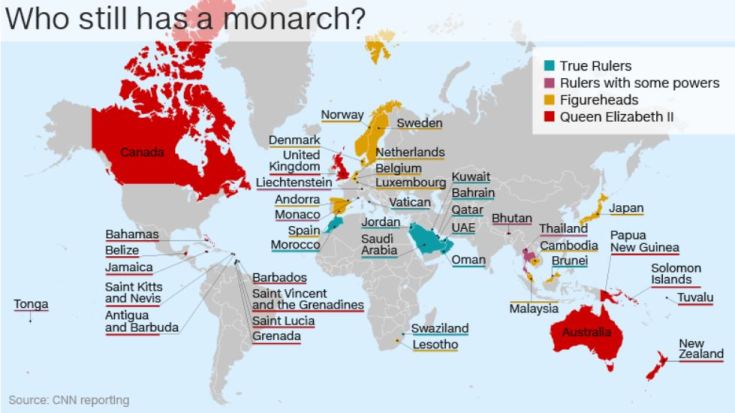
It’s amazing to think that this is only the 3rd public message from an Emperor since the invention of TV and the radio.  (1-Surrender to end WWII, 1945. 2-Fukushima nuclear disaster, 2011, 3-Emperor’s Declining health, 2016).  This news though, brings up the questions of how many monarchs still rule today, and with what amount of power do they actually have?  The map accompanying this gives the quick run-down.  


Tags: Japan, political.

When Mexico Was Flooded By Immigrants

In the early nineteenth-century, Mexico had a problem with American immigrants.

Source: daily.jstor.org

A century and a half ago, the immigration debate and geopolitical shifts in power on the United States-Mexico border reflected a profoundly different dynamic than it does today.  This history has enduring cultural impacts on southwestern states that had the international border jump them.


Tags: culture, demographicsmigration, North Americahistorical, colonialism, borders, political.

Old Mexico lives on

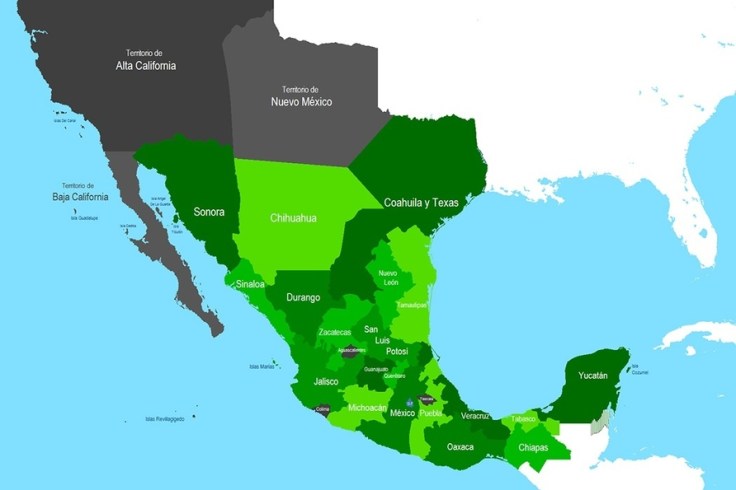
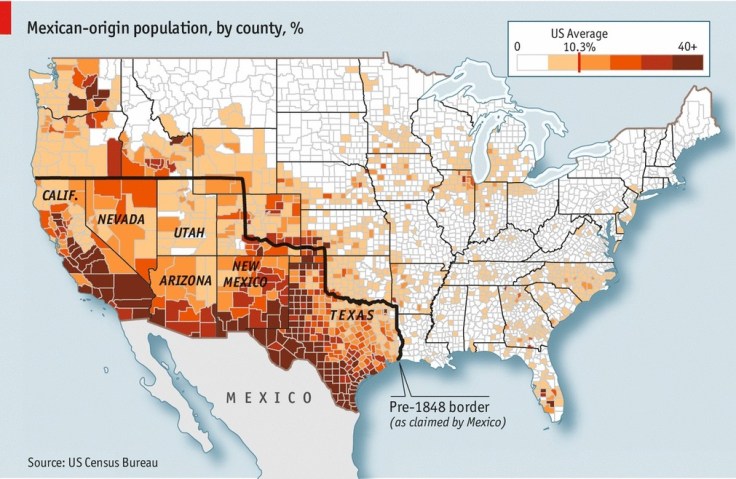
On February 2nd 1848, following a short and one-sided war, Mexico agreed to cede more than half its territory to the United States. An area covering most of present-day Arizona, California, Nevada, New Mexico and Utah, plus parts of several other states, was handed over to gringolandia. The rebellious state of Tejas, which had declared its independence from Mexico in 1836, was recognised as American soil too. But a century and a half later, communities have proved more durable than borders. The counties with the highest concentration of Mexicans (as defined by ethnicity, rather than citizenship) overlap closely with the area that belonged to Mexico before the great gringo land-grab of 1848. Some are recent arrivals; others trace their roots to long before the map was redrawn. They didn’t jump the border—it jumped them.


Tags: culture, demographics, North Americahistorical, colonialism, borders, political.

Source: www.economist.com

Why the Ukraine Crisis Is the West’s Fault

Conventional wisdom in the West blames the Ukraine crisis on Russian aggression. But this account is wrong: Washington and its European allies actually share most of the responsibility, having spent decades pushing east into Russia’s natural sphere of interest.

Source: www.foreignaffairs.com

Ukraine is culturally, economically, and geographically connected with Russia. It is a territory that Russia cannot afford to lose as a part of their sphere of influence.  John Mearsheimer, in his article Why Ukraine Crisis is the West’s Fault, gives a detailed account of NATO expansion and how it effected the Russian demand for hegemony in East Europe. Ultimately it is his conclusion that it was this expansion that provoked the Russians, and the current crisis is on the hands of the West. The will of a majority of Ukrainians is be begin economically aligning more with EU/NATO countries.  Ukraine decided against Russia, and Russia responded with force.   Here is an article where scholars weigh in and mostly disagree with the author’s provocative assessment


Tags: op-ed, Ukrainesupranationalism, Russia, geopoliticspolitical.


London Should Secede From the United Kingdom

Beyond the stunning act that has become Britain’s vote to leave the European Union lies a deeper message: Democracy is not destiny, but devolution. Ceaseless entropy — the second law of thermodynamics — applies to politics as well. The more countries democratize, the more local populations seek greater self-rule.

Source: foreignpolicy.com

In his book Connectography by Parag Khanna, he argues that connectivity and networks are more important today.  Using those ideas, Khanna discusses London’s options after the recent Brexit vote in this op-ed.      

Brexit: Reaction and the Aftermath

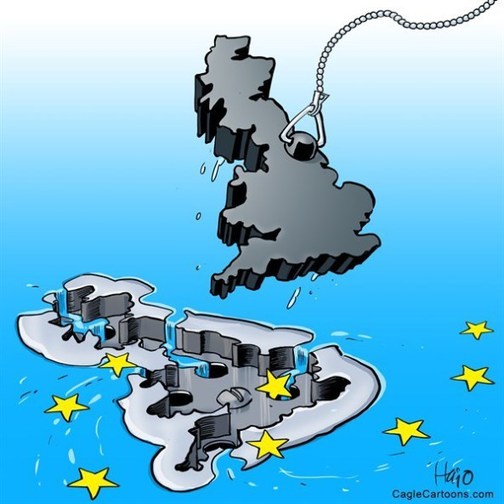
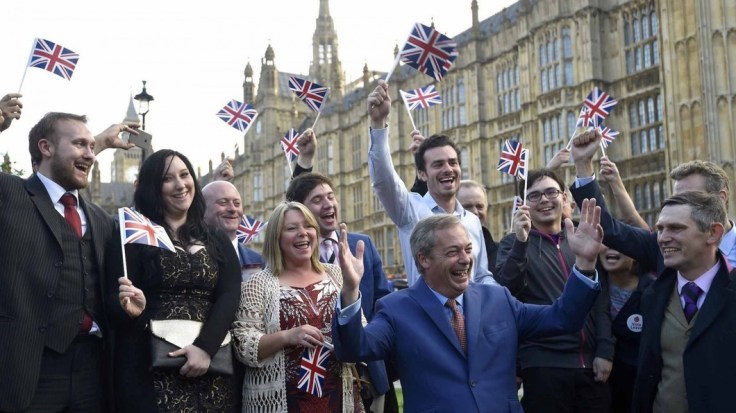
“The reactions to the Brexit have come in from all corners.  Since this was so shocking, newspapers articles that are insightful are using hyperbole in their titles to get our attention (Britain just killed globalization as we know it–Washington Post; Will Brexit mark the end of the age of globalization?–LA Times).  There have also been some excellent political cartoons and memes, so I wanted to archive a few of them here.”  


Tags: Europe, supranationalismglobalization, economic, political, images.

Source: geographyeducation.org

In stunning decision, Britain votes to leave the E.U.

The country opted to become the first ever to leave the 28-member bloc in a result that will send economic and political shockwaves across the globe.

Source: www.washingtonpost.com

The foundations of the European Union have their historical roots in World War II.  To ensure that European countries stop attacking each other, they knit their economies together and cooperated more on political and economic policies.   

The UK has narrowly voted to leave the European Union (52%-48%).  The Brexit (Britain + Exit) was expected to be close, but shows discontent with London.  The ‘Remain’ campaign dominated in London, Scotland and Northern Ireland while the ‘Leave’ campaign found its strength across England and Wales (see maps). 

The fallout of this vote is big and far-reaching.  The first global reaction was financial panic as numerous stock exchanges plummeted.  UK Prime Minister David Cameron will resign.  Already Spain is calling for joint control of Gibraltar (which they’ve wanted anyway) and using this as an opportunity to advance a Spanish agenda.  Many in Scotland chose to stay in the UK in part because they wanted Scotland to remain in the EU.  Another referendum on Scottish Independence feels eminent at this point.       

Still confused?  Here are answers to 9 frequently asked questions about the Brexit as well as a good overview from the Washington Post.


Tags: Europe, supranationalism, economic, political.

Cities are the New Nations

“Political geography is not determinant anymore, because cities are more important.”

Source: www.citylab.com

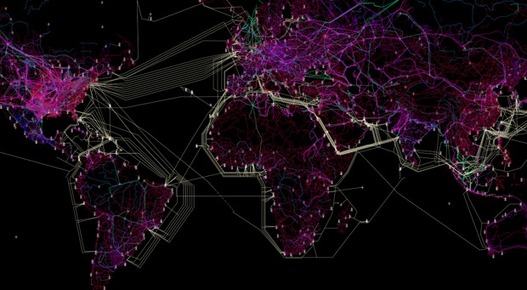
Controlling borders and territory were the main factors in geopolitics for centuries.  In his book Connectography by Parag Khanna, he argues that connectivity and networks are more important today.  The world’s most connected cities act in ways that transcend political boundaries.      


How Syria Ruined the Arab Spring

How Syria Ruined the Arab Spring « | Foreign Policy | the Global Magazine of News and Ideas

Source: foreignpolicy.com

Unraveling the situation on the ground in Syria is much like opening a Russian nesting doll, it’s a battle, inside of a battle, inside of a battle. A complex series of local, regional, and global rivalries all playing out on the battle grounds of Syria, turning the country in a wasteland. It’s created a nightmare for the millions of non-combatants forced to flee, and those stuck within the borders. What started as Syrian leader Bashar al-Assad cracking down on Arab spring protesters in early 2011, quickly escalated into a civil war. Regional rivals Iran, and Saudi Arabia then got involved sending aid to differing sides. Soon, as a result of the rise of ISIS, the west and Russia chose to intervene. Lost in the greater game of Geo-politics is the sad, slow death of the optimism that accompanied the Arab Spring. As Marc Lynch laments in ‘How Syria ruined the Arab Spring’, all of the momentum was lost and forgotten when Al-Assad resorted to force and Syria became a pawn in regional and global geopolitics.


Tagsop-ed, Syria, war, conflict, political, geopolitics, Middle East.

Create a free website or blog at WordPress.com.

Up ↑