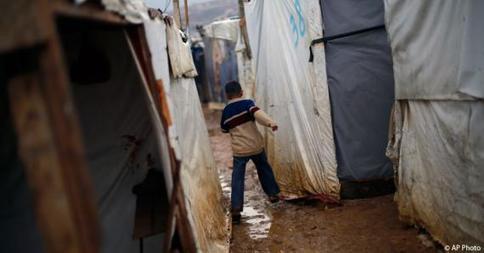
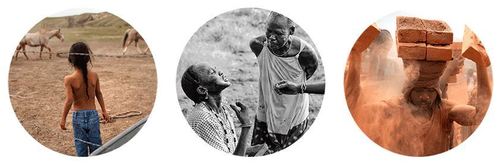
“There are more people displaced by violence and conflict on the planet right now than at any time since World War II. The United Nations Refugee Agency (UNHCR) says the number of people forcibly displaced, including refugees, asylum-seekers, and internally displaced persons has now reached over 51 million.”
From the difference between refugees and internally displaced people, to the gendered impact of refugees, this shines some light on the problems confronting refugees as well as on some of the solutions.
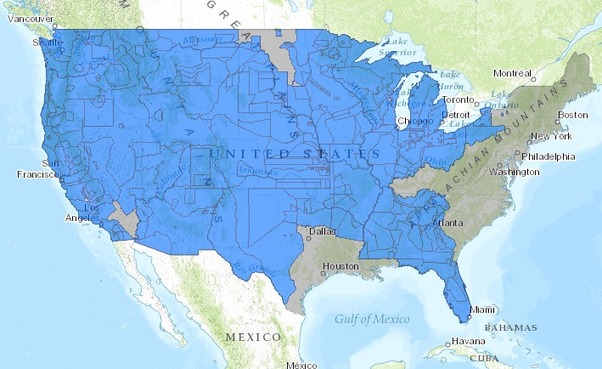
This interactive map, produced by University of Georgia historian Claudio Saunt to accompany his new book West of the Revolution: An Uncommon History of 1776, offers a time-lapse vision of the transfer of Indian land between 1776 and 1887. As blue “Indian homelands” disappear, small red areas appear, indicating the establishment of reservations (above is a static image of the map; visit the map’s page to play with its features).
In the past I’ve shared maps that show the historic expansion of the United States–a temporal and spatial visualization of Manifest Destiny. The difference with this interactive is that the narrative focuses on the declining territory controlled by Native Americans instead of the growth of the United States. That may seem a minor detail, but how history is told shapes our perception of events, identities and places.
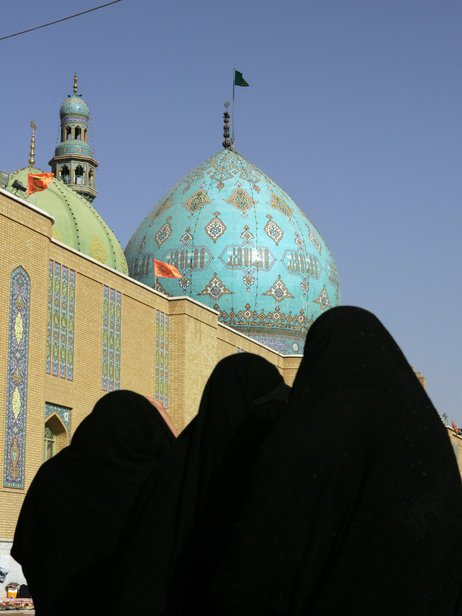
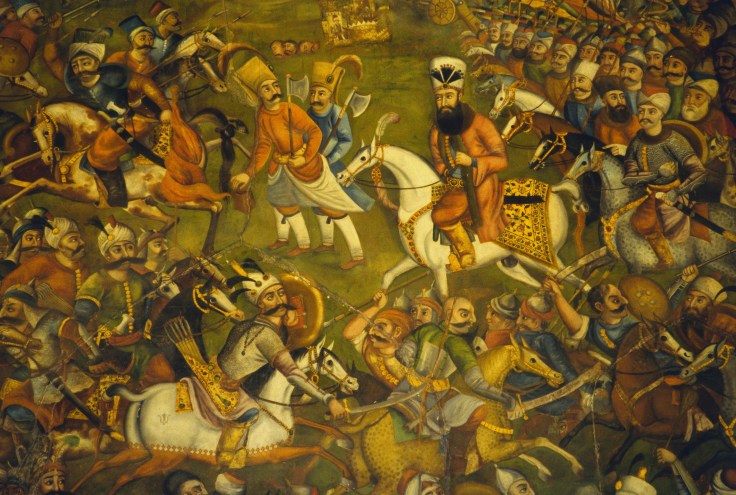
The division between Islam’s Shiite minority and the Sunni majority is deepening across the Middle East. The split occurred soon after the death of the Prophet Muhammad, nearly 1,400 years ago.
The ghosts of religious wars past are rattling in Iraq; The geography of the Sunni-Shiite division is incredibly important for a good understanding of world regional geography as well as modern geopolitics. This NPR podcast examines the historical and religious aspects of this split to then analyze the political and cultural implications in the Middle East today.
“A radical fringe Islamic group names ISIS is fighting to establish a extremist Islamic state in Iraq and Syria…and beyond. They control eastern Syria, western Iraq, just took control of Iraq’s 2nd largest city of Mosul and are advancing on the capital Baghdad. In this podcast, the professor John Boyer outlines just a few of the contributing factors to why this significant event is taking place, the geographic/historic background of the state, and the consequences for the future of the region.”
If you haven’t yet discovered John Boyer, a.k.a. the Plaid Avenger, I recommend exploring his site. He has numerous resources for world regional geography and current global affairs. His colorful persona is highly entertaining for college age-students as his class attracts over 3,000 students each semester (you can decide for yourself whether that personality works for you and your classroom). This particular ‘plaidcast’ discussion focuses on Iraq’s current devolution and possible total collapse.
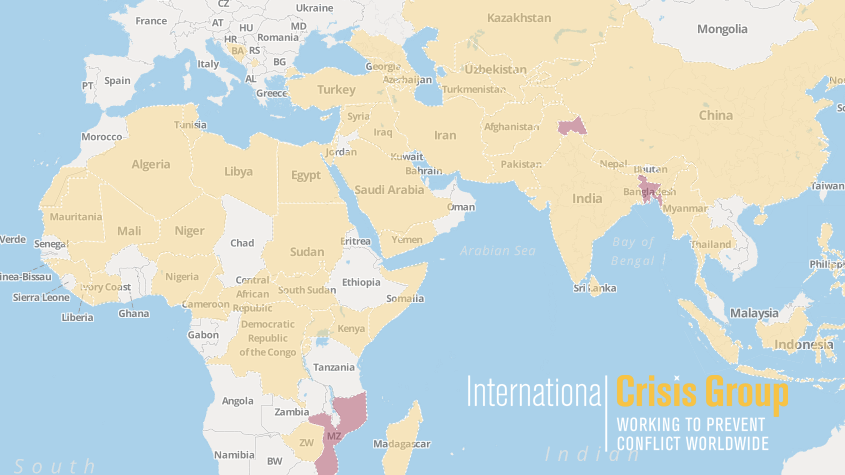
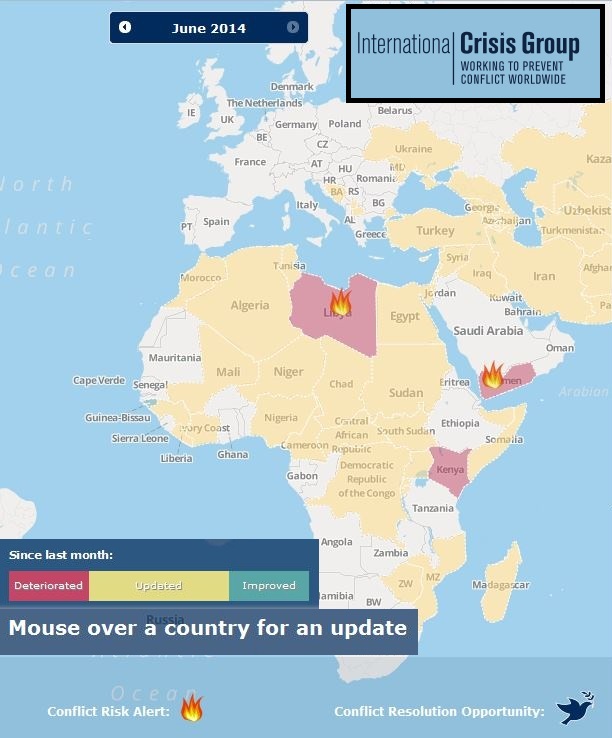
You and your students can browse through this interactive map for an update on conflict situations around the world. The International Crisis Group is an independent, non-profit, non-governmental organization committed to preventing and resolving deadly conflict; they’ve created this interactive map to help us stay informed about the most important conflict issues around the world. I’m placing this on my list of favorite resources as this is one worth returning to on a regular basis.
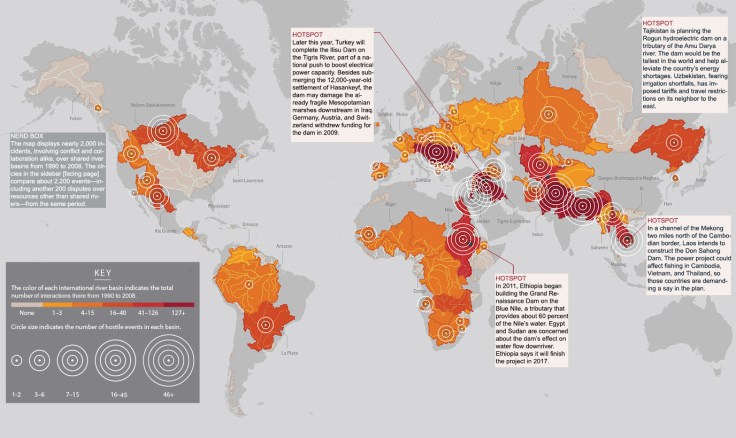
As the climate shifts, rivers will both flood and dry up more often, according to the latest report from the Intergovernmental Panel on Climate Change. Shortages are especially likely in parts of the world already strapped for water, so political scientists expect feuds will become even more intense. To track disputes worldwide, researchers at Oregon State University spent a decade building a comprehensive database of international exchanges—-both conflicts and alliances—over shared water resources. They found that countries often begin disputes belligerently but ultimately reach peaceful agreements. Says Aaron Wolf, the geographer who leads the project, “For me the really interesting part is how even Arabs and Israelis, Indians and Pakistanis, are able to resolve their differences and find a solution.”
Too often we think of political conflicts within the framework of state borders; this mapping project divides the world into watersheds and forces us to look at global politics through a different and enlightening lens (Hi-Res image). Oil might be the most economically valuable liquid resource, but water is the most critical for human habitation. This infographic is reminiscent of this one, asking where the next ‘water wars’ might take place.
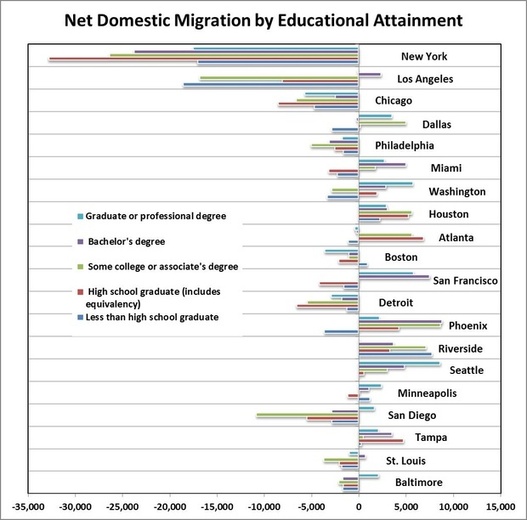
This article, with its charts and interactive maps, is worth exploring to show some of the important spatial patterns of internal migration. It’s not hard to realize that larger, cosmopolitan metro areas will have an advantage in attracting and keeping prospective college graduates; the question that we should be asking our students is how will this impact neighborhoods, cities and regions?
Artists, designers, photographers and activists share one image that encapsulates what inequality means to them.
Seth Dixon‘s insight:
Photographers are great social observers, often finding the perspective to tell a story. This gallery of shows a dozen images from all over the world highlighting various forms of inequality.
This daily dose of satellite photos helps you appreciate the beauty and intricacy of the things humans have constructed–as well as the devastating…
Seth Dixon‘s insight:
Have you ever seen the website, The Daily Overview? The purpose of the site is to share a compelling/ informative/artistic satellite image every day to get readers to view the world from a different perspective. This articleabout the site is nice summary of the project.