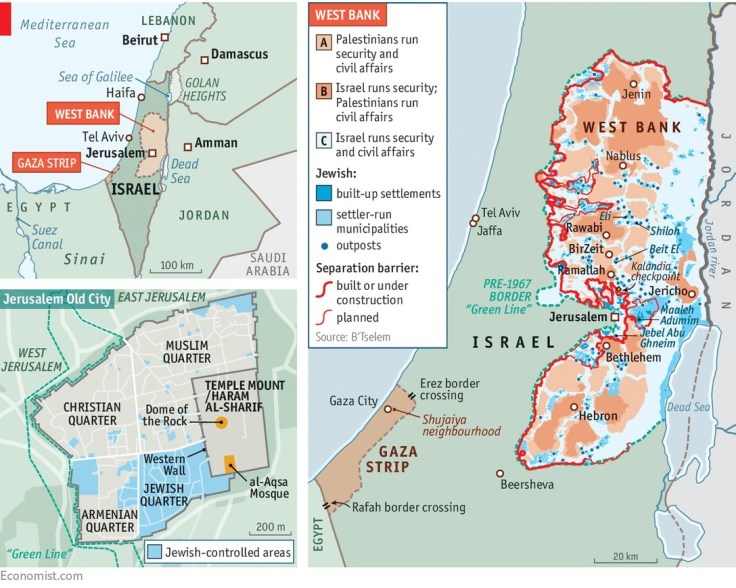
THE SIX-DAY WAR increased Israel’s territory threefold. The “borders of Auschwitz” were gone; the vulnerable nine-mile narrow waist acquired a thick cuirass with the mountains of the West Bank. Israel soon annexed East Jerusalem with some surrounding land; it did the same with the Golan Heights in 1981.
I have more questions than definitive answers, so let’s get right to it.
Questions to Ponder: How have technological and logistical shifts in various industries made this once unthinkable union workable? How will a retailer like Amazon change the food industry on the production side of the equation? What are the advantages and disadvantages of creative destruction (eliminating old jobs by creating new ones)? Who stands to benefit the most, and who are the most negatively impacted?
This is the story of how Sudan became two nations, and of an ongoing conflict in the Nuba Mountains that has changed the lives of millions of people. In parts 2–5 of our VR series, We Who Remain, follow the lives of four people living through the war: http://ajplus.co/nuba360. Produced in partnership with Nuba Reports and Emblematic Group.
The first video in this 5-part video is a bit slow, but provides the historical and geographic context needed to understand the developmental, ethnic, and political issues that remain so difficult to resolve. The Subsequent four videos provide a more human, personal glimpse into facets of the conflict.
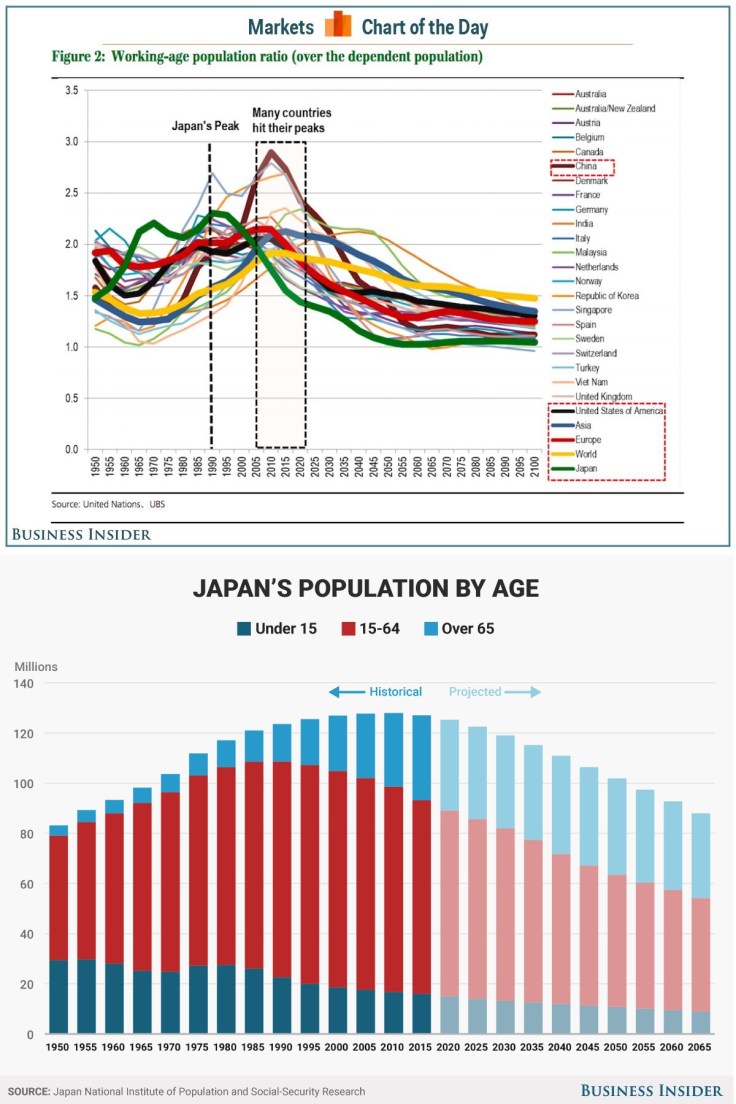
Shrinking GDP and a falling population are poised to turn Japan into what economists call a “demographic time bomb,” and other countries could be next.
The article headline is quite click-baity, but there is some real substance to this article. The graphs are especially useful to teach concepts such as population momentum and the age-dependency ratio. These were the key parts of the article that caught my eye:
An aging population will mean higher costs for the government, a shortage of pension and social security-type funds, a shortage of people to care for the very aged, slow economic growth, and a shortage of young workers.
Following feminism’s slow build in Japan since the 1970s, today’s workers strive for equality between the sexes, something Japan’s pyramid-style corporate structure just isn’t built for. That’s because institutional knowledge is viewed as a big deal in Japan.
The elderly now make up 27% of Japan’s population. In the US, the rate is only 15%. Experts predict the ratio in Japan could rise to 40% by 2050. With that comes rising social-security costs, which the shrinking younger generations are expected to bear.
To make up for an aging population and aversion toward immigrant work, Japan’s tech sector has stepped up its efforts in robotics and artificial intelligence.
“All the tweets regarding the 2017 APHG exam2017 APHG exam from the official social media outlet of College Board, Trevor Packer, Vice President of Advanced Placement.”
This isn’t news, but it isn’t just about Rio de Janeiro, since the World Cup and Olympics have already come and gone. Yet the urban planning designed for the world’s gaze remains. Some strategies used were to create economic development and stimulate the local communities, but more often than not, the poor of the city and the poor communities cities were swept under the rug without addressing the issues that creating poverty with the city. Many of the poor communities closest to Olympic venues were demolished without real viable housing options for the displaced residents.
Questions to Ponder: Can you think of other ways (of other examples) that city planning is used to hide the poor or the ‘less desirable’ parts of the city? Why does this happen? How should urban planning approach economic redevelopment, poverty, and community?
“One of the greatest aspects of the APHG reading is the professional networking, collaboration and sharing that happens with this enthusiastic set of high school and college educators. In addition to the fun evening activities, every year we also hold several professional development activities in the evening.”
On Wednesday evening, June 7th we had our annual “Night of the Round Tables” event. This event was designed to create a place to share new ideas, pick up lesson plans, discover new resources, and develop strategies for teaching geography. Presenters had 15 minutes to present. Below are the digital copies of the presentations and the handouts that they wanted to share:
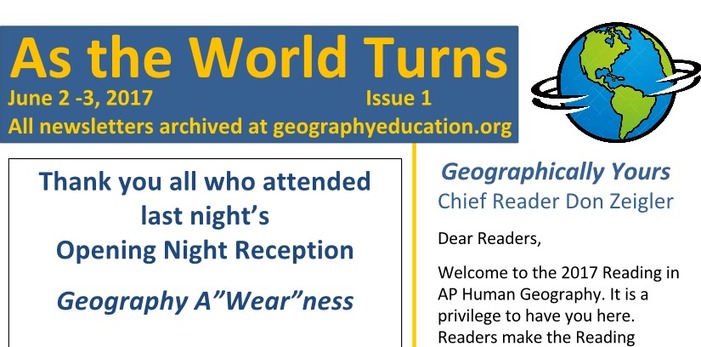
Greetings from Cincinnati, OH, home of the 2017 AP Human Geography reading. Over 700 professionals are here to score over 200,000 exams. I’ve been delighted in the past to share the Professional Development activities and newsletters and will continue to do so. This post will be updated throughout the reading (June 2-8).
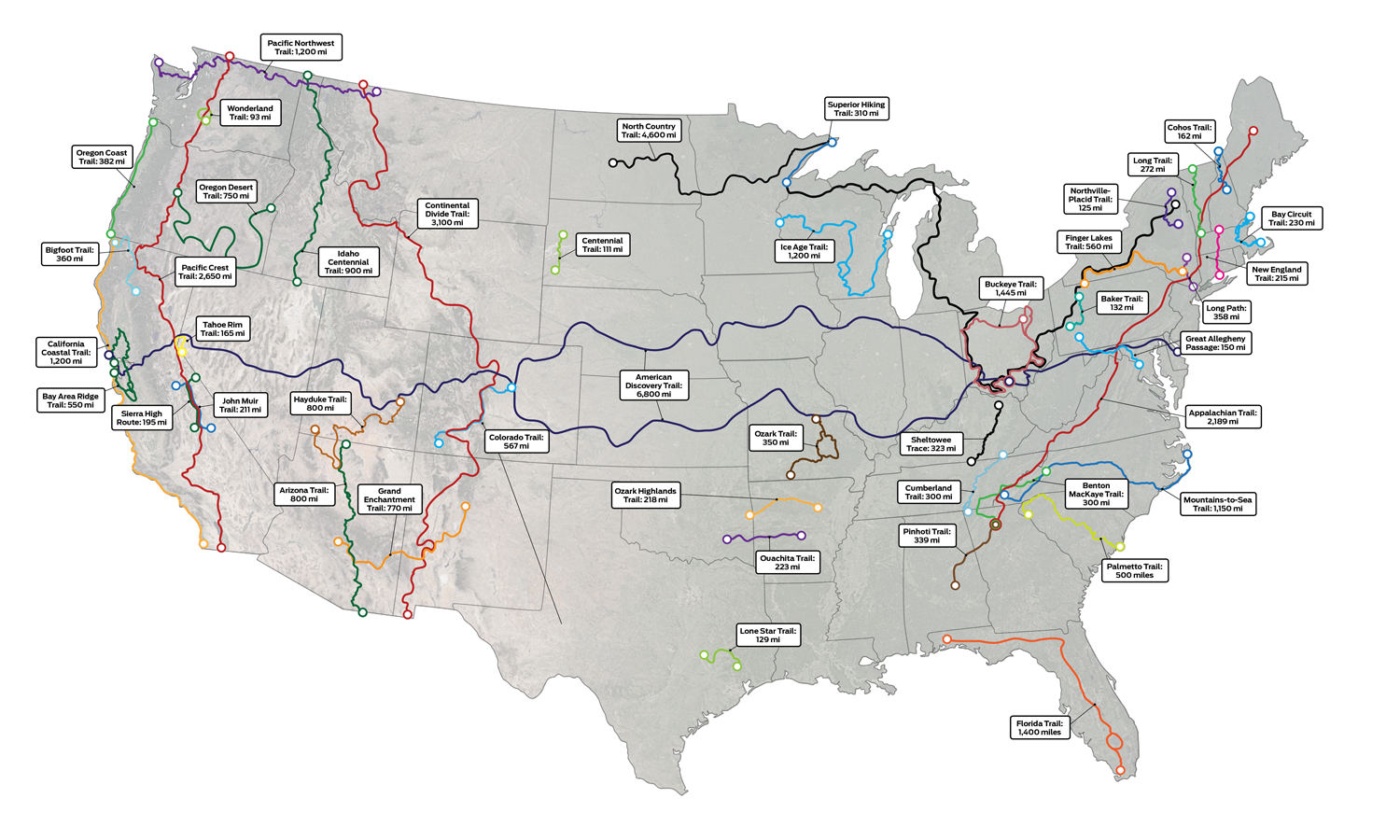
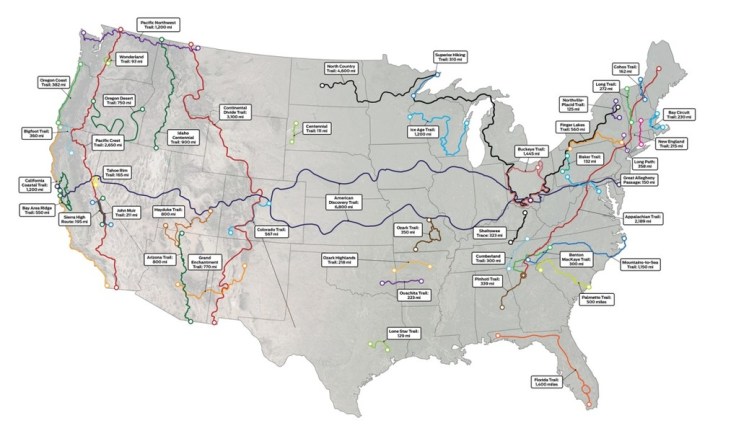
My uncle hiked the entire Pacific Crest Trail and as a kid the enormity of that feat was both inspirational and mind-boggling. Recently I watched an incredible documentary about an ultra-marathoner’s quest on Vermont’s Long Trail (Finding Traction: free on Amazon Prime–trailer here). While I doubt most of us could go the full length of these trails given our jobs, fitness levels, etc., I do think that getting outside to explore some of the physical environments in our local areas this summer sounds like a fantastic idea (high-res map here).



 GEOGRAPHY EDUCATION